Welcome to the Temple of Zeus's Official Forums!

Welcome to the official forums for the Temple of Zeus. Please consider registering an account to join our community.

New profile posts

Carte du monde relative aux principales religions et croyances :

En termes de répartition géographique des principales croyances/religions, le christianisme est majoritaire en Europe, en Amérique, en Océanie et en Afrique subsaharienne. Les divers courants du christianisme connaissent des évolutions démographiques différentes. Ainsi, le catholicisme enregistre un certain déclin en Europe occidentale et, plus modestement, en Amérique du Nord au profit de l’irréligion. Le protestantisme, par le biais des mouvements évangéliques, est particulièrement dynamique avec une forte augmentation de ses adhérents en Amérique latine, en Afrique subsaharienne et en Océanie.

Concernant l’islam, il convient d'éviter la confusion entre les termes « Arabe » et « musulman ». En effet, si la langue arabe occupe une place centrale dans la religion islamique et que la majorité de la population arabe (au sens « ethnique ») est musulmane, le Moyen-Orient et l'Afrique du Nord ne représentent toutefois que 20 % des musulmans à l'échelle mondiale. Ainsi, la plus grande partie de la communauté musulmane du monde se situe en Asie du Sud et du Sud-Est, notamment en Indonésie, au Pakistan, au Bangladesh et en Inde.

L’hindouisme reste cantonné à l’Asie du Sud (« sous-continent indien »), tandis que le bouddhisme demeure plutôt implanté en Asie du Sud-Est (Birmanie, Thaïlande, Cambodge et Laos). Le dynamisme démographique de ces deux religions majeures tend à ralentir et, selon les projections, le bouddhisme devrait même enregistrer une baisse du nombre de ses adhérents à l'horizon 2050.

Les croyances traditionnelles que sont l’animisme, le taoïsme, le confucianisme ou bien encore le shintoïsme voient leurs proportions respectives diminuer à l’échelle globale. Cette situation s’explique par l’augmentation de l’irréligion parmi les populations culturellement rattachées au shintoïsme ou au taoïsme, ainsi que par le phénomène des conversions à une autre religion, principalement au profit du protestantisme évangélique ou de l’islam.

1706704639985.png


- Source : Recensements nationaux.

Carte du monde relative au nombre d'adhérents au christianisme par État :

1706704265648.png


Carte du monde relative à la part des adhérents au christianisme par État (en %) :

1706704344372.png


- Sources : Recensements nationaux ; Pew Research Center.
I want to grow and I am currently growing like every single one of us. But seeing the people around me who can not find the truth slowly rotting is making me sad. I wish ever person could see the brightest side of our Universe, Satan. I know it is impossible but still, believing it IS possible makes me happy.
Hail Satan Forever,
Güç ve Şeref Ebediyen Şeytana Atfolsun...
Your friendly neighborhood spy along with the enemy waiting at the corner, have few basic things to look for when trying to establish something in regards to you or their victims (only if you are a key person however). Be these people are scam salesmen, enemies, parasites, ugly politicians, secret services and the like we have to look at these very very simple digestible aspects:

Suggestibility - One Example: Acceptance and acting / When given advice
Focus - One Example: Maintaining attention/ exclude the other
Compliance - One Example: Direction/command - acting
Openness - One Example: Vulnerability/ Absence of repercussion
Expectancy -One Example: Whether or not it will be enjoyed
Connection - One Example: Desire for future contact

Now, this is not to set up your mind to a game pretend of anyone being after you, but rather this is an actual simple model that is used to profile how successful influence can be on a person.
They are some factors that make influence effective.

To create effective influence pick and use three or more factors, usually dependent on the circumstances.

Good uses for your normal daily life: Jury trials, evaluate attorneys, evaluate calls, selling, determine outcome, avoid parasites and predatory behavior.

Good uses for businessmen: Create a scale from 1 to 10 on each point and evaluate your business partners, clients etc. Information is not Skill. Takes months to years to perfect an instinctive view over this as well.

Good uses against bad actors: Evaluating yourself in relation with products, people etc.

For example Social media wins over you by Focus, Expectancy and Connection etc. Primary being the Focus.

The best way to elicit focus is NOVELTY , CURIOSITY. Real focus in by excluding the environment in favor of the subject, as a measuring unit: IMMERSION.

Other helpers for you:

Openness is by the measuring of how much they share things they usually don't. (You need to know the baseline of a person).
Connection: Trust, Intuition, Credibility.
Compliance can be measured by the latency it takes for a command to be acted or accepted upon.
Expectancy is the outcome of having creative abilities take place in the subject, visualization, hope. Unmet expectations is devastating, please be careful here with this!
Ho pensato che sarebbe carino se condividessi la mia conoscenza in merito all'astronomia. Lo scopo principale è quello di portare informazioni che possano essere utili per poter creare delle basi dalle quali poi si possa costruire qualcosa. Appena avrò la possibilità, cercherò inoltre di stilare una sorta di atlante delle costellazioni con le relative descrizioni (e il periodo migliore dell'anno per osservarle).


Astronomia - Breve introduzione

Durante una bella e limpida serata, d'estate o inverno, volgendo lo sguardo verso l'alto vediamo una miriade di puntini luminosi. Alcuni sono poco appariscenti e luminosi, altri splendono con più forza. Altri ancora surclassano tutti gli altri con la loro luce ferma e decisa. E infine, l'astro più brillante di tutta la notte stellata fa impallidire perfino questi ultimi. In ordine sono: stelle, pianeti e Luna.

L'astronomia si occupa proprio di dare un senso a quello che vediamo nel cielo, dando una definizione di cosa sono gli astri e definendone le dinamiche celesti. La parola astronomia deriva dal Greco "Astron", che significa stella, e da "Nomos", ovvero legge. È quindi la scienza che studia le leggi intrinseche di tutti gli oggetti diversi.

La materia è talmente vasta e complessa che nel corso del tempo si sono create diverse ramificazioni dell'astronomia: astrofisica, cosmologia, spettroscopia, astrobiologia, astrometria, ecc.

Ma tutta la conoscenza di cui disponiamo affonda le sue radici indietro nel tempo di migliaia di anni.


  • Storia dell'astronomia
Le prime interpretazioni dei fenomeni astronomici visibili a occhio nudo, furono basate sull'evidenza che tutti gli astri e i pianeti compissero moti regolari dall'andamento ciclico.

I primi Popoli che cominciarono a osservare i cieli furono gli Antichi Babilonesi e gli Antichi Egizi ma in seguito anche tutte le altre civiltà come i Fenici, i Cinesi, i Maya, gli Incas e soprattutto i Greci, evolvettero le proprie conoscenze e svilupparono una precisione avanzata in maniera autonoma. Queste furono le civiltà straordinariamente avanzate che, con l'aiuto dei nostri Dèi, svilupparono le proprie tecnologie antiche.

I Maya, ad esempio, possedevano una struttura oggi denominata Chichen Itza o "El Castillo" che è esattamente allineata con la traiettoria del Sole. Durante gli equinozi di autunno e primavera, all'ora del tramonto il Sole crea su una scala della piramide un gioco di luci e ombre a forma di corpo di serpente, che coincide perfettamente con la testa di serpente scolpita ai piedi della gradinata. La piramide ha 4 gradinate con 91 scalini ciascuna, per un totale di 364. Aggiungendo lo scalino sulla cima della piramide che conduce all'altare si hanno 365 scalini, esattamente il numero di giorni in un anno.
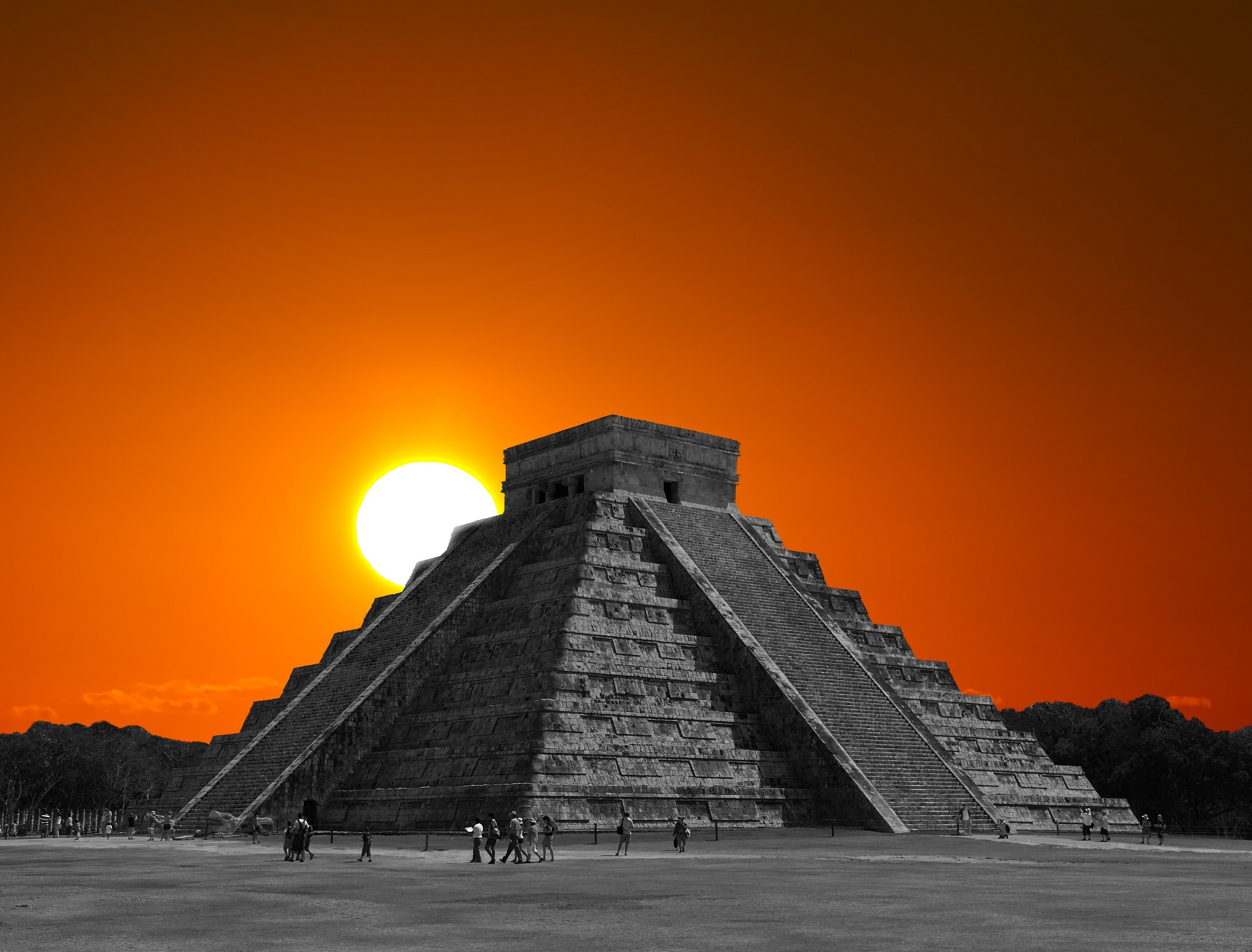

Sun-rising-behind-the-Pyramid-of-Chichen-Itza.jpg


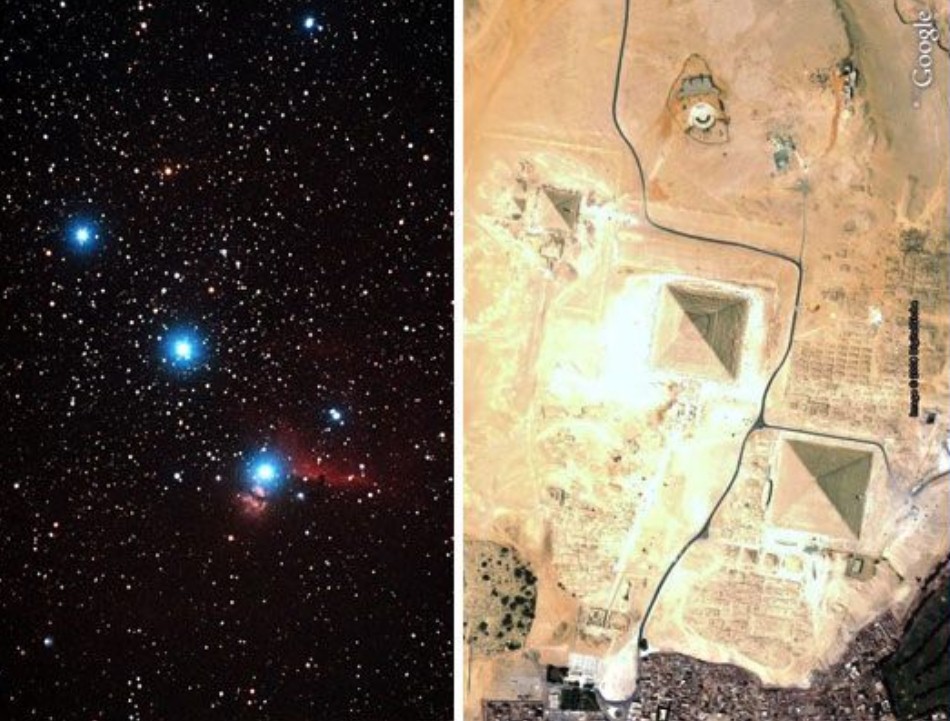
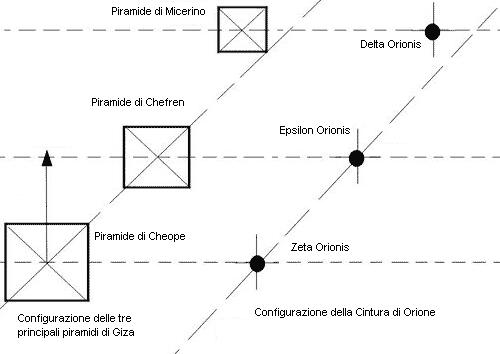
Un altro esempio sono le piramidi Egizie che con la loro disposizione sono correlate alle tre stelle che compongono la Cintura di Orione, nella omonima costellazione.

p6.jpg

Cintura_di_orione.JPG


Il famoso Stonehenge, nel Sud dell'Inghilterra, aveva la funzione di scandire la ricorrenza dei Solstizi e di prevedere le eclissi.

Stonehenge_back_wide.jpg


Furono i Greci, più di 2.500 anni fa, a trasformare l'osservazione celeste in una vera e propria scienza: l'astronomia. Il filosofo matematico Pitagora era a conoscenza che la Terra fosse una sfera: fu uno dei suoi tanti insegnamenti. Aristotele, anche lui un grande filosofo Greco, aveva individuato i moti rotatori degli astri. Nell'Antica Grecia, gli astronomi di quel tempo riuscirono a fare una serie di predizioni che in seguito si rivelarono esatte.

Tutte le grandi Civiltà del passato erano straordinariamente avanzate in materia di astronomia.

Fu solo con l'avvento delle bugie del cristianesimo che questa scienza subì una grave battuta di arresto. La chiesa, i vescovi, gli ecclesiastici, i boia e l'inquisizione impedirono e fecero retrocedere la conoscenza. Il loro compito principale era distruggere tutte le nuove idee e teorie in contrasto con gli insegnamenti biblici. Fu per questo motivo che molti uomini di scienza, come Giordano Bruno, vennero ritenuti eretici e condannati al rogo.

Tuttavia la scienza non si fermò; nuove idee iniziarono a farsi strada sotto l'ombra dell'inquisizione, lentamente ma inesorabilmente.

I secoli passarono e sempre maggiore conoscenza si aggiunse a quello che già si sapeva: si scoprirono i pianeti trascendentali Urano, Nettuno e Plutone; si calcolarono le orbite dei pianeti; si iniziò a guardare sempre più in profondità nel cosmo fino a scoprire altre galassie e altri oggetti celesti come le pulsar, le magnetar e i buchi neri.

È veramente stupendo e interessante tutto quello che si è venuto a delineare. Con il sempre più pronunciato declino della chiesa e la maggiore perdita di potere degli Yehubor, la tecnologia e la scienza saranno in grado di avanzare sempre di più e in funzione dell'Uomo.
Yoga Tips:

For all asanas, keep distance between your limbs comfortable for you. Recognize that your individual body is your own and you might need more or less distance between your feet, etc.

Never push yourself beyond your comfort. Always modify for your body if needed.

Always keep your core engaged (do not let your belly hang) unless otherwise stated.


(This post is a work in progress and will be updated along the way, and then transferred to the JoS when complete.)
Balo666
Balo666
Shouldnt we push ourselves even a little bit during asanas? im not talking about athletic stretches, but putting some pressure on oneself. I started yoga more than 2 years ago and i constaly practice it, but after some point, totally relaxed asanas calm my nervious system of course but they dont help me to surpass my previous limits. Should one practice both?
High Priestess Lydia Coventina
Yes, push yourself as far as it feels correct to do so, but not more. I vary my practice, I do more relaxing when I need it, and more challenging at other times.
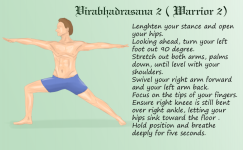
Yoga Asana of the Day: Virabhadrasana II (Warrior 2)
Warrior-2.png
Illustration by @Ardgion

Standing in Mountain Pose, spread your feet approximately 4 feet (48 inches) apart to the sides, arms straight out at shoulder height, palms facing down. Turn the right foot 90 degrees to the right, and left foot slightly to the right. (Alternatively, you can begin from Mountain Pose by stepping the left foot back by 4 feet and turning the left foot slightly outwards, keep the right foot where it is.) Keep your entire left leg engaged and knee tightened. Inhale, and on the exhale bend the right knee so the thigh is parallel to the floor, forming a right angle from your thigh to your shin. Do not bring your right knee in front of the toes, keep it above the heel.

Keep your arms straight as in the illustration, feel a stretch across the shoulders and chest. Face your right palm. Keep your shoulders in line with your hips and fully open. Feel strength in your hips, and a balance of your shoulders being above your hips. Keep your core engaged. Remain in this pose for up to 30 seconds with deep breathing.

To do the other side: From the above, straighten your right leg, pivot on your feet so your left leg is now in front yet your chest is still facing the same direction; repeat all instructions for the left side. To finish, relax your arms, straighten your legs and return to Mountain Pose.

Benefits: This pose strengthens the legs and prevents/treats leg cramps. It is relieving for the back.
Zorlu bir yol içerisindeyiz. Kimi zaman Yggdrasil'de baş aşşağı asılmak, kimi zaman bir gözünü feda etmeyi gerektiren bir yoldayız. Kimi zaman ise sadece oturup kendini dinlemenin mucizeler yaratabileceği bir yol...
Şeytan, bu yolda ki tek dostumuz, Ana Tanrıça'nın Adını, Baba Tanrı'nın Mızrağını taşıyan o yüce Şeytan, o kutlu Şeytan,
Düşmanın bahçesinde vermiş olduğun sözü tutacağız, keza tek güvencem o...
Yeller esiyor şimdi ruhumun karanlığından,
Zifiri gecenin ardından tüm parlaklığıyla göklerin arasından ışıldayan güneş gibi
Bu dünyanın değil, evrenin güneşi gibi yıldızlarımı ısıtıyorsun.
Gökyüzünün değil, kaderimin yıldızlarını Isıtıyorsun.
İşte senin eline sunuyorum
Güvenle tanrısallığına duyduğum hayranlık ile
Yeni yaratılmış bir ruh temizliğinde
Ruhumun en saf parçasından sana bakıyorum Anubis.
Çağrıma cevap veriyorsun,
Yüzyıllar arasından, zamanla güçlenen bakışlarınla bana cevap veriyorsun.
Müzikler ve çanlar senin için çalıyor.
Hep ayakta duracak heykeller senin için yapılıyor.
I have found that in these times when almost no music talent is to be seen I prefer to listen to game music and OST.

One theme song that got stuck with me when I used to play games before is from game Warframe called "To Take Away It's Pain" or "Smiles From Juran"

Quick short story while you listen to it: It is about Umbra who spied on evil villian Ballas and in the end Ballas infested him, tortured him, turned him into a waframe (bio-metal exoskeletons controlled by Operators) and made him kill his own son. You as a Operator try and connect with Umbra.
It is a very short theme song but it is really beautiful, it start with the string instrument as Umbra grieves and suffers from all the pain and torture it has endured and then the second part is where he connects with Operator who helps him to "take away its pain."

"And it was not their force of will — not their Void devilry — not their alien darkness... it was something else. It was that somehow, from within the derelict-horror, they had learned a way to see inside an ugly, broken thing — and take away its pain." Ballas

Unfortunately I couldn't find the name of the string instrument, it is so calming.
If someone here plays games sometimes, I would highly recommend checking out Warframe and the "Sacrifice" quest.

Oh Father, come to me!
In this season of lust, we call for thee!
Hear and follow us till dawn,
Watch us dancing in the woods all alone honoring Arawn!
Oh Father Satan hear me,
I call for thy name, listen me...
These past days have been quite tough, but I actually found an opportunity to grow in the midst of it all.
Now I am one step closer towards freedom.

And by freedom I do not mean financial freedom or any type of freedom. But the freedom where you can freely act no matter your situation or circumstances, no matter how hard is it, you are free.
No matter if you are in a society where freedom is only resembled by your financial state, you are free.

This is my current definition of freedom, the ability to be free anywhere, anytime, anyhow.

Don't let society shackle you. The freedom is within yourself and nobody but you can embody it.
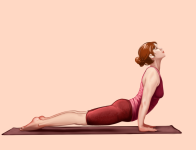
Yoga Asana of the day: Urdhva Mukha Svanasana (Upward Facing Dog)
upwardfacingdog (1).png
Illustration by @Heather (click to enlarge)

Begin lying on stomach. Feet are about one foot apart with toes pointing straight back. Place your palms on each side of your waist with fingers pointing forward (to your head). Inhale and raise your head and torso like you are going into cobra pose, but also raise your pelvis and thighs, keeping your knees off the floor. Keep your glutes and legs engaged, your weight will be on your hands and toes (the tops of your toes which are pressing into the floor, as shown in the illustration above). Press your chest forwards.

Feel a stretch through your chest, abdominals, and entire legs. Have your head back at a comfortable position for you. Your arms will be fully engaged to support your weight. Stay in this pose as long as comfortable, breathing deeply.

To release, bend your elbows and relax your legs then your torso onto the floor.

Benefits: This pose is very healthy for the spine and back, and treats sciatica and lumbago. The lungs are expanded, and blood circulation is brought to the pelvic region.
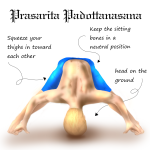
Yoga Asana of the day: Prasarita Padottanasana
Prasarita Padottanasana.png
Illustration by @Rroco88 (click to enlarge)

Stand with your feet between 4-5 feet apart, at a comfortable width for you. Inhale, place hands on waist and stretch your chest up. Exhale as you lean forward at the hips and lower your torso and head, place your hands on the floor in front of you for balance only, keep your weight entirely on your feet. Inhale, keeping hands on the floor, straighten your back and lift your chest and shoulders up to make your lower back concave; exhale and lean forward and down again, hinging at your hips. If your head is able to touch the floor, do not place bodyweight on it; keep your weight entirely on your feet.

You can remain with your palms on the floor, but if possible, hook your pointer and middle fingers and thumbs around the big toe of the corresponding foot, as shown in the illustration. Gently draw your elbows out to deepen the pose. Do not clench your glutes, but keep your thighs activated and drawing together.

Benefits: The hamstrings receive a nice stretch and the hips are open. Blood can circulate to the head, so this is beneficial for those who cannot yet perform headstand or handstand. This pose helps to increase balance.
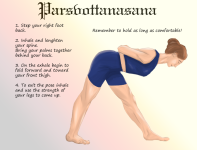
Yoga Asana of the Day: Parsvottanasana (Pyramid Pose)
Parsvottanasana (1).png
Illustration by @Ardgion (click to enlarge)

Begin standing in Mountain Pose (just standing, feet together). Roll your shoulders back, keep them relaxed yet shoulder blades close together, down from the neck (not hunched up). Bring your elbows back and if possible, press your palms together in prayer mudra behind your back. If this is not possible, then simply hold your hands together behind your back.

Step the left leg back, about 1 meter behind you. The left foot can point out slightly at a comfortable angle for you. Keep both knees activated. Inhale, make sure your shoulders and arms are in correct position, exhale and lean forwards over your right leg. If you have the flexibility you can lower your head to your knee or shin, and remain like this for as long as comfortable; if you are newer to this pose, you can now relax your arms and touch the floor with your hands (or place your hands on your leg for support), enjoying the stretch in your front hamstring.

To release, raise up by using your leg muscles firmly, step your left leg forward to meet the right, and repeat on the opposite side (right leg back).

Benefits: This asana is beneficial for the legs and hips, and gives a nice stretch to the shoulders and front of the armpit area. It helps straighten rounding or drooping shoulders. If you are able to reach your face to your knee/leg and pressing your abdominals into your thigh, then this benefits your digestive organs.
View attachment 442

The Satanic holiday feast of fire is nearing, for this reason a community event will be held! It would be great if you could be a part of this, joining the festivities with all of our brothers and sisters! If you are interested on what to expect, take a look at my previous post.

The community event will be uploaded on the 25th / 26th of January!
Yoga Asana of the day: Padmasana
padmasana (1).png
Illustration by @Heather (click to enlarge)

Start in a seated position, legs in front of you. Bend the right leg and use your hands to place the foot at the top of the left thigh, the heel should be near the navel and the sole will be facing up. Bend the left leg and use your hands to place your left foot over the right, also at the top of the thigh with the heel near the navel and the sole facing up. Remain in the position as comfortable with the back erect, then release the legs, gently move them around, and repeat with the legs reversed (left leg first).

Hands can be on knees with fingers in Gyan mudra, or palms facing up (one hand in the other) in the middle of where your feet cross.

This can be difficult at first to perform, and takes time for the knees and hips to gain the needed flexibility. Practicing the various pigeon poses and other hip-opening asanas will help prepare the hips for this pose. Never strain your knees, think of this asana as a long-term goal, even if it takes a few years of practice. In the beginning, practice with one leg at a time, with the other remaining straight out or bent, however is comfortable for your body; and then repeat on the other side.

Benefits: This asana is beneficial for those who are heavy in the Earth element or otherwise feel stagnant and heavy (Kapha); it will help you reach a lighter and higher state of meditation. Padmasana when correctly performed helps the kundalini energy reach the Crown chakra. This asana is beneficial for the knees and ankles, spine, lumbar region, abdomen.

Official Temple of Zeus Links

Back
Top