Welcome to the Temple of Zeus's Official Forums!

Welcome to the official forums for the Temple of Zeus. Please consider registering an account to join our community.

New God Rituals: Nepthys & Sekhmet NOW LIVE [Nov 17 to Nov 23]

High Priest Zevios Metathronos

Administrative High Priest
Staff member
Joined
Apr 30, 2012
Messages
4,470
Website
templeofzeus.org
Greetings to everyone in our Spiritual Family,

I am very happy to announce the Rituals for our Goddesses, Sekhmet and Nepthys. The Rituals can be found in the links on this post below. We are continuing steadfast in bringing the Gods into the forefront and the Joy of Satanas is continuing it’s holy work for the restoration of the Original Culture of Mankind.

These Rituals are both very powerful and they represent for once more a perfect veneration for these two exceptionally important Goddesses. More updates are coming soon in many areas, including JoS Donors, Rituals and everything else.

We are building together a great momentum and the greatest works that have been done for the Gods in almost 20 centuries…I want to thank everyone and I wish that more and more people will see what we have all seen: That one will always wish they should have joined this Path to Enlightenment earlier.

As with all other Rituals, except of venerating the Gods, we are also furthering our collective and individual evolution with these Rituals. Feedback is very much welcome.

Sekhmet Power Ritual:


Nepthys Power Ritual:


Below, there will be the quoted post of JG Karnonnos on both these Goddesses.

Nephthys, known in the Goetia as Bathin, is an extremely important Goddess ruling over very important processes of Life and Death. She is represented in the Egyptian pantheon in the form of Nephthys and is one of the foremost Goddesses.

It is no exaggeration to say Nephthys’ prominence in all facets of Egyptian religion was second only to Isis [Astarte]. Although Nephthys is considered to be a highly mysterious and enigmatic Goddess in the contemporary imagination due to a general lack of understanding of Her symbolism, the record of the Egyptian household, palace, temple, tomb, hieratic document, and sets of sacramental objects has Her imagery emblazoned upon them. Even as far back as the Old Kingdom, Nephthys plays a highly prominent role.

Understanding why this is the case means understanding part of the intrinsic relationship of Isis and Nephthys. The association conveys the duality of both home life and of life and death. The two Goddesses are constantly portrayed together, as Nephthys is referred to as being the sister and daughter of Isis, but additionally as the minister, the midwife, the nursing mother, and the twin of Isis.

Her name in Egyptian, Nebot-Het, means ‘the Delineation of the House’ or, more simply, ‘the Mistress of the House.’ Accordingly, Nephthys was considered to embody the inner spiritual sanctum of the home.

View attachment 4716

As a Demoness, She is married to Set. This marriage also contains several mysteries tied to the theme of the home. Following on from defeating one’s purely basic nature (one of the themes of Set), by taking a step into the boundaries of the Temple via dedication and opening the Chakras, one’s former life dies. The door to the state of ignorance is forever closed: the Temple after Initiation is the new house. Set therefore represents the husband ushering in the devotee to the new house of life, while Nephthys represents the wife of the household ready to welcome a guest.

The character of Nephthys as the ‘Ǫueen of the Dead’ or ‘Ǫueen of the Night’ in lieu of her marriage to Set is another aspect of Her powers and a different type of hieratic function relating to Her role in the Astral Realm. Both the home and death represent a private sphere of life with boundary lines often connected to motherhood, as in the symbolism of the 4th House in Astrology. Nephthys thus guides souls of the dead and projectors on the Astral which is exactly why Bathin as a Demon is said to take the practitioner to every region they wish.

Her presence was used to mark the boundary zone of temples, tombs, and other sacred places. Nephthys was therefore commonly represented on one of the two pylons (pillars) opening a temple, while Isis would be represented on the other. For any worshipper entering the temple, Isis and Nephthys would appear as the Queen of Life and the Queen of Death, respectively, to greet them. Both pylons would be aligned with the horizon.

View attachment 4717

Nephthys is understood by Egyptologists to be the Goddess of the Air. The Chakra of Venus, the Middle Chakra, is ruled by air and fire. This Chakra deals with using the astral body. The symbolism of levity and death connected to this Chakra (upon death, one’s soul exits the body through it) is in parallel to Nephthys’ rulership of the lower realms of the Astral, where many of the dead inhabit, a realm that only a few living people have access to. In Egyptian religion itself, Nephthys was often called upon to intercede and protect the souls of the dead in front of Ma'at.

In tandem, Set rules over elements of the visible world, which is a world with the majority of humanity totally blinded in ignorance. Consequently, Set and Nephthys are equated with the underworld, darkness, and the night, being one of the male and female principles of these matters in the same manner that Thoth and Seshat represent knowledge.

View attachment 4718

As the Ǫueen of the Dead, Nephthys is notably associated with Isis and Anubis, the child of Nephthys. As the child of Nephthys and Osiris’ affair in mythology, Anubis becomes the Lord of the Dead and enacts the decrees of the two Deities, carrying out all the bindings and synchronicities involved in life and death. These include the union of matters necessary for the individual to continue incarnating, like matters of race and health, a parallel to the internal processes that Nephthys creates in the soul for the ‘Second Birth.’

Many other mystical processes are associated with Nephthys who, is also called the ‘Binderess’ and ‘Nurse’ in Ancient Egyptian, as she represents many processes and alchemical matters of uniting the body and soul together for the ‘Second Birth,’ a process overseen by Isis (Astarte). In this context, the House of Nephthys does not merely represent a physical place but the body and soul itself, supported by the pillar.

She is associated often with Seshat, enacting Her decrees of reality and acting as a deputy to the Goddess of Fate.

SYMBOLS OF NEPHTHYS

View attachment 4721

Firstly, the visual symbolism of Nephthys being the identical twin to Isis shows a code involving the Ka or Astral Body, which is the ethereal ‘twin’ of the mortal living body and moulds itself to the shape of the physical body in each incarnation. Often, the most visible difference is in the colors of their clothing, with Isis wearing brighter and Nephthys wearing darker tones.

View attachment 4723

The two sister Goddesses were associated with the lamentation or wailing Ritual of Egyptian funerals. Two female priestesses (She of the Kites) were chosen free of bodily and spiritual defect to conduct this funerary rite dressed as Isis and Nephthys to ensure the soul of the deceased would continue to live peaceably.


As with Isis, Nephthys was represented by the kite and shown with wings, representing levity and the ability to project in the Astral. Unlike Isis, however, Nephthys was distinctly associated with scavenger birds and the harsh desert. This sprawling desert represented the ‘domain’ of Set and Nephthys, with Set ruling during the day and Nephthys at night.

She is portrayed with the symbol for the boundary and basket representing the active connection of the soul atop Her head, while Isis wears a throne. The basket and house components of Nephthys name show the Grail of the Solar Chakra after the dew of the Pineal Gland is activated and drips onto it. In line with this, Nephthys is associated with the spitting flame.

Nephthys’ headdress and the Hieroglyph of Nephthys’ name represent another code. If you look closely, it resembles a pillar and a pylon in itself.

View attachment 4725

In an Egyptian tomb, the King and Queen meditation is represented. Here, Isis and Nephthys anoint Amon Ra (wearing the guise of Khnum), representing the Solar Chakra and major life-force being activated via the dew of the Pineal Gland. JG NakedPluto pointed out that the heart shape inside the human head is also given as a code by the arms of the Goddesses.

View attachment 4724

As Plutarch records, both Isis and Nephthys were typically shown on the sistrum with one face of Isis on one side and the other with Nephthys’ likeness, often interchangably with Hathor. Nephthys is also occasionally shown with the crown of Ma’at adorned with two feathers, illustrating the ability for Her to intercede for the dead.

NEPHTHYS AND THE ENEMY


The Book of Revelation provides a striking parallel to how Nephthys is represented in the Goetia as the Demon named Bathin, depicted as a male knight on a pale steed.


The fourth seal is the Middle Chakra. This part of the Bible is alchemical in the nature of its curses and is intended to assert the primacy of the Hebrew 'right' over death and all its matters. The horse is symbolic of Her rulership of the Astral Realm. Another code here is that χλωρός as a word in Koine Greek means greenish-pale and is often indicative of rotting, but also reinforces the visual connection to the Middle Chakra.

Many of the representations of Death as a male figure on a horse in ‘Western’ culture thus come from this Hebrew understanding.

Note the similarity:


We of the Joy of Satanas greet the Goddess Nephthys warmly as our own understanding increases, particularly the understanding of life and death in full gravity. May Nephthys return to Her prominent and correct place in guiding humans in life as much as the role She eternally plays in helping the dead.

SOURCES

Isis and Nephthys as Wailing Women, Numen (Vol. 5), C.J. Bleeker

Special thanks to:
[JG] Power of Justice (editing)
[JG] NakedPluto and Arcadia (research)
Sekhmet is known as the personification of Power as a Goddess. Represented in Egypt as a fierce lioness, Sekhmet rules over war, destruction, extreme rage, discord, medicine, plagues, and motherhood.

She is often represented with the Pharaoh as a protective deity during times of war and invoked to protect the Pharaoh during times of strife. Sekhmet is used as an aegis on objects signifying protection, and many of the facets of Sekhmet relate to the willingness to destroy in creation. Along with Her son Maahes, the God Khepu, and the Goddess Neith, Sekhmet is the most prolific war Deity in Egypt. To this day, door knockers are often adorned with lion or lioness figures as a vestige of Her influence.

View attachment 4709

Her cult was centered in Leontopolis, or ‘the City of Lions,’ called Taremu (Place of the Fish) by the Egyptians, the latter name involving one of Azazel’s mysteries. Bastet’s cult also was a major focus of this city, which hosted a gigantic festival. Sekhmet, as the consort of Ptah, was also the patron Goddess of Memphis, the most sprawling city in the world at that point, meaning Her importance to the Egyptian state was supreme.

Sekhmet in day-to-day life is represented as the destroyer of lies and seemingly paradoxically the creator of strife, including rivalry and competition for further development. She was invoked by rulers to uphold their oaths correctly and to be held accountable to the Gods. If the Pharaoh did not rule Egypt with wisdom, She would use terrifying power to ruin him. Likewise, plagues were associated with Her judgement of the land.

For surgeons, they would pray to Sekhmet prior to conducting surgery, as destruction was seen as a necessary act to get rid of disease. She was also associated with relieving epidemics and plagues, particularly those on a national level, but in day-to-day life, any disease afflicting children. Mothers would often pray to Sekhmet to relieve diseases such as smallpox. The karmic nature of disease was tied to Sekhmet’s attributes as Punitrix.

This is not the only signification, as many of Her functions relate to the deepest aspects of the occult. Sekhmet represents the powers of the Kundalini in its latent and feminine form as a dispositor of the Great Serpent, Satan. Her name, derived from ‘sakhemu’ or serpent power in Ancient Egyptian, represents this mysterious power. The sakhemu form of a person was meant to represent their idealized, perfected, and truly human state, in other words, the potential for what they can become.

In Egyptian sources, Sekhmet is known for her fiery breath, boiling like white-hot coals, and dwelling in the depths. She was also associated with struck white flint, inflamed boils, flashing visions and other visual codes relating to crisis.

Being the Destructrix of Lies and an incarnation of the Eye of Re, Sekhmet is a deputy of Azazel and enforces His decrees relating to Truth, Wisdom, and Understanding as listed in the Satanic Virtues, along with enforcing decrees on all matters related to Him. In the primary story involving Sekhmet, the Eye of Re sent Hathor down to Egypt to punish the impure humans who followed Set into the desert and disobeyed the Gods. Sated with blood from destroying the impure, Hathor transformed into Sekhmet. Several other Goddesses also interchangeably transform into Sekhmet.

View attachment 4715

This primary mythology involving Sekhmet indicates the necessity of purifying the bad karma and dross (represented in the iniquitous humans) of the Chakras (Gods), aura, mind, and soul before the Kundalini can ascend properly in the Initiate and to have enough energy to be able to attempt this process. If achieved, the Serpent passes through each of the cleansed Chakras (Gods) before reaching its apex point in the Crown Chakra.

Her bloodlust is only abated when Thoth, with words of power, directs Her back to the pool of beer stained with red ochre (the Base Chakra) in preparation for the true rising, where She is reunified with Re and perfected, an always-occurring process with Kundalini in its final stages.

The point of the visual codes in this story is to point out that if a purified soul and mind are not achieved, chaos and peril will result with any attempted rising of this imperceptibly powerful force, a force that can drive unprepared individuals insane or even kill them. Sekhmet’s violent symbolism in slaughtering humans serves as a vivid symbol. If the powers of ignorance are not crushed in accordance with the Laws of Ma’at, the soul will succumb to the negative manifestations of the domain of Set and fall under the forces of the material realm.

Sekhmet also represents the importance of harmony and balance in this process, as decreed by Azazel and Astarte. Physically, it is for this reason that yoga and breathwork are pursued by the Initiate to direct the serpent properly. Thoth using the words of power shows how vibration can affect the soul and alter a precarious path.

If the serpent is able to ascend with little trouble and is in synchronicity with Set’s 144 Laws (the 144,000 Nadis of the soul), the powers of both Gods become an unstoppable force for ascension in full cooperation. Set erects the active serpent of His Father, pushing it towards Eden.

All of these allegories also convey the importance of using proper pace in advancement and not forcing development—rushing can result in burnout or destruction, inviting the wrath of Sekhmet, the magnetic force of the serpent.

In Egypt, Sekhmet has the powers of the Black Land, evocative of Her pulling on and materializing the realm of expanded infinite consciousness (ruled by Bastet). The two Goddesses were sometimes fused into one entity by the Egyptians for this reason.

In line with accessing the powers of the Kundalini, Sekhmet also represents the pulling together (magnetism) of all the bodies to attain Godhood and the invincible, activated aspect of the serpentine power of the soul that fuels the ability to continue incarnating. In this regard, she stands in contrast to Nephthys, who binds together the preliminary methods for ascension.

That is another reason Sekhmet is portrayed so commonly with the Pharaohs or God-Men of Egypt: as the symbolic wife of the Pharaoh, She stands as a symbol of their divine ascension when they are righteous. Her marriage to Ptah likewise shows the connection of the Pineal Gland and its role as the center of occult power in the brain in relation to the serpent, among other codes.

Sekhmet was also associated with prominent individuals associated with ascension cults such as Imhotep who came to be recognised as Her son. In this role, She stands as the fierce Guardian of the philosopher and the initiate.

SYMBOLS OF SEKHMET

View attachment 4710

Sekhmet is represented with the head of a lioness. The visage of the lioness demonstrates Her fierce commitment to protecting the divine order of Ma’at. Another element commonly used in Sekhmet’s imagery is the sun disk adorned with the serpent or uraeus. This is not just a symbol of the serpent enlightenment but a reminder of Her being a dispenser of Re’s powers and for rulers to exercise their power wisely.

The symbol of the lioness also reveals several things about the nature of the feminine in tandem with the lion. Sekhmet represents the principle that these forces require a rigid counterpart. If a lion is a weakling or a corrupted leader, it is inevitable the lionesses will leave for a new pride. This is one of the inevitable dark sides of nature and the magnetic principle.

Yet Sekhmet also serves as a warning for both men and women alike to use wisdom and virtue in exercising their relations with one another, lest they be subjected to Set’s Laws of Nature and be destroyed. Too much imbalance in one direction will lead to the entropic destruction of a civilized state of affairs, as men and women are ideally meant to cooperate in a balance that is always difficult to maintain when one sex cannot understand the other. Likewise, any citizen will abandon rulers who do not exhibit strength.

She is also depicted with the Was—a long, thin staff associated with the narrow sushumna channel of the soul, often adorned with a lotus representing the Crown and the union with the Mother Goddess. The right fist grasping this staff, however, also signifies the ruling power of Beelzebul and His dominion over the visible universe.

View attachment 4714

As Isis and Nephthys are portrayed together constantly, so are Sekhmet and Bastet equated. One major reason why Sekhmet is typically represented as a lioness while Bastet is represented as a domestic cat involves a certain delineation of their powers. Bastet, the Ǫueen of All Powers, represents the latent powers as they exist in every advanced being, while Sekhmet represents their powerful and ferocious activation.

Bastet is also equated with the night and the Moon, while Sekhmet is equated with the day and the Sun. Both cats and lions are crepuscular animals. The lioness and tigress are the most fearsome of all female animals and represent the apex of feline evolution and wildness, while cats represent sophistication and contemplation among animals kept by humans.

Occasionally, however, Bastet is represented as a lioness and Sekhmet as a cat, confusing Egyptologists. Sekhmet is sometimes additionally represented by scorpions, indicating the association with tenacity and vengeance.

View attachment 4713

Her statues were copiously produced as protective items during times of disease or crisis. In just the past few years, Egyptologists have discovered hundreds of statues of Sekhmet, crafted with such striking skill and synchronicity that conventional historians cannot explain how they were made. They were made from red diorite (associated with protection) and commonly had a black slate-like color with a reflective finish.

We honor the mighty and powerful Sekhmet through participating in Her Ritual. Life often being struggle and war means we are fortuitous to be under the awe-inspiring aegis of Sekhmet as a growing and thriving community. May Her powers protect everyone in the Joy of Satanas and ensure our lustrous pathway to ascension.

SOURCES

Sekhmet and Bastet – The Feline Powers of Egypt, Lesley Jackson

The Goddess Sekhmet, Robert Masters

Special thanks to:
[JG] Power of Justice (editing)
Arcadia (research)

-High Priest Zevios Metathronos
 
Last edited:
Sekhmet is known as the personification of Power as a Goddess. Represented in Egypt as a fierce lioness, Sekhmet rules over war, destruction, extreme rage, discord, medicine, plagues, and motherhood.

She is often represented with the Pharaoh as a protective deity during times of war and invoked to protect the Pharaoh during times of strife. Sekhmet is used as an aegis on objects signifying protection, and many of the facets of Sekhmet relate to the willingness to destroy in creation. Along with Her son Maahes, the God Khepu, and the Goddess Neith, Sekhmet is the most prolific war Deity in Egypt. To this day, door knockers are often adorned with lion or lioness figures as a vestige of Her influence.

9cc9de558c4fb090eff39755518c7be2.jpg

Her cult was centered in Leontopolis, or ‘the City of Lions,’ called Taremu (Place of the Fish) by the Egyptians, the latter name involving one of Azazel’s mysteries. Bastet’s cult also was a major focus of this city, which hosted a gigantic festival. Sekhmet, as the consort of Ptah, was also the patron Goddess of Memphis, the most sprawling city in the world at that point, meaning Her importance to the Egyptian state was supreme.

Sekhmet in day-to-day life is represented as the destroyer of lies and seemingly paradoxically the creator of strife, including rivalry and competition for further development. She was invoked by rulers to uphold their oaths correctly and to be held accountable to the Gods. If the Pharaoh did not rule Egypt with wisdom, She would use terrifying power to ruin him. Likewise, plagues were associated with Her judgement of the land.

For surgeons, they would pray to Sekhmet prior to conducting surgery, as destruction was seen as a necessary act to get rid of disease. She was also associated with relieving epidemics and plagues, particularly those on a national level, but in day-to-day life, any disease afflicting children. Mothers would often pray to Sekhmet to relieve diseases such as smallpox. The karmic nature of disease was tied to Sekhmet’s attributes as Punitrix.

This is not the only signification, as many of Her functions relate to the deepest aspects of the occult. Sekhmet represents the powers of the Kundalini in its latent and feminine form as a dispositor of the Great Serpent, Satan. Her name, derived from ‘sakhemu’ or serpent power in Ancient Egyptian, represents this mysterious power. The sakhemu form of a person was meant to represent their idealized, perfected, and truly human state, in other words, the potential for what they can become.

In Egyptian sources, Sekhmet is known for her fiery breath, boiling like white-hot coals, and dwelling in the depths. She was also associated with struck white flint, inflamed boils, flashing visions and other visual codes relating to crisis.

Being the Destructrix of Lies and an incarnation of the Eye of Re, Sekhmet is a deputy of Azazel and enforces His decrees relating to Truth, Wisdom, and Understanding as listed in the Satanic Virtues, along with enforcing decrees on all matters related to Him. In the primary story involving Sekhmet, the Eye of Re sent Hathor down to Egypt to punish the impure humans who followed Set into the desert and disobeyed the Gods. Sated with blood from destroying the impure, Hathor transformed into Sekhmet. Several other Goddesses also interchangeably transform into Sekhmet.

sekhmet.jpg

This primary mythology involving Sekhmet indicates the necessity of purifying the bad karma and dross (represented in the iniquitous humans) of the Chakras (Gods), aura, mind, and soul before the Kundalini can ascend properly in the Initiate and to have enough energy to be able to attempt this process. If achieved, the Serpent passes through each of the cleansed Chakras (Gods) before reaching its apex point in the Crown Chakra.

Her bloodlust is only abated when Thoth, with words of power, directs Her back to the pool of beer stained with red ochre (the Base Chakra) in preparation for the true rising, where She is reunified with Re and perfected, an always-occurring process with Kundalini in its final stages.

The point of the visual codes in this story is to point out that if a purified soul and mind are not achieved, chaos and peril will result with any attempted rising of this imperceptibly powerful force, a force that can drive unprepared individuals insane or even kill them. Sekhmet’s violent symbolism in slaughtering humans serves as a vivid symbol. If the powers of ignorance are not crushed in accordance with the Laws of Ma’at, the soul will succumb to the negative manifestations of the domain of Set and fall under the forces of the material realm.

Sekhmet also represents the importance of harmony and balance in this process, as decreed by Azazel and Astarte. Physically, it is for this reason that yoga and breathwork are pursued by the Initiate to direct the serpent properly. Thoth using the words of power shows how vibration can affect the soul and alter a precarious path.

If the serpent is able to ascend with little trouble and is in synchronicity with Set’s 144 Laws (the 144,000 Nadis of the soul), the powers of both Gods become an unstoppable force for ascension in full cooperation. Set erects the active serpent of His Father, pushing it towards Eden.

All of these allegories also convey the importance of using proper pace in advancement and not forcing development—rushing can result in burnout or destruction, inviting the wrath of Sekhmet, the magnetic force of the serpent.

In Egypt, Sekhmet has the powers of the Black Land, evocative of Her pulling on and materializing the realm of expanded infinite consciousness (ruled by Bastet). The two Goddesses were sometimes fused into one entity by the Egyptians for this reason.

In line with accessing the powers of the Kundalini, Sekhmet also represents the pulling together (magnetism) of all the bodies to attain Godhood and the invincible, activated aspect of the serpentine power of the soul that fuels the ability to continue incarnating. In this regard, she stands in contrast to Nephthys, who binds together the preliminary methods for ascension.

That is another reason Sekhmet is portrayed so commonly with the Pharaohs or God-Men of Egypt: as the symbolic wife of the Pharaoh, She stands as a symbol of their divine ascension when they are righteous. Her marriage to Ptah likewise shows the connection of the Pineal Gland and its role as the center of occult power in the brain in relation to the serpent, among other codes.

Sekhmet was also associated with prominent individuals associated with ascension cults such as Imhotep who came to be recognised as Her son. In this role, She stands as the fierce Guardian of the philosopher and the initiate.

SYMBOLS OF SEKHMET

Sekhmet.svg.png


Sekhmet is represented with the head of a lioness. The visage of the lioness demonstrates Her fierce commitment to protecting the divine order of Ma’at. Another element commonly used in Sekhmet’s imagery is the sun disk adorned with the serpent or uraeus. This is not just a symbol of the serpent enlightenment but a reminder of Her being a dispenser of Re’s powers and for rulers to exercise their power wisely.

The symbol of the lioness also reveals several things about the nature of the feminine in tandem with the lion. Sekhmet represents the principle that these forces require a rigid counterpart. If a lion is a weakling or a corrupted leader, it is inevitable the lionesses will leave for a new pride. This is one of the inevitable dark sides of nature and the magnetic principle.

Yet Sekhmet also serves as a warning for both men and women alike to use wisdom and virtue in exercising their relations with one another, lest they be subjected to Set’s Laws of Nature and be destroyed. Too much imbalance in one direction will lead to the entropic destruction of a civilized state of affairs, as men and women are ideally meant to cooperate in a balance that is always difficult to maintain when one sex cannot understand the other. Likewise, any citizen will abandon rulers who do not exhibit strength.

She is also depicted with the Was—a long, thin staff associated with the narrow sushumna channel of the soul, often adorned with a lotus representing the Crown and the union with the Mother Goddess. The right fist grasping this staff, however, also signifies the ruling power of Beelzebul and His dominion over the visible universe.

image-asset.jpeg

As Isis and Nephthys are portrayed together constantly, so are Sekhmet and Bastet equated. One major reason why Sekhmet is typically represented as a lioness while Bastet is represented as a domestic cat involves a certain delineation of their powers. Bastet, the Ǫueen of All Powers, represents the latent powers as they exist in every advanced being, while Sekhmet represents their powerful and ferocious activation.

Bastet is also equated with the night and the Moon, while Sekhmet is equated with the day and the Sun. Both cats and lions are crepuscular animals. The lioness and tigress are the most fearsome of all female animals and represent the apex of feline evolution and wildness, while cats represent sophistication and contemplation among animals kept by humans.

Occasionally, however, Bastet is represented as a lioness and Sekhmet as a cat, confusing Egyptologists. Sekhmet is sometimes additionally represented by scorpions, indicating the association with tenacity and vengeance.

egyptian-goddess-sekhmet-granite-statues.jpg

Her statues were copiously produced as protective items during times of disease or crisis. In just the past few years, Egyptologists have discovered hundreds of statues of Sekhmet, crafted with such striking skill and synchronicity that conventional historians cannot explain how they were made. They were made from red diorite (associated with protection) and commonly had a black slate-like color with a reflective finish.

We honor the mighty and powerful Sekhmet through participating in Her Ritual. Life often being struggle and war means we are fortuitous to be under the awe-inspiring aegis of Sekhmet as a growing and thriving community. May Her powers protect everyone in the Joy of Satanas and ensure our lustrous pathway to ascension.

SOURCES

Sekhmet and Bastet – The Feline Powers of Egypt, Lesley Jackson

The Goddess Sekhmet, Robert Masters

Special thanks to:
[JG] Power of Justice (editing)
Arcadia (research)
 
Last edited:
Nephthys, known in the Goetia as Bathin, is an extremely important Goddess ruling over very important processes of Life and Death. She is represented in the Egyptian pantheon in the form of Nephthys and is one of the foremost Goddesses.

It is no exaggeration to say Nephthys’ prominence in all facets of Egyptian religion was second only to Isis [Astarte]. Although Nephthys is considered to be a highly mysterious and enigmatic Goddess in the contemporary imagination due to a general lack of understanding of Her symbolism, the record of the Egyptian household, palace, temple, tomb, hieratic document, and sets of sacramental objects has Her imagery emblazoned upon them. Even as far back as the Old Kingdom, Nephthys plays a highly prominent role.

Understanding why this is the case means understanding part of the intrinsic relationship of Isis and Nephthys. The association conveys the duality of both home life and of life and death. The two Goddesses are constantly portrayed together, as Nephthys is referred to as being the sister and daughter of Isis, but additionally as the minister, the midwife, the nursing mother, and the twin of Isis.

Her name in Egyptian, Nebot-Het, means ‘the Delineation of the House’ or, more simply, ‘the Mistress of the House.’ Accordingly, Nephthys was considered to embody the inner spiritual sanctum of the home.

unnamed (1).jpg

As a Demoness, She is married to Set. This marriage also contains several mysteries tied to the theme of the home. Following on from defeating one’s purely basic nature (one of the themes of Set), by taking a step into the boundaries of the Temple via dedication and opening the Chakras, one’s former life dies. The door to the state of ignorance is forever closed: the Temple after Initiation is the new house. Set therefore represents the husband ushering in the devotee to the new house of life, while Nephthys represents the wife of the household ready to welcome a guest.

The character of Nephthys as the ‘Ǫueen of the Dead’ or ‘Ǫueen of the Night’ in lieu of her marriage to Set is another aspect of Her powers and a different type of hieratic function relating to Her role in the Astral Realm. Both the home and death represent a private sphere of life with boundary lines often connected to motherhood, as in the symbolism of the 4th House in Astrology. Nephthys thus guides souls of the dead and projectors on the Astral which is exactly why Bathin as a Demon is said to take the practitioner to every region they wish.

Her presence was used to mark the boundary zone of temples, tombs, and other sacred places. Nephthys was therefore commonly represented on one of the two pylons (pillars) opening a temple, while Isis would be represented on the other. For any worshipper entering the temple, Isis and Nephthys would appear as the Queen of Life and the Queen of Death, respectively, to greet them. Both pylons would be aligned with the horizon.

Goddess-Nephthys-with-her-outspr.jpg

Nephthys is understood by Egyptologists to be the Goddess of the Air. The Chakra of Venus, the Middle Chakra, is ruled by air and fire. This Chakra deals with using the astral body. The symbolism of levity and death connected to this Chakra (upon death, one’s soul exits the body through it) is in parallel to Nephthys’ rulership of the lower realms of the Astral, where many of the dead inhabit, a realm that only a few living people have access to. In Egyptian religion itself, Nephthys was often called upon to intercede and protect the souls of the dead in front of Ma'at.

In tandem, Set rules over elements of the visible world, which is a world with the majority of humanity totally blinded in ignorance. Consequently, Set and Nephthys are equated with the underworld, darkness, and the night, being one of the male and female principles of these matters in the same manner that Thoth and Seshat represent knowledge.

ancient-egyptian-god-anubis-goddess-isis-and-nephthys-twin-sisters-lamentations-protecting-th...jpeg

As the Ǫueen of the Dead, Nephthys is notably associated with Isis and Anubis, the child of Nephthys. As the child of Nephthys and Osiris’ affair in mythology, Anubis becomes the Lord of the Dead and enacts the decrees of the two Deities, carrying out all the bindings and synchronicities involved in life and death. These include the union of matters necessary for the individual to continue incarnating, like matters of race and health, a parallel to the internal processes that Nephthys creates in the soul for the ‘Second Birth.’

Many other mystical processes are associated with Nephthys who, is also called the ‘Binderess’ and ‘Nurse’ in Ancient Egyptian, as she represents many processes and alchemical matters of uniting the body and soul together for the ‘Second Birth,’ a process overseen by Isis (Astarte). In this context, the House of Nephthys does not merely represent a physical place but the body and soul itself, supported by the pillar.

She is associated often with Seshat, enacting Her decrees of reality and acting as a deputy to the Goddess of Fate.

SYMBOLS OF NEPHTHYS

Nepthys.svg.png

Firstly, the visual symbolism of Nephthys being the identical twin to Isis shows a code involving the Ka or Astral Body, which is the ethereal ‘twin’ of the mortal living body and moulds itself to the shape of the physical body in each incarnation. Often, the most visible difference is in the colors of their clothing, with Isis wearing brighter and Nephthys wearing darker tones.

isis-nephthys.png


The two sister Goddesses were associated with the lamentation or wailing Ritual of Egyptian funerals. Two female priestesses (She of the Kites) were chosen free of bodily and spiritual defect to conduct this funerary rite dressed as Isis and Nephthys to ensure the soul of the deceased would continue to live peaceably.

A close study of this material must lead to the conclusion that the religion of the ancient Egyptians consisted mainly in the performance of certain sacred actions, from which religious salvation was expected. The effect of these cultic actions depended on their immanent mythical value. To the Egyptian mind, religiosity was not bound up with the knowledge of a certain doctrine but with the celebration of certain rites that were somehow rooted in myth.

Numen (Vol. 5), C.J. Breeker
As with Isis, Nephthys was represented by the kite and shown with wings, representing levity and the ability to project in the Astral. Unlike Isis, however, Nephthys was distinctly associated with scavenger birds and the harsh desert. This sprawling desert represented the ‘domain’ of Set and Nephthys, with Set ruling during the day and Nephthys at night.

She is portrayed with the symbol for the boundary and basket representing the active connection of the soul atop Her head, while Isis wears a throne. The basket and house components of Nephthys name show the Grail of the Solar Chakra after the dew of the Pineal Gland is activated and drips onto it. In line with this, Nephthys is associated with the spitting flame.

Nephthys’ headdress and the Hieroglyph of Nephthys’ name represent another code. If you look closely, it resembles a pillar and a pylon in itself.

12660.jpg


In an Egyptian tomb, the King and Queen meditation is represented. Here, Isis and Nephthys anoint Amon Ra (wearing the guise of Khnum), representing the Solar Chakra and major life-force being activated via the dew of the Pineal Gland. JG NakedPluto pointed out that the heart shape inside the human head is also given as a code by the arms of the Goddesses.

upper-part-of-sistrum-v0-018y5jmcburc1.jpg

As Plutarch records, both Isis and Nephthys were typically shown on the sistrum with one face of Isis on one side and the other with Nephthys’ likeness, often interchangably with Hathor. Nephthys is also occasionally shown with the crown of Ma’at adorned with two feathers, illustrating the ability for Her to intercede for the dead.

SOURCES

Isis and Nephthys as Wailing Women, Numen (Vol. 5), C.J. Bleeker

Special thanks to:
[JG] Power of Justice (editing)
[JG] NakedPluto and Arcadia (research)
 
Nephthys, known in the Goetia as Bathin, is an extremely important Goddess ruling over very important processes of Life and Death...
Thanks to everyone who contributed to these enlightening posts! Excellent as always.
 
Greetings to everyone in our Spiritual Family,

I am very happy to announce the Rituals for our Goddesses, Sekhmet and Nepthys. The Rituals can be found in the links on this post below. We are continuing steadfast in bringing the Gods into the forefront and the Joy of Satanas is continuing it’s holy work for the restoration of the Original Culture of Mankind.

These Rituals are both very powerful and they represent for once more a perfect veneration for these two exceptionally important Goddesses. More updates are coming soon in many areas, including JoS Donors, Rituals and everything else.

We are building together a great momentum and the greatest works that have been done for the Gods in almost 20 centuries…I want to thank everyone and I wish that more and more people will see what we have all seen: That one will always wish they should have joined this Path to Enlightenment earlier.

As with all other Rituals, except of venerating the Gods, we are also furthering our collective and individual evolution with these Rituals. Feedback is very much welcome.

Sekhmet Power Ritual:


Nepthys Power Ritual:


Below, there will be the quoted post of JG Karnonnos on both these Goddesses.

__

-High Priest Zevios Metathronos
Thank you Master Cobra for these wonderful rituals.

By the way, I believe it would be nice if the links wouldn´t turn to white when hovering over them. It is somehow disturbing, I think.
 
Thank HPHC you for these rituals and JG Karnonnos for the information on these two Goddesses.

the energy of Sekhmet's ritual was very substantial yet comforting and was felt in my full body somewhat like a mixture of the energy of Alastor's ritual and Raum's

The energy of Nepthys was very intense it honestly reminded me a lot of a mixture of Seshat's, Satan's and Astarte's energy, I actually believe it also felt extremely lunar in nature, perhaps she has rulership over the Moon? Her energy was focused across and throughout my entire head like a cool wave somewhat tingly wave.

Both these rituals were very beautiful.
 
Thank you, High Priest Zevios for the rituals, as well as your effort, I am eternally grateful for all of your incredibly hard work and dedication.

A huge thanks to JG Karnonnos, JG NakedPluto, JG Power of Justice and Arcadia for the knowledge and impressive research regarding our wonderful and beautiful Goddesses, Nepthys and Sekhmet.

It is a true blessing to be in this place, to be able to learn, connect and show the appreciation to our wonderful Gods.

Hail Satanas!
Hail Sekhmet!
Hail Nepthys!
 
Greetings to everyone in our Spiritual Family,

I am very happy to announce the Rituals for our Goddesses, Sekhmet and Nepthys. The Rituals can be found in the links on this post below. We are continuing steadfast in bringing the Gods into the forefront and the Joy of Satanas is continuing it’s holy work for the restoration of the Original Culture of Mankind.

These Rituals are both very powerful and they represent for once more a perfect veneration for these two exceptionally important Goddesses. More updates are coming soon in many areas, including JoS Donors, Rituals and everything else.

We are building together a great momentum and the greatest works that have been done for the Gods in almost 20 centuries…I want to thank everyone and I wish that more and more people will see what we have all seen: That one will always wish they should have joined this Path to Enlightenment earlier.

As with all other Rituals, except of venerating the Gods, we are also furthering our collective and individual evolution with these Rituals. Feedback is very much welcome.

Sekhmet Power Ritual:


Nepthys Power Ritual:


Below, there will be the quoted post of JG Karnonnos on both these Goddesses.

__

-High Priest Zevios Metathronos
Sekhmet is one of all time most favorite Goddesses! I’m am so hyped for her ritual! Lady Nephthys is awesome too! Thank you for all you do HPHC, you’re a hero!
 
\nGreetings to everyone in our Spiritual Family,\n\nI am very happy to announce the Rituals for our Goddesses, Sekhmet and Nepthys. The Rituals can be found in the links on this post below. We are continuing steadfast in bringing the Gods into the forefront and the Joy of Satanas is continuing it’s holy work for the restoration of the Original Culture of Mankind.\n\nThese Rituals are both very powerful and they represent for once more a perfect veneration for these two exceptionally important Goddesses. More updates are coming soon in many areas, including JoS Donors, Rituals and everything else.\n\nWe are building together a great momentum and the greatest works that have been done for the Gods in almost 20 centuries…I want to thank everyone and I wish that more and more people will see what we have all seen: That one will always wish they should have joined this Path to Enlightenment earlier.\n\nAs with all other Rituals, except of venerating the Gods, we are also furthering our collective and individual evolution with these Rituals. Feedback is very much welcome.\n\nSekhmet Power Ritual:\n\n\n\nNepthys Power Ritual:\n\n\n\nBelow, there will be the quoted post of JG Karnonnos on both these Goddesses.\n\n__\n\n-High Priest Zevios Metathronos\n
\nThank you so much for this!\n\nI have never done a Power Ritual before as I could say I am relatively new (only one year). Is there a way of knowing if I am ready to do a Power Ritual? I want to make sure that I am able to give my all and not mess anything up and do something negative. Thank you again HP Zevios Metathronos!! HAIL SATAN!!
 
Last edited by a moderator:
Greetings to everyone in our Spiritual Family,

I am very happy to announce the Rituals for our Goddesses, Sekhmet and Nepthys. The Rituals can be found in the links on this post below. We are continuing steadfast in bringing the Gods into the forefront and the Joy of Satanas is continuing it’s holy work for the restoration of the Original Culture of Mankind.

These Rituals are both very powerful and they represent for once more a perfect veneration for these two exceptionally important Goddesses. More updates are coming soon in many areas, including JoS Donors, Rituals and everything else.

We are building together a great momentum and the greatest works that have been done for the Gods in almost 20 centuries…I want to thank everyone and I wish that more and more people will see what we have all seen: That one will always wish they should have joined this Path to Enlightenment earlier.

As with all other Rituals, except of venerating the Gods, we are also furthering our collective and individual evolution with these Rituals. Feedback is very much welcome.

Sekhmet Power Ritual:


Nepthys Power Ritual:


Below, there will be the quoted post of JG Karnonnos on both these Goddesses.

__

-High Priest Zevios Metathronos
Thanks this is a awesome Rituals
I enjoyed doing them
Thanks I love the information
About them
Hail Satanas

Hail Sekmet
Hail Nepthys
 
Overwhelming power, seriously calming almost put me back to sleep. Feels metallic too, heavily felt on my aura like earth but metallic. My pineal gland really felt it just like my third eye is always affected in Bastet's Power Ritual. I like the feeling,
Hail Sekhmett
 
Grand news thank you HP Zevios Metathronos and JG Karnonnos for the rituals and invaluable information. The knowledge about our Gods has not been so well documented and detailed for thousands of years, this is history in the making!
 
Sekhmet is known as the personification of Power as a Goddess. Represented in Egypt as a fierce lioness, Sekhmet rules over war, destruction, extreme rage, discord, medicine, plagues, and motherhood.

She is often represented with the Pharaoh as a protective deity during times of war and invoked to protect the Pharaoh during times of strife. Sekhmet is used as an aegis on objects signifying protection, and many of the facets of Sekhmet relate to the willingness to destroy in creation. Along with Her son Maahes, the God Khepu, and the Goddess Neith, Sekhmet is the most prolific war Deity in Egypt. To this day, door knockers are often adorned with lion or lioness figures as a vestige of Her influence.

View attachment 4709

Her cult was centered in Leontopolis, or ‘the City of Lions,’ called Taremu (Place of the Fish) by the Egyptians, the latter name involving one of Azazel’s mysteries. Bastet’s cult also was a major focus of this city, which hosted a gigantic festival. Sekhmet, as the consort of Ptah, was also the patron Goddess of Memphis, the most sprawling city in the world at that point, meaning Her importance to the Egyptian state was supreme.

Sekhmet in day-to-day life is represented as the destroyer of lies and seemingly paradoxically the creator of strife, including rivalry and competition for further development. She was invoked by rulers to uphold their oaths correctly and to be held accountable to the Gods. If the Pharaoh did not rule Egypt with wisdom, She would use terrifying power to ruin him. Likewise, plagues were associated with Her judgement of the land.

For surgeons, they would pray to Sekhmet prior to conducting surgery, as destruction was seen as a necessary act to get rid of disease. She was also associated with relieving epidemics and plagues, particularly those on a national level, but in day-to-day life, any disease afflicting children. Mothers would often pray to Sekhmet to relieve diseases such as smallpox. The karmic nature of disease was tied to Sekhmet’s attributes as Punitrix.

This is not the only signification, as many of Her functions relate to the deepest aspects of the occult. Sekhmet represents the powers of the Kundalini in its latent and feminine form as a dispositor of the Great Serpent, Satan. Her name, derived from ‘sakhemu’ or serpent power in Ancient Egyptian, represents this mysterious power. The sakhemu form of a person was meant to represent their idealized, perfected, and truly human state, in other words, the potential for what they can become.

In Egyptian sources, Sekhmet is known for her fiery breath, boiling like white-hot coals, and dwelling in the depths. She was also associated with struck white flint, inflamed boils, flashing visions and other visual codes relating to crisis.

Being the Destructrix of Lies and an incarnation of the Eye of Re, Sekhmet is a deputy of Azazel and enforces His decrees relating to Truth, Wisdom, and Understanding as listed in the Satanic Virtues, along with enforcing decrees on all matters related to Him. In the primary story involving Sekhmet, the Eye of Re sent Hathor down to Egypt to punish the impure humans who followed Set into the desert and disobeyed the Gods. Sated with blood from destroying the impure, Hathor transformed into Sekhmet. Several other Goddesses also interchangeably transform into Sekhmet.

View attachment 4715

This primary mythology involving Sekhmet indicates the necessity of purifying the bad karma and dross (represented in the iniquitous humans) of the Chakras (Gods), aura, mind, and soul before the Kundalini can ascend properly in the Initiate and to have enough energy to be able to attempt this process. If achieved, the Serpent passes through each of the cleansed Chakras (Gods) before reaching its apex point in the Crown Chakra.

Her bloodlust is only abated when Thoth, with words of power, directs Her back to the pool of beer stained with red ochre (the Base Chakra) in preparation for the true rising, where She is reunified with Re and perfected, an always-occurring process with Kundalini in its final stages.

The point of the visual codes in this story is to point out that if a purified soul and mind are not achieved, chaos and peril will result with any attempted rising of this imperceptibly powerful force, a force that can drive unprepared individuals insane or even kill them. Sekhmet’s violent symbolism in slaughtering humans serves as a vivid symbol. If the powers of ignorance are not crushed in accordance with the Laws of Ma’at, the soul will succumb to the negative manifestations of the domain of Set and fall under the forces of the material realm.

Sekhmet also represents the importance of harmony and balance in this process, as decreed by Azazel and Astarte. Physically, it is for this reason that yoga and breathwork are pursued by the Initiate to direct the serpent properly. Thoth using the words of power shows how vibration can affect the soul and alter a precarious path.

If the serpent is able to ascend with little trouble and is in synchronicity with Set’s 144 Laws (the 144,000 Nadis of the soul), the powers of both Gods become an unstoppable force for ascension in full cooperation. Set erects the actiive serpent of His Father, pushing it towards Eden.

All of these allegories also convey the importance of using proper pace in advancement and not forcing development—rushing can result in burnout or destruction, inviting the wrath of Sekhmet, the magnetic force of the serpent.

In Egypt, Sekhmet has the powers of the Black Land, evocative of Her pulling on and materializing the realm of expanded infinite consciousness (ruled by Bastet). The two Goddesses were sometimes fused into one entity by the Egyptians for this reason.

In line with accessing the powers of the Kundalini, Sekhmet also represents the pulling together (magnetism) of all the bodies to attain Godhood and the invincible, activated aspect of the serpentine power of the soul that fuels the ability to continue incarnating. In this regard, she stands in contrast to Nephthys, who binds together the preliminary methods for ascension.

That is another reason Sekhmet is portrayed so commonly with the Pharaohs or God-Men of Egypt: as the symbolic wife of the Pharaoh, She stands as a symbol of their divine ascension when they are righteous. Her marriage to Ptah likewise shows the connection of the Pineal Gland and its role as the center of occult power in the brain in relation to the serpent, among other codes.

Sekhmet was also associated with prominent individuals associated with ascension cults such as Imhotep who came to be recognised as Her son. In this role, She stands as the fierce Guardian of the philosopher and the initiate.

SYMBOLS OF SEKHMET

View attachment 4710

Sekhmet is represented with the head of a lioness. The visage of the lioness demonstrates Her fierce commitment to protecting the divine order of Ma’at. Another element commonly used in Sekhmet’s imagery is the sun disk adorned with the serpent or uraeus. This is not just a symbol of the serpent enlightenment but a reminder of Her being a dispenser of Re’s powers and for rulers to exercise their power wisely.

The symbol of the lioness also reveals several things about the nature of the feminine in tandem with the lion. Sekhmet represents the principle that these forces require a rigid counterpart. If a lion is a weakling or a corrupted leader, it is inevitable the lionesses will leave for a new pride. This is one of the inevitable dark sides of nature and the magnetic principle.

Yet Sekhmet also serves as a warning for both men and women alike to use wisdom and virtue in exercising their relations with one another, lest they be subjected to Set’s Laws of Nature and be destroyed. Too much imbalance in one direction will lead to the entropic destruction of a civilized state of affairs, as men and women are ideally meant to cooperate in a balance that is always difficult to maintain when one sex cannot understand the other. Likewise, any citizen will abandon rulers who do not exhibit strength.

She is also depicted with the Was—a long, thin staff associated with the narrow sushumna channel of the soul, often adorned with a lotus representing the Crown and the union with the Mother Goddess. The right fist grasping this staff, however, also signifies the ruling power of Beelzebul and His dominion over the visible universe.

View attachment 4714

As Isis and Nephthys are portrayed together constantly, so are Sekhmet and Bastet equated. One major reason why Sekhmet is typically represented as a lioness while Bastet is represented as a domestic cat involves a certain delineation of their powers. Bastet, the Ǫueen of All Powers, represents the latent powers as they exist in every advanced being, while Sekhmet represents their powerful and ferocious activation.

Bastet is also equated with the night and the Moon, while Sekhmet is equated with the day and the Sun. Both cats and lions are crepuscular animals. The lioness and tigress are the most fearsome of all female animals and represent the apex of feline evolution and wildness, while cats represent sophistication and contemplation among animals kept by humans.

Occasionally, however, Bastet is represented as a lioness and Sekhmet as a cat, confusing Egyptologists. Sekhmet is sometimes additionally represented by scorpions, indicating the association with tenacity and vengeance.

View attachment 4713

Her statues were copiously produced as protective items during times of disease or crisis. In just the past few years, Egyptologists have discovered hundreds of statues of Sekhmet, crafted with such striking skill and synchronicity that conventional historians cannot explain how they were made. They were made from red diorite (associated with protection) and commonly had a black slate-like color with a reflective finish.

We honor the mighty and powerful Sekhmet through participating in Her Ritual. Life often being struggle and war means we are fortuitous to be under the awe-inspiring aegis of Sekhmet as a growing and thriving community. May Her powers protect everyone in the Joy of Satanas and ensure our lustrous pathway to ascension.

SOURCES

Sekhmet and Bastet – The Feline Powers of Egypt, Lesley Jackson

The Goddess Sekhmet, Robert Masters

Special thanks to:
[JG] Power of Justice (editing)
Arcadia (research)

Awesome information about these absolutely incredible Goddesses, thank you so much to all involved in bringing this forth.
 
I cannot wait to do these Rituals!! Thank you High Priest Zevios Metathronos. And thank you to JG Karnonnos & Arcadia for the articles. We are growing closer to our Gods by the day.

My recent experiences with these Rituals is that doing them starts to reveal some beautiful hidden secrets and knowledge in the Ancinet Egyptian lore.
 
Thank you to all of you who contributed. High Priest Zevios Metathronos, Arcadia, JG Power of Justice, JG Karnonnos and JG NakedPluto.

The goddess Sekhmet is very powerful. I can feel it. Her energy is so invigorating and regenerating. THIS RITUAL IS INCREDIBLE!

HAIL SEKHMET!
HAIL NEPTHYS!
HAIL THE JOY OF SATANAS!
 
Greetings to everyone in our Spiritual Family,

I am very happy to announce the Rituals for our Goddesses, Sekhmet and Nepthys. The Rituals can be found in the links on this post below. We are continuing steadfast in bringing the Gods into the forefront and the Joy of Satanas is continuing it’s holy work for the restoration of the Original Culture of Mankind.

These Rituals are both very powerful and they represent for once more a perfect veneration for these two exceptionally important Goddesses. More updates are coming soon in many areas, including JoS Donors, Rituals and everything else.

We are building together a great momentum and the greatest works that have been done for the Gods in almost 20 centuries…I want to thank everyone and I wish that more and more people will see what we have all seen: That one will always wish they should have joined this Path to Enlightenment earlier.

As with all other Rituals, except of venerating the Gods, we are also furthering our collective and individual evolution with these Rituals. Feedback is very much welcome.

Sekhmet Power Ritual:


Nepthys Power Ritual:


Below, there will be the quoted post of JG Karnonnos on both these Goddesses.

__

-High Priest Zevios Metathronos
This is a wonderful post (y), I did these Rituals in my Astral Temple today :)
 
Greetings to everyone in our Spiritual Family,

I am very happy to announce the Rituals for our Goddesses, Sekhmet and Nepthys. The Rituals can be found in the links on this post below. We are continuing steadfast in bringing the Gods into the forefront and the Joy of Satanas is continuing it’s holy work for the restoration of the Original Culture of Mankind.

These Rituals are both very powerful and they represent for once more a perfect veneration for these two exceptionally important Goddesses. More updates are coming soon in many areas, including JoS Donors, Rituals and everything else.

We are building together a great momentum and the greatest works that have been done for the Gods in almost 20 centuries…I want to thank everyone and I wish that more and more people will see what we have all seen: That one will always wish they should have joined this Path to Enlightenment earlier.

As with all other Rituals, except of venerating the Gods, we are also furthering our collective and individual evolution with these Rituals. Feedback is very much welcome.

Sekhmet Power Ritual:


Nepthys Power Ritual:


Below, there will be the quoted post of JG Karnonnos on both these Goddesses.

__

-High Priest Zevios Metathronos

Thank you for this awesome work for the JoS HPHC! You are really the best man of the JoS who constantly and directly provides us with messages from the God's.

Thank you very much, again!


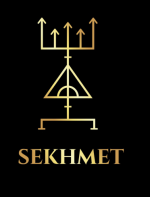
I have one question though? Which of the Goetic Demons' names and attributes does the Sekhmet sigil correspond to.


I managed to search the sigil on the Internet and it said that it was from the "Demon Sekhmet". I am well aware of the "Demonization" made by the enemy in order to confuse people.

So, please tell me, who is the Demon behind the Sekhmet sigil? Or is it a Demon that is not documented that much in the Demonology section of the JoS
 
I have one question though? Which of the Goetic Demons' names and attributes does the Sekhmet sigil correspond to.


I managed to search the sigil on the Internet and it said that it was from the "Demon Sekhmet". I am well aware of the "Demonization" made by the enemy in order to confuse people.

So, please tell me, who is the Demon behind the Sekhmet sigil? Or is it a Demon that is not documented that much in the Demonology section of the JoS
On the JoS, under the name Sekhet. Not Goetic, but in High Ranking Gods. Not all of the Gods in the JoS are Goetic.

We didn't have much information on Her in the JoS, but the article posted in this thread by JG Karnonnos will go in the JoS. You can read that to know more about Sekhmet. She was an Egyptian Goddess.
 
\nThank you so much for this!\n\nI have never done a Power Ritual before as I could say I am relatively new (only one year). Is there a way of knowing if I am ready to do a Power Ritual? I want to make sure that I am able to give my all and not mess anything up and do something negative. Thank you again HP Zevios Metathronos!! HAIL SATAN!!\n
\nOne year is more than enough time, start now you will only regret not doing more later.\n\nIts basically impossible to do something negative with these rituals or even mess up, I have asked the clergy and my GD and each time I have gotten the same response, don't worry just do the ritual.\n\nThe worst thing you can do with a ritual, is not do the ritual.
 
Last edited by a moderator:
Feedback is very much welcome.
In Sekhmet's Ritual, the first affirmation states: "The Joy of Satan Assembly Venerates you with respectful and holy words."

Shouldn't it be "The Joy of Satanas Assembly"?

I would also like to add that the second to last step, the one where you affirm Sekhmet's names three times and state an affirmation, does not fade when you click on "Complete"
 
On the JoS, under the name Sekhet. Not Goetic, but in High Ranking Gods. Not all of the Gods in the JoS are Goetic.

We didn't have much information on Her in the JoS, but the article posted in this thread by JG Karnonnos will go in the JoS. You can read that to know more about Sekhmet. She was an Egyptian Goddess.

Thank you for this useful and insightful explanation.

Hail Sekhmet!

May the Gods and Godesses bless you.


For some reason, I find that the sigil of Sekhmet relates somehow to Neptune. I find it as the aspect of awakened positive aspects of Neptune.


The fire element symbolism (upwards triangle) and also symbolism of activated power goes throughout the mind and psychic (domains ruled by Neptune), evolving the individual
 

Attachments

  • sekhmet-sigil.png
    sekhmet-sigil.png
    43.5 KB · Views: 248

Official Temple of Zeus Links

Back
Top