Welcome to the Temple of Zeus's Official Forums!

Welcome to the official forums for the Temple of Zeus. Please consider registering an account to join our community.

“Correct” Yoga Alignment – Equal Balance of Strength and Flexibility

High Priestess Lydia

High Priestess
Joined
Sep 20, 2017
Messages
7,807
Most people mistakenly think yoga is about flexibility. Many yoga studios and classes focus on this one aspect due to most people having decreased range of motion from sitting too long at work and at home.

Yoga needs to have a harmonious balance of muscular engagement and stretching, for the individual. Do not aim for just a deep stretch; you need to engage your muscles to support and protect your joints. Most injuries during yoga happen to people who have a lot of flexibility and inadequate strength, not people who have less flexibility. Strength is also a requirement for increased bioelectricity. You need to find your balance between flexibility and strength, never one to the detriment of the other.

For muscular engagement, you can find information online for each and every pose, or by talking with a knowledgeable yoga instructor. Studying anatomy, including of the spine, and alignment is very helpful. You want to ensure you have the sensation of space between each vertebra, but not overstretch to cause damage. When getting into alignment, generally you will want to start your focus with your feet first and work your way up.

Yes this can add up to a lot of time, but ask yourself:
-Would you rather keep doing yoga in a sloppy way and potentially cause injuries?
-Or would you rather put in quality time getting to know your individual body better and learning how to benefit your form the most?

As for “correct” alignment, many yoga practitioners have a snobbish attitude as to what this entails. No, it is not “Iyengar’s books only” or what is seen as “traditional Hatha” (most asanas are recent, I will explain in a future post). Iyengar is very useful, but is not actually full-form correct for most people, due to skeletal differences and other individual nuances.

What is truly correct, is what is most appropriate for you and your unique body. When in an asana ask yourself if you are breathing steadily and deeply, and able to continue doing so for more than a few breaths. If not, adjust the pose to fit you better. The truest form of a pose, is what benefits you the most. There is no one-size-fits-all approach to yogasana.

Yoga changes not just the shape (poses, asana) of your body, it changes the flow of prana. Contemplate that when in your next practice. Prana is in the breath (breathing exercises are called pranayama), so it makes sense to aim to be able to breathe correctly in each asana.

Don’t go into yoga with strict left brain hemisphere thinking. Everyone needs to develop and tune into your right brain hemispheres. We are supposed to have equal brain function, not lopsided. Draw within and use your senses to determine if you need to adjust or modify any asana you are practicing.

Another point: I have noticed among members here, many of you doing what you think you ought to be doing. This is wrong. Tune in to yourself each day, multiple times a day and try to sense what you should do. This might blow your mind, but a yoga practice is not supposed to be the exact same every day. We are not inorganic robots, we are organic beings with incredibly nuanced bodies (physical, mental, subtle, etc bodies) and many differences day to day.

You are supposed to do what will actually benefit you, in this moment of now. 🙏
 
Thank you High Priestess Lydia! ⚡💚

To become intuitive and good at taking care of ourselves is worth the time and effort required. We each travel our own road ahead in our own bodies for the time we have.

I think this is why I've had so much healing from yoga in the past since I intuitively customised how I fit into asanas, while also going where I feel slightly more challenged with my strength when I need to. It's a beautiful thing! 🙏🏻✨

This has opened my eyes about the need to study more about the bodies we have so we can incorporate it into our spiritual practise 🌟✨
 
Most people mistakenly think yoga is about flexibility. Many yoga studios and classes focus on this one aspect due to most people having decreased range of motion from sitting too long at work and at home.

Yoga needs to have a harmonious balance of muscular engagement and stretching, for the individual. Do not aim for just a deep stretch; you need to engage your muscles to support and protect your joints. Most injuries during yoga happen to people who have a lot of flexibility and inadequate strength, not people who have less flexibility. Strength is also a requirement for increased bioelectricity. You need to find your balance between flexibility and strength, never one to the detriment of the other.

For muscular engagement, you can find information online for each and every pose, or by talking with a knowledgeable yoga instructor. Studying anatomy, including of the spine, and alignment is very helpful. You want to ensure you have the sensation of space between each vertebra, but not overstretch to cause damage. When getting into alignment, generally you will want to start your focus with your feet first and work your way up.

Yes this can add up to a lot of time, but ask yourself:
-Would you rather keep doing yoga in a sloppy way and potentially cause injuries?
-Or would you rather put in quality time getting to know your individual body better and learning how to benefit your form the most?

As for “correct” alignment, many yoga practitioners have a snobbish attitude as to what this entails. No, it is not “Iyengar’s books only” or what is seen as “traditional Hatha” (most asanas are recent, I will explain in a future post). Iyengar is very useful, but is not actually full-form correct for most people, due to skeletal differences and other individual nuances.

What is truly correct, is what is most appropriate for you and your unique body. When in an asana ask yourself if you are breathing steadily and deeply, and able to continue doing so for more than a few breaths. If not, adjust the pose to fit you better. The truest form of a pose, is what benefits you the most. There is no one-size-fits-all approach to yogasana.

Yoga changes not just the shape (poses, asana) of your body, it changes the flow of prana. Contemplate that when in your next practice. Prana is in the breath (breathing exercises are called pranayama), so it makes sense to aim to be able to breathe correctly in each asana.

Don’t go into yoga with strict left brain hemisphere thinking. Everyone needs to develop and tune into your right brain hemispheres. We are supposed to have equal brain function, not lopsided. Draw within and use your senses to determine if you need to adjust or modify any asana you are practicing.

Another point: I have noticed among members here, many of you doing what you think you ought to be doing. This is wrong. Tune in to yourself each day, multiple times a day and try to sense what you should do. This might blow your mind, but a yoga practice is not supposed to be the exact same every day. We are not inorganic robots, we are organic beings with incredibly nuanced bodies (physical, mental, subtle, etc bodies) and many differences day to day.

You are supposed to do what will actually benefit you, in this moment of now. 🙏
Thanks for this lesson I find it very awesome thanks
Hail Zeus and the God's of Hell!!
 
Thank you High Priestess Lydia!! It is so relieving to know that the yoga practice doesn't have to be the same every day.
 
Most people mistakenly think yoga is about flexibility. Many yoga studios and classes focus on this one aspect due to most people having decreased range of motion from sitting too long at work and at home.

Yoga needs to have a harmonious balance of muscular engagement and stretching, for the individual. Do not aim for just a deep stretch; you need to engage your muscles to support and protect your joints. Most injuries during yoga happen to people who have a lot of flexibility and inadequate strength, not people who have less flexibility. Strength is also a requirement for increased bioelectricity. You need to find your balance between flexibility and strength, never one to the detriment of the other.

For muscular engagement, you can find information online for each and every pose, or by talking with a knowledgeable yoga instructor. Studying anatomy, including of the spine, and alignment is very helpful. You want to ensure you have the sensation of space between each vertebra, but not overstretch to cause damage. When getting into alignment, generally you will want to start your focus with your feet first and work your way up.

Yes this can add up to a lot of time, but ask yourself:
-Would you rather keep doing yoga in a sloppy way and potentially cause injuries?
-Or would you rather put in quality time getting to know your individual body better and learning how to benefit your form the most?

As for “correct” alignment, many yoga practitioners have a snobbish attitude as to what this entails. No, it is not “Iyengar’s books only” or what is seen as “traditional Hatha” (most asanas are recent, I will explain in a future post). Iyengar is very useful, but is not actually full-form correct for most people, due to skeletal differences and other individual nuances.

What is truly correct, is what is most appropriate for you and your unique body. When in an asana ask yourself if you are breathing steadily and deeply, and able to continue doing so for more than a few breaths. If not, adjust the pose to fit you better. The truest form of a pose, is what benefits you the most. There is no one-size-fits-all approach to yogasana.

Yoga changes not just the shape (poses, asana) of your body, it changes the flow of prana. Contemplate that when in your next practice. Prana is in the breath (breathing exercises are called pranayama), so it makes sense to aim to be able to breathe correctly in each asana.

Don’t go into yoga with strict left brain hemisphere thinking. Everyone needs to develop and tune into your right brain hemispheres. We are supposed to have equal brain function, not lopsided. Draw within and use your senses to determine if you need to adjust or modify any asana you are practicing.

Another point: I have noticed among members here, many of you doing what you think you ought to be doing. This is wrong. Tune in to yourself each day, multiple times a day and try to sense what you should do. This might blow your mind, but a yoga practice is not supposed to be the exact same every day. We are not inorganic robots, we are organic beings with incredibly nuanced bodies (physical, mental, subtle, etc bodies) and many differences day to day.

You are supposed to do what will actually benefit you, in this moment of now. 🙏
That's surpring to know that we're not supposed to be doing the same thing everyday. I will follow the same prompt of :
Standing asanas
Sitting asanas
Forward bending asanas
Backward bending asanas
Side to side bending asanas
Twisting asanas
Inverted asanas
Lying asanas

But I will look up new poses for each instead of beginning with the Handstand. Thank you HPS!
 
Beautiful post, congratulations. In addition to yoga, I would like to try learning a martial art, perhaps one that is in line with Zevism. Some time ago, I read a sermon that talked about advanced training in a martial art that would give you an enormous amount of bioelectricity. Which one would be the most appropriate?
 
Most people mistakenly think yoga is about flexibility. Many yoga studios and classes focus on this one aspect due to most people having decreased range of motion from sitting too long at work and at home.

Yoga needs to have a harmonious balance of muscular engagement and stretching, for the individual. Do not aim for just a deep stretch; you need to engage your muscles to support and protect your joints. Most injuries during yoga happen to people who have a lot of flexibility and inadequate strength, not people who have less flexibility. Strength is also a requirement for increased bioelectricity. You need to find your balance between flexibility and strength, never one to the detriment of the other.

For muscular engagement, you can find information online for each and every pose, or by talking with a knowledgeable yoga instructor. Studying anatomy, including of the spine, and alignment is very helpful. You want to ensure you have the sensation of space between each vertebra, but not overstretch to cause damage. When getting into alignment, generally you will want to start your focus with your feet first and work your way up.

Yes this can add up to a lot of time, but ask yourself:
-Would you rather keep doing yoga in a sloppy way and potentially cause injuries?
-Or would you rather put in quality time getting to know your individual body better and learning how to benefit your form the most?

As for “correct” alignment, many yoga practitioners have a snobbish attitude as to what this entails. No, it is not “Iyengar’s books only” or what is seen as “traditional Hatha” (most asanas are recent, I will explain in a future post). Iyengar is very useful, but is not actually full-form correct for most people, due to skeletal differences and other individual nuances.

What is truly correct, is what is most appropriate for you and your unique body. When in an asana ask yourself if you are breathing steadily and deeply, and able to continue doing so for more than a few breaths. If not, adjust the pose to fit you better. The truest form of a pose, is what benefits you the most. There is no one-size-fits-all approach to yogasana.

Yoga changes not just the shape (poses, asana) of your body, it changes the flow of prana. Contemplate that when in your next practice. Prana is in the breath (breathing exercises are called pranayama), so it makes sense to aim to be able to breathe correctly in each asana.

Don’t go into yoga with strict left brain hemisphere thinking. Everyone needs to develop and tune into your right brain hemispheres. We are supposed to have equal brain function, not lopsided. Draw within and use your senses to determine if you need to adjust or modify any asana you are practicing.

Another point: I have noticed among members here, many of you doing what you think you ought to be doing. This is wrong. Tune in to yourself each day, multiple times a day and try to sense what you should do. This might blow your mind, but a yoga practice is not supposed to be the exact same every day. We are not inorganic robots, we are organic beings with incredibly nuanced bodies (physical, mental, subtle, etc bodies) and many differences day to day.

You are supposed to do what will actually benefit you, in this moment of now. 🙏
I was 100% meant to see this today. Perfect timing, not a coincidence! Grateful for you High Priestess Lydia! ♡
 
That's surpring to know that we're not supposed to be doing the same thing everyday. I will follow the same prompt of :
Standing asanas
Sitting asanas
Forward bending asanas
Backward bending asanas
Side to side bending asanas
Twisting asanas
Inverted asanas
Lying asanas

But I will look up new poses for each instead of beginning with the Handstand. Thank you HPS!
Did you read my post about the balance for doshas and asanas? You can adjust your routine based on what you need at the time.
 
Beautiful post, congratulations. In addition to yoga, I would like to try learning a martial art, perhaps one that is in line with Zevism. Some time ago, I read a sermon that talked about advanced training in a martial art that would give you an enormous amount of bioelectricity. Which one would be the most appropriate?
Here's a great post about martial arts: https://ancient-forums.com/threads/...p-from-lydias-post-on-exercise-pilates.76236/ Read the thread, as Eagle Bearer made long replies within.

For those of you reading this, if you are not interested in the martial side of martial arts (actually practicing combat with others) you can try Tai Chi. I advise you to only do it a few times a week to begin. I did it daily until it nearly knocked me out, and then I learned that it is recommended by masters to not do it daily to begin with. The chi is very powerful, and needs to be gradually built up. I had done a lot of yoga and Qigong before, but Tai Chi is different. Very powerful, even with subtle movements. Focus fully on your body and chi while practicing.
 
Most people mistakenly think yoga is about flexibility. Many yoga studios and classes focus on this one aspect due to most people having decreased range of motion from sitting too long at work and at home.

Yoga needs to have a harmonious balance of muscular engagement and stretching, for the individual. Do not aim for just a deep stretch; you need to engage your muscles to support and protect your joints. Most injuries during yoga happen to people who have a lot of flexibility and inadequate strength, not people who have less flexibility. Strength is also a requirement for increased bioelectricity. You need to find your balance between flexibility and strength, never one to the detriment of the other.

For muscular engagement, you can find information online for each and every pose, or by talking with a knowledgeable yoga instructor. Studying anatomy, including of the spine, and alignment is very helpful. You want to ensure you have the sensation of space between each vertebra, but not overstretch to cause damage. When getting into alignment, generally you will want to start your focus with your feet first and work your way up.

Yes this can add up to a lot of time, but ask yourself:
-Would you rather keep doing yoga in a sloppy way and potentially cause injuries?
-Or would you rather put in quality time getting to know your individual body better and learning how to benefit your form the most?

As for “correct” alignment, many yoga practitioners have a snobbish attitude as to what this entails. No, it is not “Iyengar’s books only” or what is seen as “traditional Hatha” (most asanas are recent, I will explain in a future post). Iyengar is very useful, but is not actually full-form correct for most people, due to skeletal differences and other individual nuances.

What is truly correct, is what is most appropriate for you and your unique body. When in an asana ask yourself if you are breathing steadily and deeply, and able to continue doing so for more than a few breaths. If not, adjust the pose to fit you better. The truest form of a pose, is what benefits you the most. There is no one-size-fits-all approach to yogasana.

Yoga changes not just the shape (poses, asana) of your body, it changes the flow of prana. Contemplate that when in your next practice. Prana is in the breath (breathing exercises are called pranayama), so it makes sense to aim to be able to breathe correctly in each asana.

Don’t go into yoga with strict left brain hemisphere thinking. Everyone needs to develop and tune into your right brain hemispheres. We are supposed to have equal brain function, not lopsided. Draw within and use your senses to determine if you need to adjust or modify any asana you are practicing.

Another point: I have noticed among members here, many of you doing what you think you ought to be doing. This is wrong. Tune in to yourself each day, multiple times a day and try to sense what you should do. This might blow your mind, but a yoga practice is not supposed to be the exact same every day. We are not inorganic robots, we are organic beings with incredibly nuanced bodies (physical, mental, subtle, etc bodies) and many differences day to day.

You are supposed to do what will actually benefit you, in this moment of now. 🙏

Thank you High Priestess , I just Needed this in this Moment!😍
 
Thank you, High Priestess! For the longest time, I myself had somewhat improper yoga practices. I focused far too much on trying to push my muscles to the limit of what they would allow, and too little on holding the pose, breathing and feeling the energy of it. It was definitely a rookie mistake at the time, since as HPS says, there's an inordinate focus on simply becoming as flexible as possible. And sure, while it's definitely good to gain that flexibility, it's good to not treat yoga like its a workout session at the gym.

I explained to a friend recently, one who suffers from pretty stiff joints and muscles and often complained he was unable to do the poses shown in most guides, that he wasn't actually expected to pull off those poses. I told him to just begin heading in the direction of them, to find where he was comfortable pushing to, and to just hold, and breathe. The reality is, trying to contort your body into poses its not ready for and getting frustrated with yourself isn't going to get you much of anywhere.

As HPS suggests, be careful not to listen too much to any guides which give an all-or-nothing approach to poses. You do not stand to gain or lose nirvana trying to look exactly like the pose in the pictures. If you finish your session, and you feel relaxed and buzzing when you lay down, you've done yourself a world of good already.
 
That's surpring to know that we're not supposed to be doing the same thing everyday. I will follow the same prompt of :
Standing asanas
Sitting asanas
Forward bending asanas
Backward bending asanas
Side to side bending asanas
Twisting asanas
Inverted asanas
Lying asanas

But I will look up new poses for each instead of beginning with the Handstand. Thank you HPS!
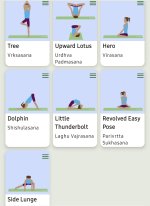
Also for anyone who needs it I found a cool app called "Yoga Sequence" you can filter through a lot of asanas and customize a routine that fits what HP Lydia has recommended. Below is the link that will lead you to the Google Play store. I don't know if it's on IOS.

 
Did you read my post about the balance for doshas and asanas? You can adjust your routine based on what you need at the time.
Here's what I did yesterday. I just followed the list of what should typically be done and not what one should feel during a specific day. I'm going for a more peaceful mindset today though.
 

Attachments

  • Screenshot_20260128_111340_Yoga Sequence.jpg
    Screenshot_20260128_111340_Yoga Sequence.jpg
    186.2 KB · Views: 3

Al Jilwah: Chapter IV

"It is my desire that all my followers unite in a bond of unity, lest those who are without prevail against them." - Shaitan

Back
Top