Welcome to the Temple of Zeus's Official Forums!

Welcome to the official forums for the Temple of Zeus. Please consider registering an account to join our community.

Zevist Personalities Section: A Community Project [JG Karnonnos + Update]

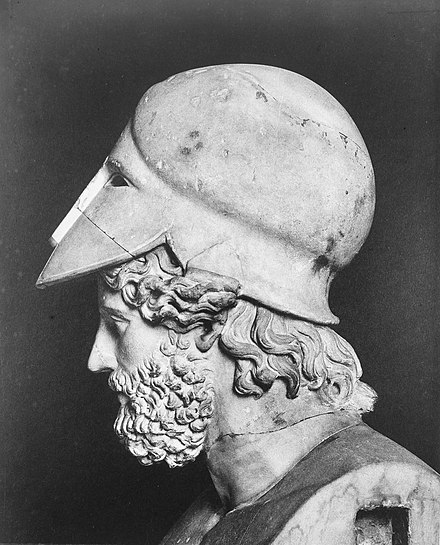
Hephaestion's life and the great value of loyalty on the path

Hephaestion is one of the most unforgettable figures in Ancient Greek history. He was the closest friend and most trusted general of Alexander the Great, King of Macedonia.

My research project will explore Hephaestion's life historically, his influence on Alexander the Great, his heroic exploits in battle, their inspiring relationship, the importance of loyalty, and the lessons he left behind for those who follow the path.

Born around 356 BC, Hephaestion was a member of the Macedonian aristocracy. As a young man, he was educated alongside Alexander as a student of the famous philosopher Aristotle. During this period, they worked together on philosophical thought and military strategy. The close friendship between the two was fueled not only by military solidarity, but also through a mutual understanding. Their deep affection for each other has been romantically described by many historians.

1024px-Head_of_Hephaistion.jpeg


Hephaestion played an important role during Alexander the Great's conquests. At the Battle of Granicus, he contributed greatly to Alexander's victory by bravely charging into enemy lines at a young age. He also showed strategic leadership at the Battle of Issos, causing the enemy troops to scatter. However, his greatest heroism came during the Battle of Gaugamela. This battle was a turning point in Alexander's history. Hephaestion attacked the enemy's stronghold, allowing Alexander to realize his strategic plans.

After the conquest of Persia, Hephaestion was appointed as the satrap (governor) of Persia's eastern provinces, including the important region of Babylon. His administrative role involved overseeing these territories and implementing Alexander’s policies, helping to stabilize and integrate the diverse cultures within the conquered lands.

Hephaestion acted as a key diplomat during Alexander's campaigns, assisting in diplomatic efforts to maintain relations with various peoples and tribes. His understanding of different cultures and languages contributed to the diplomatic successes of Alexander's campaign, allowing for smoother transitions of power and support among the conquered populations.

He was also involved in significant construction projects, particularly in Babylon. He accompanied Alexander during the establishment of new cities, which were part of Alexander's vision to blend cultures and facilitate trade. Hephaestion’s contributions to urban planning and infrastructure helped shape the environments of these new cities.

He was not only a great warrior, but also a leader who shared Alexander's dreams. Their friendship was deepened by their trust in each other on the battlefield. Hephaestion stood out as a figure who supported Alexander's ideas while at the same time instilling in him courage. For him, victory was not just a military success, but the realization of Alexander's dreams. Hephaestion's loyalty and love for him was his main motivation in battle.

Hephaestion was a figure who supported Alexander's leadership qualities, understood his vision and motivated him to realize it. They fought together on the battlefield and won victories. But this relationship transcended mere military solidarity. The deep friendship between the two may have developed over time into a kind of romantic relationship or love. Ancient sources frequently refer to the emotional dimensions of their relationship. This goes beyond the norms of male friendship of the time and shows how important Hephaestion was to Alexander.

His presence meant more than just moral support for Alexander. His strategic advice was his greatest ally in his military leadership, and the time and experiences they spent together guided Alexander's decisions. His trust in Hephaestion encouraged and increased the risks Alexander took in battle.

The sudden illness and death of Hephaestion in 324 BC was devastating for Alexander. Hephaestion's death was not only the loss of a friend, but also the loss of a part of him buried deep in his soul. Alexander had a monument built in his memory and wanted him to be remembered as a god. This is one of the historical proofs of Alexander's deep affection.

The loss of Hephaestion had a negative impact on Alexander's state of mind. Alexander the Great became more and more withdrawn due to the sadness and loneliness he felt after the loss of Hephaestion. This also affected his military decisions and general direction. The fact that the bond between the two was so deep reveals the importance of friendship and love in human life.

(Alexander on the left, Hephaestion on the right)
Alexander_and_Hephaestion.jpg


One of the most valuable lessons inherited from Hephaestion and Alexander's relationship is the place of loyalty in our lives. True friendship is a bond that sticks with us in difficult times and nourishes our souls. This story shows how important it is how people measure their commitment, dedication and loyalty to each other.

In a world where life, friendships, hardship and loss are intertwined, loyalty means holding the hand of a friend, reassuring a lover and maintaining our commitment to those we love. This loyalty not only strengthens our commitment to each other, but also elevates our souls in the path. Loyalty is a divine and godly virtue.

The story of Hephaestion and Alexander is not only a historical tale, but also a journey into the emotional depths of humankind. This relationship reveals the divine importance of loyalty. They teach us how strongly and deeply a human being can be connected to another, how the soul can be nourished when combined with love and friendship.

Loyalty is one of the most meaningful elements of life and symbolizes the lasting imprint that individuals leave on each other's lives. What we learn from their story helps us understand how love, loyalty and friendship shape our lives. And this story offers a lesson we should remember every day: As we face life's challenges, the love and loyalty of our true friends is a source of light that illuminates our souls.


Beneath the stars, their fates entwined,
Two hearts as one, in love they’d find.
A king so bold, a friend so true,
In war and peace, their bond grew.

Through endless roads, through battles wide,
Hephaestion walked by Alexander’s side.
Not just by power, nor throne or land,
But love that fate could not withstand.

Through Persia’s sands, and rivers deep,
A silent vow they’d always keep.
No crown could match the loyalty shared,
No empire's rise could leave it impaired.

With every step, with every fight,
They carried each other into light.
Though one may fall, the other would rise,

Their love eternal, beyond the skies.

BiowarRS.jpg
 
This is really great. I highly recommend as Henu suggested, for members to look offline in local records for historic Satanic personalities in their own nations. You can also try looking in the public records in the local website of the library, university, etc, if you can't get there in person. My point is, don't just use internet search engines. Dig deeper.

I personally already have a small list in mind of people I wanted to write on, and they are not as well-known as the obvious choices.
Unfortunately I will have to use internet as I live in different country and searching for my regional records would be difficult if not impossible.
But there are few big libraries in close cities so I guess I'll start there.
 
Greetings everyone, there will be two new Demon Rituals to be published shortly.

Other than this, I want to initiate a project for the Joy of Satan. This will involve articles that will be written about Spiritual Satanists [Followers of the Gods or those respecting the Ancient Gods] in history.

It is time if you really love any of these people, to give them a gift and immortalize their memory in the Joy of Satan. That way, they will inspire our people for centuries to come.

There were many graced personalities that were doing things like occultism, spirituality, or others that were very direct in their connection with the Gods and even admitted this explicitly. Others were more concealed and they did not reveal their affiliations, but information about their allegience to the Gods was proven by their works or historical review.

These involve many people; all the way from George Washington to Nikola Tesla, Friedrich Nietszche, Alexander the Great, Aristotle or Plato [They were worshipers of the Gods directly]. We must assemble a large list of all of these personalities, and articles have to be written in regard to them all, that will contain in-depth information.

Pioneers of both genders who did not comply to the enemy and advanced humanity forward regardless, in accordance to the ethical values and spiritual plans of the Gods need to be remembered. People who brought occult knowledge, criticized the enemy and reduced their power, did provide inordinate scientific value to mankind in the face of the oppression of the enemy [Like Gallileo to name a very well known case or Giordano Bruno], or those who caused great reformations or important achievements for the Gods in consistency with the compass of the Gods in this world, must be all included.

Emperors of the Roman Empire, other Great beings like Marcus Aurelius, were literally initiates of the Gods like you are today.

They do not have to only be perfect examples. People might do mistakes, life has obstacles. But they received great status and advanced in the path of the Gods, in many cases carrying huge amounts of people with them.

Many have done works they went not recognized for, affecting smaller numbers of souls. But that doesn't mean their works were also not of extreme importance. Smaller and inspiring examples of people from our history should also be included.

People who are known to have existed and became Gods historically, like Pythagoras or Asclepius, should also be included in this section [but also will be included in the new Demons section]. Ancient powerful followers of the Gods from India or worldwide should also be included, or other legends who are known beyond a doubt to have existed amogn us.

There must be no lying in this section. We do not want to say that everyone was part of this. We only want people who were verifiably on our side. There are already endless amounts.

We will focus on very evident cases; Ancient mystics and so on. These people can be from anywhere in the world and any timeline; Ancient Times until today.

If there are more than one people making research on a personality, articles can be combined.

All of these will also bring honor upon their people of their respective Nations, and their affiliations with the tasks of the Gods must be highlighted in their passing through life. So if you know of any regional important personality that struggled for the Gods, bring them to the light so they are commemorated and they receive honor.

There must be images, sources, historicity of a person, so their life can be seen and read about and an inspiration for SS to continue their journey.

There will be appointment of a JG Guardian at the head of this project and then everyone can contact them to organize with them, in order to make this section a reality.

As this is an official JoS project, advancement in the project will be taken in consideration for receiving positions or furthering one's position in the JoS Donor system also.

PS: Seminar arriving about Making Money Workings manifest within 24 hours for all Tiers.

-High Priest Hooded Cobra 666

This is a very important project, HP!

It's very important that everyone memorizes and also stores important knowledge about those people who were in direct contact with the Gods.

And, in thus message, not only that I wanted to say how grateful I am to see such project being available and the fact that you organized it, but I also wanted to tell everyone here about the following people which I found out about.


Asia:

Cai Lun, the Chinese creator of paper, who greatly facilitated the spread of knowledge, culture, and information, impacting the world's history, education, and communication systems.

Cai%20Lun%20Papermaking.png


India:

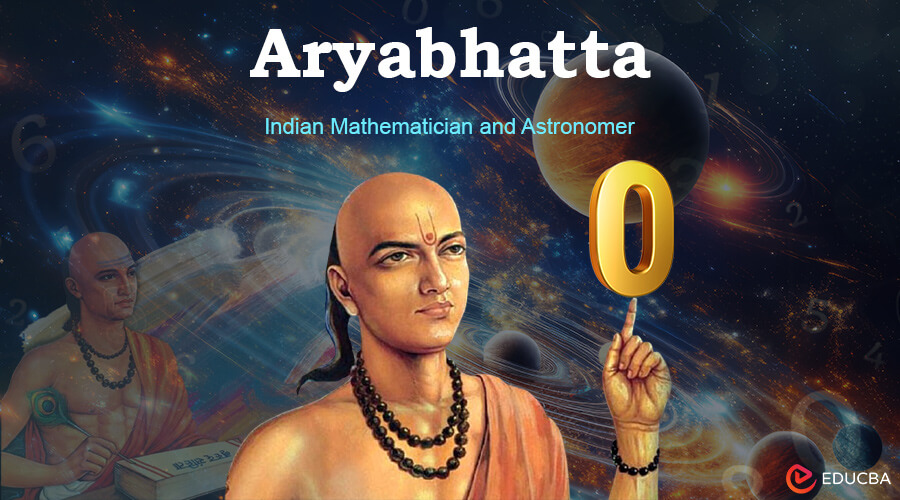
Aryabhatta
, Indian Mathematician and Astronomer, proposed the concept of zero and made ground breaking discoveries in mathematics and astronomy, such as solar system rotation, approximation of pi, trigonometry, place value system and zero.

Biography-of-Aryabhatta.jpg


Greece:

Synesius
, an Ancient Greek occultist who wrote very significant works such as the De insomniis, an ancient treatise on Dream interpretation or the Economium Calvitii, a literary jeu d'espirit suggested by Dio Chrysostom's Praise of Hair.

Syn%C3%A9sios_de_Cyr%C3%A8ne.png


And the last famous person from Greece who was directly connected to the Gods in Ancient times, that I can think of, is none other than...

Cleopatra the Alchemist, a Greek alchemist who is credited as one of the women capable of producing the philosopher stone, and also the inventor of the alembic, an alchemical still consisting of two vessels connected by a tube, used for distillation of liquids.


Forgotten-Cleopatra.jpg


I am very glad to share these useful discoveries with the community, with the Family we all have here 😍


Hail Satan


This is such a fascinating topic. I just happened to be reading about the Founding Fathers yesterday.

All these great names, which I would never have suspected as being with the Gods due to the enemy corruption and lies (i.e., Wikipedia), are truly an inspiration to us all. An example of how "everyday" people can do such a great service to the Gods, and how brilliant their minds are. From Ancient Times to present times.

All of these great people are a reminder as to what our true potential is, and I have deep respect for all of them and everything they gave. I find it very motivating to learn about them, and think about how I can try to do the same, as much as possible in my life.

I will see if I can find any potential names not already mentioned here.
 
I would like to share my article about Horemheb, one of the pharaohs that I found most powerful through my own little research.
~
Pharaoh Horemheb

He is the last Pharaoh of the 18th Dynasty.(1550-1292 BC)

He is the pioneer in destroying the harmful thought form and the ignorant form of government that low-spirited people want to bring.

The meaning of the name Horemheb is that "Horus is in Jubilation".

GWQI7BRXsAAPqJc.jpeg


Before becoming Pharaoh, he was the commander-in-chief of the army during the reigns of Horemheb, Tutankhamun and Ay (Akhenaten's uncle and Tutankhamun's teacher.
Extensions of the formation hostile to the True Gods.). He is also said to be Tutankhamun's closest assistant.

Horemheb always intended to ascend to the throne with the title he gave himself. However, he did this secretly when he was commander in chief.

If Tutankhamun had not died at an early age and without having children, Horemheb's ascension to the throne might have been more difficult. However, Tutankhamun's death is an issue that was not expected by anyone and still surprises Egyptologists.

It is thought that Horemheb remained on the throne for at least 14 years, with an average of 20 years.

During his time on the throne, he destroyed the structures of the heretical organization Aten and largely destroyed its thoughts.

Under Horemheb's rule, Egypt's power and confidence were once again restored following the internal chaos of the Amarna Period (Dirty formation Aten prints); this paved the way for the rise of the 19th Dynasty under ambitious Pharaohs such as Seti I and Ramesses II.

GWQKMqEWQAEBPHG.jpeg


~

Frankly, this may be too subjective for some people. Therefore, if there are people who think they have clear information about this subject, they can add it.
 
Maria Orsitsch or Maria Oršić.
" He was born in Vienna. Her father was Croatian and her mother a German from Vienna.

Although there are several photos and documents proving the existence of Maria Orsic, it was only after 1960 that historians and writers began to notice her connection to Nazi mysticism. Maria was mentioned and dealt with for the first time in 1967 by Bergier and Pauwels in their book "Aufbruch ins dritte Jahrtausend: von der Zukunft der phantastischen Vernunft".

Maria soon followed the German national movement that became active after the First World War. The main aim of the movement was to unite Austria with Germany. In 1919 Maria moved to Munich.

There she came into contact with the Thule Gesellschaft and soon created her own circle together with Traute. Maria was the leader of the "German Society for Metaphysics" founded at the beginning of the 20th century as a women's circle of mediums who allegedly engaged in contacts with extraterrestrials. Supposedly these extraterrestrials visited Earth and settled in Sumer. The word was formed from the ancient Sumerian word "Vri-Il" ("like God"). Another member was known only as Sigrun, a name etymologically related to Sigrune, a Valkyrie and one of the nine daughters of Wotan from the Norse legends.

They were all young ladies. Both Maria and Traute were beautiful women with very long hair, Maria was blonde and Traute had brown hair. They wore long ponytails, an unusual hairstyle for the time. This became a common characteristic of all the women who joined Vril and remained so until May 1945. They believed that long hair served as cosmic antennae to receive extraterrestrial communication from beyond. In public, however, they hardly ever showed their hair in a ponytail. For identification purposes, the Vril members (also called "Vrilerinnen") wore a disk representing the two mediums: Marija Oršić and Sigrun.

In 1919 the Society joined another group in a Lodge in a forest outside Berchtesgaden with the aim of discussing a possible trip to Aldebaran to join the extraterrestrials who would help them build the Nazi UFOs. Notes on this space mission are discussed in a recent detailed analysis of Nazi occultism entitled "Black Sun: Aryan Cults, Esoteric Nazism and Identity Politics":

"Maria claimed to have received mediumistic transmissions in a language unknown to her - which contained the technical data for the construction of a flying machine. Vril documents mention that these telepathic messages originated in Aldebaran, a solar system located 68 light years away in the constellation Taurus."

At the end of November 1924, she visited Rudolf Hess in his Munich apartment, together with Rudolf von Sebottendorf, the founder of the Thule Gesellschaft. Sebottendorf wanted to get in touch with Dietrich Eckart, who had died a year earlier. He had also been a member of the Thule Gesellschaft. To establish contact with Eckart, Sebottendorff and the other Thulists joined hands around a table. Maria went into a trance and with rolling eyes threw herself backwards and made contact with Eckart. He announced that he had been forced to let someone else's voice through with an important message. A strange voice, which then identified itself as Sumi, a resident of a distant world, which orbits the star Aldebaran, in the constellation of Taurus. According to the voice, the Sumi were a humanoid race that would have colonized Earth 500 million years ago. While Maria was still in a trance, she scribbled several strange-looking lines and marks. These marks turned out to be ancient Sumerian characters, the language of the founders of Babylon's oldest culture.


In 1945, Maria Orsitsch and the entire Vril Circle mysteriously disappeared, leading some writers, conspiracy theorists and Nazi mystics to believe that they had fled to Aldebaran."

This article was written in Portuguese and I simply translated it. I found some posts here on foram that said she had completed the magnum opus along with the others. Her beauty struck me, there aren't many articles about her on the internet, but she was certainly with the gods.

another article about her : https://tonocosmos.com.br/maria-orsic-realmente-obteve-tecnologia-extraterrestre-para-os-alemaes

images (3) (2).jpeg
 
I would like to suggest Carl Jung. I will double check the spelling but he is the psychologist that brought to light the extreme mistakes of that f*** up Yehubor who screwed up the field of psychology for decades. He doesn't get the credit he deserves even to this day. From what i have been able to see of his works he really tried to understand humans in truth and not in some weird way as others have.

These pages should be interesting to see come together. Will they be posted as part of a new section on the JOS site or in just a different section?

Hail Father Satanas
In fact, Carl Gustav Jung is definitely one of the personalities who paved the way for spiritual Satanism. His entire worldview was gnostic and anti-Christian.

Jung 1.jpg


Image: Carl Gustav Jung, the founder of "analytical psychology".

This is by no means an exhaustive article about him.

Rather, he advocated the central role of spirituality and thus issues concerning the divinity of the self as well as the dangers of orthodox Christianity. He therefore inevitably had a great interest in occult practices such as alchemy and astrology. He studied all mythologies as well as archaeology to show how much paganism was obscured and rejected by Christianity.

C. G. Jung was mentored as a young Swiss psychiatrist by the Yehubor and atheist Sigmund Freud. Jung accompanied Freud on his brief visit to America in 1909. However, their friendship ended in 1914 in a radical break and a lifelong estrangement. Jung by no means agreed with Freud's views on the psychological centrality of sexuality or his rejection of religious impulses as neurotic. Rather, Jung was always the spiritual explorer and therefore tried to fathom the spiritual needs of the soul.

Freud initially regarded him as the "crown prince" of his psychoanalysis. However, after the differences between them grew ever greater, Freund withdrew his mandate. Jung, in turn, in order to distance himself from Freud's theories, described his psychology as an analytical psychology.

C. G. Jung, who became one of the most deeply religious psychologists and most profound connoisseurs of occultism through his many experiences in self-therapy and extensive research into almost all cultures, much to Freud's dismay, disappointed his teacher. In the end, he went far beyond him and increasingly practiced occult practices that Freud disliked.

He turned to mystical paganism, claiming that he became a god through an intense visualization exercise based on the elements of initiation rituals of ancient mystery religions, particularly Mithraism. Jung believed that he had experienced a direct initiation into the ancient Hellenistic mysteries and even experienced deification in the process.

The doctrine of archetypes that pervades his work, however, comes from the Sufi master Ibn El-ʿArabī, which even Jung knew about and wrote about in an article entitled "The Soul Problem of Modern Man".
An archetype in the sense of C. G. Jung's teachings would be, for example, the "apple" that appears in mythologies, but also the pentagram and the moon. These are symbols for the primal principle, for the archetype, namely the feminine, the "goddess of love", Venus.

Another occult practice in Jung's work is the so-called shadow work.

According to C. G. Jung, the "shadow" is that part of us with which we do not identify, which we rather repress into the darkest corner of our consciousness. We do not want this part or simply cannot live it out. Nevertheless, together with the "I" with which we identify, it forms our individual.
The projection of the shadow outwards, in turn, very often causes the psychiatric clinical picture of paranoia and general delusions.

However, if a person not only wants to be healthy, but also wants to become "whole" and thus realize themselves, the rejected part must urgently be integrated into the person according to Jung. He called it shadow integration in order to create a complete personality.

C. G. Jung called the path of individuation shadow work through shadow integration. He understood this to be a transformative process which, on the one hand, frees us from unconscious parts and, on the other hand, brings us to life and promotes inner freedom from conflicts.

Metaphorically speaking, Osiris is killed by his brother Seth through this shadow integration. First of all, it leads to a dispersion of all the unpleasant parts of the soul within us. In the light of Isis, however, all these parts are found again (with the help of Anubis) except for the generative power, which must be "artificially" produced by her. In this way, Osiris can be reawakened in us, who now rules in our "underworld", our unconscious as the "dark god". In his union with Isis, he also gives birth to the new child, our new, awakened soul as the child Horus. The springs of life, which are located in the "underworld", begin to bubble up.

Right understanding is about shadow acceptance, about being in agreement with one's own shadows. It is not about dissolving or destroying them, but about experiencing and "loving" them. There are tremendous energies hidden in the shadow that want to be released. They need to be used in order to become more alive.
The aim is therefore to accept ourselves as we are and learn to recognize what lies dormant in the shadows. Dealing with this unloved part of ourselves should transform us. Because one thing is certain: it is precisely the dark sides of ourselves that hinder us the most in our magical work.

In his "Red Book", he also described and drew his guardian demon Philemon, who accompanied him throughout his life and whom he got to know through shadow work.

Jung 2.jpg


Image: The "holy guardian demon" Philemon by C. G. Jung from the "Red Book"

C. G. Jung said that you often only live out one part of your personality and repress another part that is hidden inside. The repressed part, the shadow, often creates fears, feelings of guilt and shame as well as addictions. It works hidden from the depths.

The shadow is our "other side", so to speak. It is the "dark brother" who forms a whole with the human being, like Isis and her other side, her shadow side, her dark side Nephthys, or like Osiris and his other side, his shadow side, his dark side Seth. In the area of the shadow lie tendencies of the personality that are present but have not yet found expression, or those that are considered unfavorable or "sinful" according to false Christian ideas, which is why they are suppressed.

For Christians, Jung was and is not only an "occult psychologist", but a "Satanist", without using the latter word as we understand it, but as an "enemy" of Christian doctrine, which would, however, coincide with our view.

Hail Satanas!
Hail Luciferus!
Heil Wotanas!
 
This is a wonderful project that will connect us even more with Our Ancestors!

It would be interesting if there could be at one point additionaly analyses of certain works, if they have themes relating to Our Path.

Die Zauberflöte/The Magic Flute by Wolfgang Amadeus Mozart (Libretto by Emanuel Schikaneder) is a stunning example with many references.


Thank you, very interesting and beautiful poems!


Danke für deine wunderbaren und interessanten Beiträge. Ich lerne immer sehr viel Neues davon. 🙂
I could say the same about you. You're absolutely right about The Magic Flute, by the way. It provides many important clues and is full of mythology. Unfortunately, Mozart was completely abused by the Freemasons and presented as an example of their high virtue, just as Leonardo da Vinci had to paint on behalf of the church in his days and they then boasted that he could only paint so well because he had received the Christian spirit. That's nonsense, of course, and da Vinci let pagan allusions show through in his works in his own way, without being condemned by the church for it. I am thinking, for example, of the "Last Supper", where he worked through the whole of astrology and the zodiac and showed what the person "Jesus Christ" was really all about. Da Vinci was simply a great initiate.
Perhaps I should take a closer look at the Magic Flute. Thanks for the hint, brother in spirit.
Thanks for the tip and the kind words, brother in spirit.
Danke für den Hinweis und die netten Worte, Bruder im Geiste.

Hail Satanas!
Hail Luciferus!
Hail Wotanas!
 
In fact, Carl Gustav Jung is definitely one of the personalities who paved the way for spiritual Satanism. His entire worldview was gnostic and anti-Christian.

View attachment 4073

Image: Carl Gustav Jung, the founder of "analytical psychology".

This is by no means an exhaustive article about him.

Rather, he advocated the central role of spirituality and thus issues concerning the divinity of the self as well as the dangers of orthodox Christianity. He therefore inevitably had a great interest in occult practices such as alchemy and astrology. He studied all mythologies as well as archaeology to show how much paganism was obscured and rejected by Christianity.

C. G. Jung was mentored as a young Swiss psychiatrist by the Yehubor and atheist Sigmund Freud. Jung accompanied Freud on his brief visit to America in 1909. However, their friendship ended in 1914 in a radical break and a lifelong estrangement. Jung by no means agreed with Freud's views on the psychological centrality of sexuality or his rejection of religious impulses as neurotic. Rather, Jung was always the spiritual explorer and therefore tried to fathom the spiritual needs of the soul.

Freud initially regarded him as the "crown prince" of his psychoanalysis. However, after the differences between them grew ever greater, Freund withdrew his mandate. Jung, in turn, in order to distance himself from Freud's theories, described his psychology as an analytical psychology.

C. G. Jung, who became one of the most deeply religious psychologists and most profound connoisseurs of occultism through his many experiences in self-therapy and extensive research into almost all cultures, much to Freud's dismay, disappointed his teacher. In the end, he went far beyond him and increasingly practiced occult practices that Freud disliked.

He turned to mystical paganism, claiming that he became a god through an intense visualization exercise based on the elements of initiation rituals of ancient mystery religions, particularly Mithraism. Jung believed that he had experienced a direct initiation into the ancient Hellenistic mysteries and even experienced deification in the process.

The doctrine of archetypes that pervades his work, however, comes from the Sufi master Ibn El-ʿArabī, which even Jung knew about and wrote about in an article entitled "The Soul Problem of Modern Man".
An archetype in the sense of C. G. Jung's teachings would be, for example, the "apple" that appears in mythologies, but also the pentagram and the moon. These are symbols for the primal principle, for the archetype, namely the feminine, the "goddess of love", Venus.

Another occult practice in Jung's work is the so-called shadow work.

According to C. G. Jung, the "shadow" is that part of us with which we do not identify, which we rather repress into the darkest corner of our consciousness. We do not want this part or simply cannot live it out. Nevertheless, together with the "I" with which we identify, it forms our individual.
The projection of the shadow outwards, in turn, very often causes the psychiatric clinical picture of paranoia and general delusions.

However, if a person not only wants to be healthy, but also wants to become "whole" and thus realize themselves, the rejected part must urgently be integrated into the person according to Jung. He called it shadow integration in order to create a complete personality.

C. G. Jung called the path of individuation shadow work through shadow integration. He understood this to be a transformative process which, on the one hand, frees us from unconscious parts and, on the other hand, brings us to life and promotes inner freedom from conflicts.

Metaphorically speaking, Osiris is killed by his brother Seth through this shadow integration. First of all, it leads to a dispersion of all the unpleasant parts of the soul within us. In the light of Isis, however, all these parts are found again (with the help of Anubis) except for the generative power, which must be "artificially" produced by her. In this way, Osiris can be reawakened in us, who now rules in our "underworld", our unconscious as the "dark god". In his union with Isis, he also gives birth to the new child, our new, awakened soul as the child Horus. The springs of life, which are located in the "underworld", begin to bubble up.

Right understanding is about shadow acceptance, about being in agreement with one's own shadows. It is not about dissolving or destroying them, but about experiencing and "loving" them. There are tremendous energies hidden in the shadow that want to be released. They need to be used in order to become more alive.
The aim is therefore to accept ourselves as we are and learn to recognize what lies dormant in the shadows. Dealing with this unloved part of ourselves should transform us. Because one thing is certain: it is precisely the dark sides of ourselves that hinder us the most in our magical work.

In his "Red Book", he also described and drew his guardian demon Philemon, who accompanied him throughout his life and whom he got to know through shadow work.

View attachment 4074

Image: The "holy guardian demon" Philemon by C. G. Jung from the "Red Book"

C. G. Jung said that you often only live out one part of your personality and repress another part that is hidden inside. The repressed part, the shadow, often creates fears, feelings of guilt and shame as well as addictions. It works hidden from the depths.

The shadow is our "other side", so to speak. It is the "dark brother" who forms a whole with the human being, like Isis and her other side, her shadow side, her dark side Nephthys, or like Osiris and his other side, his shadow side, his dark side Seth. In the area of the shadow lie tendencies of the personality that are present but have not yet found expression, or those that are considered unfavorable or "sinful" according to false Christian ideas, which is why they are suppressed.

For Christians, Jung was and is not only an "occult psychologist", but a "Satanist", without using the latter word as we understand it, but as an "enemy" of Christian doctrine, which would, however, coincide with our view.

Hail Satanas!
Hail Luciferus!
Heil Wotanas!

Carl Jung's works hold immense occult value, including the fact that Carl Jung also motivated the blind worship the Christians do to their God as due to self-hate.

Carl Jung was a wise man, and still is in the Astral, of course
 
Carl Jung's works hold immense occult value, including the fact that Carl Jung also motivated the blind worship the Christians do to their God as due to self-hate.

Carl Jung was a wise man, and still is in the Astral, of course
You are absolutely right. I see it the same way and have learned a lot from him. His shadow work in particular is very effective. I have listened to many of his interviews and was always very impressed by the depth of his sentences. He always said everything he wanted to convey very calmly and firmly. A missionary urge was far from his mind. He was Swiss, but he spoke very clear German. It quickly became clear to me that he was a high, wise spirit. He had worked on himself for 30 years so that he lived what he said. He was a very spiritual person who meditated and visualized for hours on end. I sincerely admire people like that and they are a great role model for me.
Hail Satanas!
Hail Luciferus!
Hail Wotanas!
 
Hephaestion's life and the great value of loyalty on the path

Hephaestion is one of the most unforgettable figures in Ancient Greek history. He was the closest friend and most trusted general of Alexander the Great, King of Macedonia.

My research project will explore Hephaestion's life historically, his influence on Alexander the Great, his heroic exploits in battle, their inspiring relationship, the importance of loyalty, and the lessons he left behind for those who follow the path.

Born around 356 BC, Hephaestion was a member of the Macedonian aristocracy. As a young man, he was educated alongside Alexander as a student of the famous philosopher Aristotle. During this period, they worked together on philosophical thought and military strategy. The close friendship between the two was fueled not only by military solidarity, but also through a mutual understanding. Their deep affection for each other has been romantically described by many historians.

1024px-Head_of_Hephaistion.jpeg


Hephaestion played an important role during Alexander the Great's conquests. At the Battle of Granicus, he contributed greatly to Alexander's victory by bravely charging into enemy lines at a young age. He also showed strategic leadership at the Battle of Issos, causing the enemy troops to scatter. However, his greatest heroism came during the Battle of Gaugamela. This battle was a turning point in Alexander's history. Hephaestion attacked the enemy's stronghold, allowing Alexander to realize his strategic plans.

After the conquest of Persia, Hephaestion was appointed as the satrap (governor) of Persia's eastern provinces, including the important region of Babylon. His administrative role involved overseeing these territories and implementing Alexander’s policies, helping to stabilize and integrate the diverse cultures within the conquered lands.

Hephaestion acted as a key diplomat during Alexander's campaigns, assisting in diplomatic efforts to maintain relations with various peoples and tribes. His understanding of different cultures and languages contributed to the diplomatic successes of Alexander's campaign, allowing for smoother transitions of power and support among the conquered populations.

He was also involved in significant construction projects, particularly in Babylon. He accompanied Alexander during the establishment of new cities, which were part of Alexander's vision to blend cultures and facilitate trade. Hephaestion’s contributions to urban planning and infrastructure helped shape the environments of these new cities.

He was not only a great warrior, but also a leader who shared Alexander's dreams. Their friendship was deepened by their trust in each other on the battlefield. Hephaestion stood out as a figure who supported Alexander's ideas while at the same time instilling in him courage. For him, victory was not just a military success, but the realization of Alexander's dreams. Hephaestion's loyalty and love for him was his main motivation in battle.

Hephaestion was a figure who supported Alexander's leadership qualities, understood his vision and motivated him to realize it. They fought together on the battlefield and won victories. But this relationship transcended mere military solidarity. The deep friendship between the two may have developed over time into a kind of romantic relationship or love. Ancient sources frequently refer to the emotional dimensions of their relationship. This goes beyond the norms of male friendship of the time and shows how important Hephaestion was to Alexander.

His presence meant more than just moral support for Alexander. His strategic advice was his greatest ally in his military leadership, and the time and experiences they spent together guided Alexander's decisions. His trust in Hephaestion encouraged and increased the risks Alexander took in battle.

The sudden illness and death of Hephaestion in 324 BC was devastating for Alexander. Hephaestion's death was not only the loss of a friend, but also the loss of a part of him buried deep in his soul. Alexander had a monument built in his memory and wanted him to be remembered as a god. This is one of the historical proofs of Alexander's deep affection.

The loss of Hephaestion had a negative impact on Alexander's state of mind. Alexander the Great became more and more withdrawn due to the sadness and loneliness he felt after the loss of Hephaestion. This also affected his military decisions and general direction. The fact that the bond between the two was so deep reveals the importance of friendship and love in human life.

(Alexander on the left, Hephaestion on the right)
Alexander_and_Hephaestion.jpg


One of the most valuable lessons inherited from Hephaestion and Alexander's relationship is the place of loyalty in our lives. True friendship is a bond that sticks with us in difficult times and nourishes our souls. This story shows how important it is how people measure their commitment, dedication and loyalty to each other.

In a world where life, friendships, hardship and loss are intertwined, loyalty means holding the hand of a friend, reassuring a lover and maintaining our commitment to those we love. This loyalty not only strengthens our commitment to each other, but also elevates our souls in the path. Loyalty is a divine and godly virtue.

The story of Hephaestion and Alexander is not only a historical tale, but also a journey into the emotional depths of humankind. This relationship reveals the divine importance of loyalty. They teach us how strongly and deeply a human being can be connected to another, how the soul can be nourished when combined with love and friendship.

Loyalty is one of the most meaningful elements of life and symbolizes the lasting imprint that individuals leave on each other's lives. What we learn from their story helps us understand how love, loyalty and friendship shape our lives. And this story offers a lesson we should remember every day: As we face life's challenges, the love and loyalty of our true friends is a source of light that illuminates our souls.


Beneath the stars, their fates entwined,
Two hearts as one, in love they’d find.
A king so bold, a friend so true,
In war and peace, their bond grew.

Through endless roads, through battles wide,
Hephaestion walked by Alexander’s side.
Not just by power, nor throne or land,
But love that fate could not withstand.

Through Persia’s sands, and rivers deep,
A silent vow they’d always keep.
No crown could match the loyalty shared,
No empire's rise could leave it impaired.

With every step, with every fight,
They carried each other into light.
Though one may fall, the other would rise,

Their love eternal, beyond the skies.

BiowarRS.jpg
Thank you, Thersthara666, for your great article. I am truly overwhelmed by how many members here are working diligently and putting HP Hooded Cobra666's wish into action so quickly.we are truly a strong community. I have taken the liberty of copying out your article.
May you also be blessed by the gods on your path of self-empowerment and deification.
Hail Satanas!
Hail Luciferos!
Hail Wotanas!
 
Maria Orsitsch or Maria Oršić.
" He was born in Vienna. Her father was Croatian and her mother a German from Vienna.

Although there are several photos and documents proving the existence of Maria Orsic, it was only after 1960 that historians and writers began to notice her connection to Nazi mysticism. Maria was mentioned and dealt with for the first time in 1967 by Bergier and Pauwels in their book "Aufbruch ins dritte Jahrtausend: von der Zukunft der phantastischen Vernunft".

Maria soon followed the German national movement that became active after the First World War. The main aim of the movement was to unite Austria with Germany. In 1919 Maria moved to Munich.

There she came into contact with the Thule Gesellschaft and soon created her own circle together with Traute. Maria was the leader of the "German Society for Metaphysics" founded at the beginning of the 20th century as a women's circle of mediums who allegedly engaged in contacts with extraterrestrials. Supposedly these extraterrestrials visited Earth and settled in Sumer. The word was formed from the ancient Sumerian word "Vri-Il" ("like God"). Another member was known only as Sigrun, a name etymologically related to Sigrune, a Valkyrie and one of the nine daughters of Wotan from the Norse legends.

They were all young ladies. Both Maria and Traute were beautiful women with very long hair, Maria was blonde and Traute had brown hair. They wore long ponytails, an unusual hairstyle for the time. This became a common characteristic of all the women who joined Vril and remained so until May 1945. They believed that long hair served as cosmic antennae to receive extraterrestrial communication from beyond. In public, however, they hardly ever showed their hair in a ponytail. For identification purposes, the Vril members (also called "Vrilerinnen") wore a disk representing the two mediums: Marija Oršić and Sigrun.

In 1919 the Society joined another group in a Lodge in a forest outside Berchtesgaden with the aim of discussing a possible trip to Aldebaran to join the extraterrestrials who would help them build the Nazi UFOs. Notes on this space mission are discussed in a recent detailed analysis of Nazi occultism entitled "Black Sun: Aryan Cults, Esoteric Nazism and Identity Politics":

"Maria claimed to have received mediumistic transmissions in a language unknown to her - which contained the technical data for the construction of a flying machine. Vril documents mention that these telepathic messages originated in Aldebaran, a solar system located 68 light years away in the constellation Taurus."

At the end of November 1924, she visited Rudolf Hess in his Munich apartment, together with Rudolf von Sebottendorf, the founder of the Thule Gesellschaft. Sebottendorf wanted to get in touch with Dietrich Eckart, who had died a year earlier. He had also been a member of the Thule Gesellschaft. To establish contact with Eckart, Sebottendorff and the other Thulists joined hands around a table. Maria went into a trance and with rolling eyes threw herself backwards and made contact with Eckart. He announced that he had been forced to let someone else's voice through with an important message. A strange voice, which then identified itself as Sumi, a resident of a distant world, which orbits the star Aldebaran, in the constellation of Taurus. According to the voice, the Sumi were a humanoid race that would have colonized Earth 500 million years ago. While Maria was still in a trance, she scribbled several strange-looking lines and marks. These marks turned out to be ancient Sumerian characters, the language of the founders of Babylon's oldest culture.


In 1945, Maria Orsitsch and the entire Vril Circle mysteriously disappeared, leading some writers, conspiracy theorists and Nazi mystics to believe that they had fled to Aldebaran."

This article was written in Portuguese and I simply translated it. I found some posts here on foram that said she had completed the magnum opus along with the others. Her beauty struck me, there aren't many articles about her on the internet, but she was certainly with the gods.

another article about her : https://tonocosmos.com.br/maria-orsic-realmente-obteve-tecnologia-extraterrestre-para-os-alemaes

View attachment 4072
Thank you for your contribution about Maria Orsitsch and Rudolf von Sebottendorf. Both are heavily vilified in the public, official press and it is difficult to tell what is true or what lies were later spewed about both people, mainly by Yehuborim people.

In this context, I would like to mention General Ludendorff, who organized the march on the Feldherrnhalle with Hitler in 1923, known as the Hitler-Ludendorff Putsch. His writings in particular, some of which he wrote together with his wife Mathilde Ludendorff, opened my eyes to the perfidy of the Yehuborim and the Freemasons. He also clearly documented the invention of Christianity and its disastrous effect on the German people through Judaism.

Of course, the Yehuborim and Freemasons still harshly condemn and despise him for his great achievement and portray him as a criminal or criminal dictator. They have nothing good to say about him and accuse him of lying without being able to prove the opposite.

Hail Satanas!
Hail Luciferus!
Hail Wotanas!
 
Sounds like great fun. I have been collecting books and have 100s of thousands of them including many old manuscripts and I will make available relevant ones on a website, I have already popped up and started and put a bunch of books on Pythagoras that one member requested. Will keep adding more under various names you mentioned. No guarantee the books are enemy free :) http://www.satan.quest/
Thank you for providing so many books, some of which I have already downloaded. Keep up the good work!
Hail Satanas!
Hail Luciferus!
Hail Wotanas!
 
Greetings everyone, there will be two new Demon Rituals to be published shortly.

Other than this, I want to initiate a project for the Joy of Satan. This will involve articles that will be written about Spiritual Satanists [Followers of the Gods or those respecting the Ancient Gods] in history.

It is time if you really love any of these people, to give them a gift and immortalize their memory in the Joy of Satan. That way, they will inspire our people for centuries to come.

There were many graced personalities that were doing things like occultism, spirituality, or others that were very direct in their connection with the Gods and even admitted this explicitly. Others were more concealed and they did not reveal their affiliations, but information about their allegience to the Gods was proven by their works or historical review.

These involve many people; all the way from George Washington to Nikola Tesla, Friedrich Nietszche, Alexander the Great, Aristotle or Plato [They were worshipers of the Gods directly]. We must assemble a large list of all of these personalities, and articles have to be written in regard to them all, that will contain in-depth information.

Pioneers of both genders who did not comply to the enemy and advanced humanity forward regardless, in accordance to the ethical values and spiritual plans of the Gods need to be remembered. People who brought occult knowledge, criticized the enemy and reduced their power, did provide inordinate scientific value to mankind in the face of the oppression of the enemy [Like Gallileo to name a very well known case or Giordano Bruno], or those who caused great reformations or important achievements for the Gods in consistency with the compass of the Gods in this world, must be all included.

Emperors of the Roman Empire, other Great beings like Marcus Aurelius, were literally initiates of the Gods like you are today.

They do not have to only be perfect examples. People might do mistakes, life has obstacles. But they received great status and advanced in the path of the Gods, in many cases carrying huge amounts of people with them.

Many have done works they went not recognized for, affecting smaller numbers of souls. But that doesn't mean their works were also not of extreme importance. Smaller and inspiring examples of people from our history should also be included.

People who are known to have existed and became Gods historically, like Pythagoras or Asclepius, should also be included in this section [but also will be included in the new Demons section]. Ancient powerful followers of the Gods from India or worldwide should also be included, or other legends who are known beyond a doubt to have existed amogn us.

There must be no lying in this section. We do not want to say that everyone was part of this. We only want people who were verifiably on our side. There are already endless amounts.

We will focus on very evident cases; Ancient mystics and so on. These people can be from anywhere in the world and any timeline; Ancient Times until today.

If there are more than one people making research on a personality, articles can be combined.

All of these will also bring honor upon their people of their respective Nations, and their affiliations with the tasks of the Gods must be highlighted in their passing through life. So if you know of any regional important personality that struggled for the Gods, bring them to the light so they are commemorated and they receive honor.

There must be images, sources, historicity of a person, so their life can be seen and read about and an inspiration for SS to continue their journey.

There will be appointment of a JG Guardian at the head of this project and then everyone can contact them to organize with them, in order to make this section a reality.

As this is an official JoS project, advancement in the project will be taken in consideration for receiving positions or furthering one's position in the JoS Donor system also.

PS: Seminar arriving about Making Money Workings manifest within 24 hours for all Tiers.

-High Priest Hooded Cobra 666
Greetings, High Priest, and brothers!

Thank you for informing us, I am looking forward to it.

I’m slightly new and just wondering, is it possible to do any of the God rituals whenever you’d like, but rather more efficient to do it at the scheduled times, or does it have to be a set time, like in the schedules? The reason I’m asking is because I’d like to bond closer with the Gods, but many of their rituals are out of the upcoming schedules.
 
Sounds like great fun. I have been collecting books and have 100s of thousands of them including many old manuscripts and I will make available relevant ones on a website, I have already popped up and started and put a bunch of books on Pythagoras that one member requested. Will keep adding more under various names you mentioned. No guarantee the books are enemy free :) http://www.satan.quest/
Thanks, It’s incredibly slow to get to 🙂
 
There is a group that has done a nice job of putting together info on Hitler. they had their website removed recently but are now back up and running. They have much info on Hitler. https://www.theneworder.net/
and I also have acquired a vast amount of info, photos and videos on the subject.
nice one, i have been looking for that tooo
 
The story of Atalanta and her position in mythology

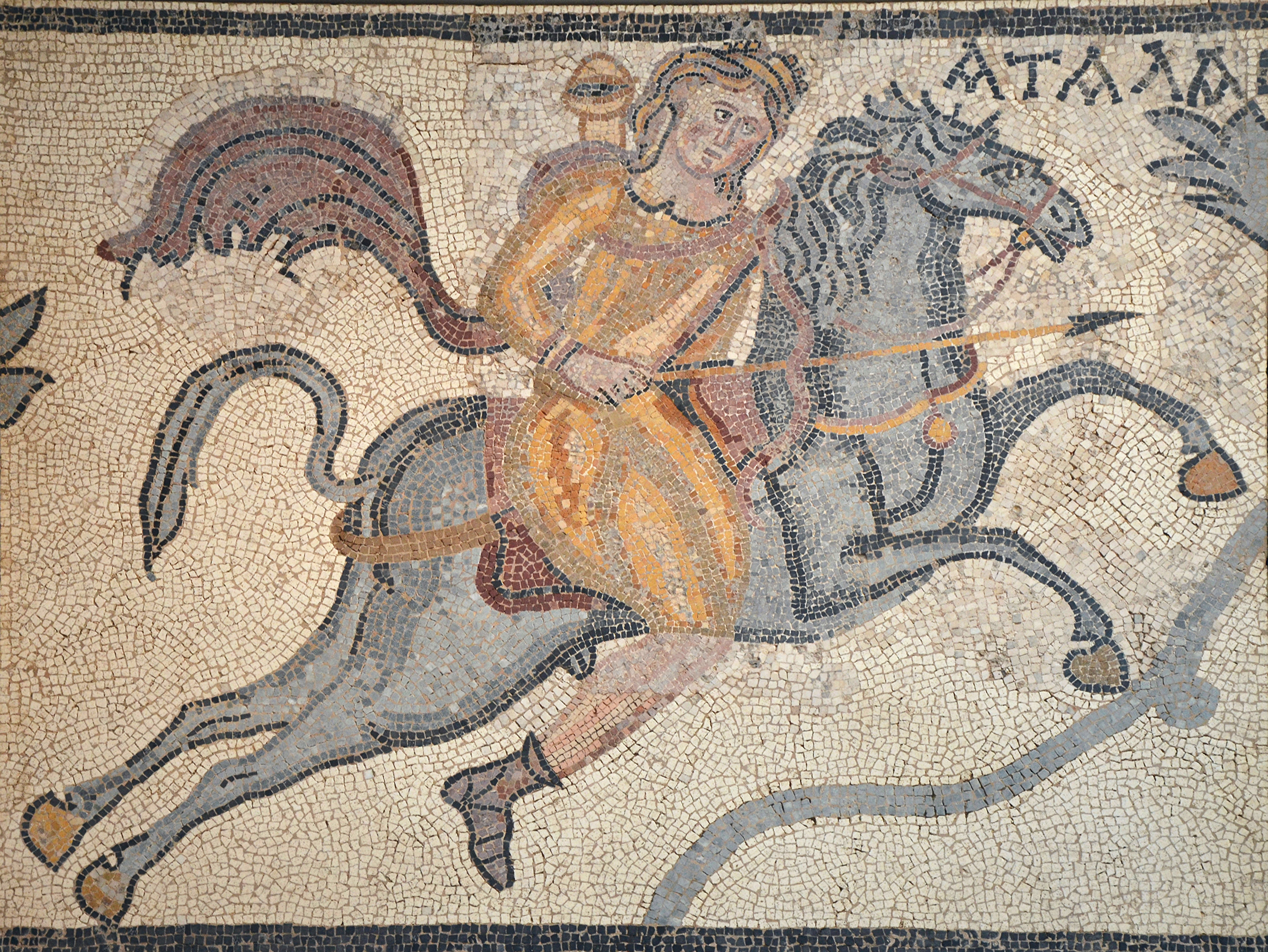
Atalanta is one of the most interesting and powerful female figures of Ancient Greek mythology. At a time when Greek heroes were usually men, Atalanta's abilities, independence and courage set her apart from other women and heroines. Her life story is full of tragedies, triumphs and challenges.

Atalanta was born in the region of Arcadia, in the north of Greece. Legends say she was the daughter of a king named either Iasus or Schoeneus. Because she was born a girl, her father did not want her and abandoned her at the foot of a mountain. However, instead of dying in the arms of nature, Atalanta was found and fed by a she-bear. She survives this way for a while and grows up surrounded by nature. She is then found and raised by hunters and becomes a skilled hunter and athlete.

13530.jpeg


One of Atalanta's best-known traits is her ability to run incredibly fast. Another is her mastery of archery and hunting. She runs so fast that many men fail to overtake her. Her athletic abilities are considered extraordinary even when compared to men. Thanks to these skills, she participated in many heroic deeds.

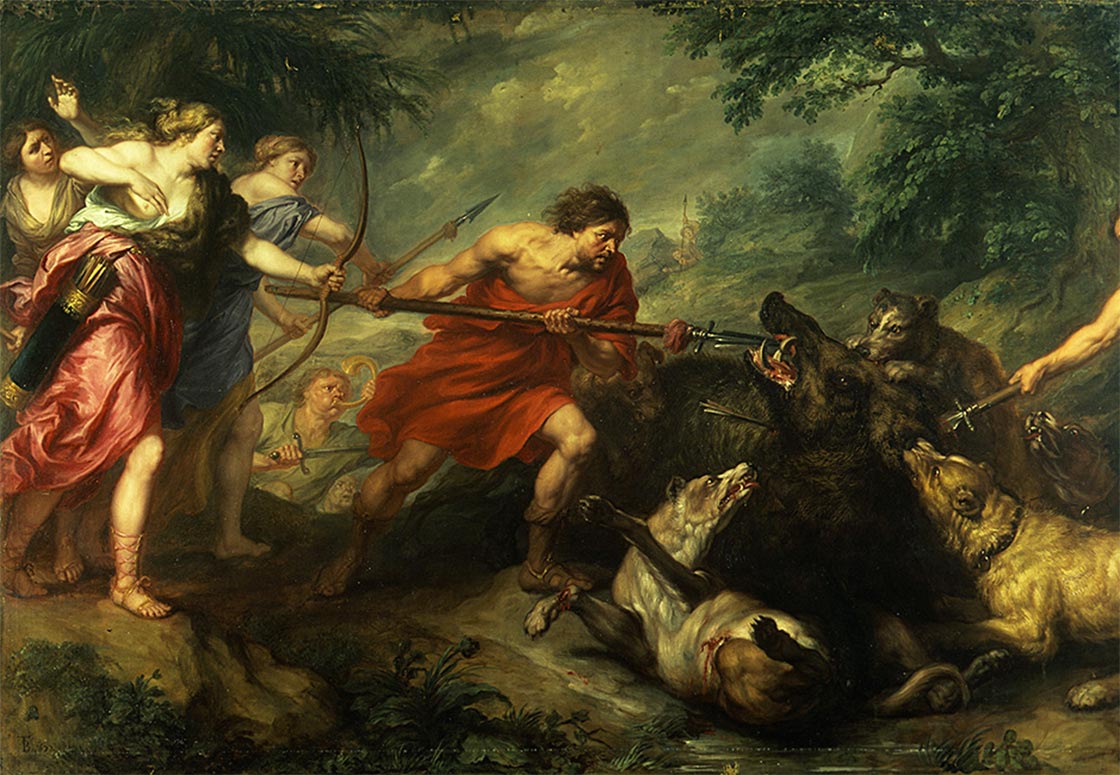
One of the most famous adventures that Atalanta participated in was the hunt for the boar of Chalydon. According to legend, the king of Chalydon, Oineus, did not pay enough respect to Artemis, so the goddess got angry and sent a huge wild boar to Chalydon. The boar causes great destruction and the king gathers the best hunters and heroes and organizes a hunt to kill the boar. Among the Greek heroes are famous names like Meleager, but Atalanta stands out as the only female member of the hunt.

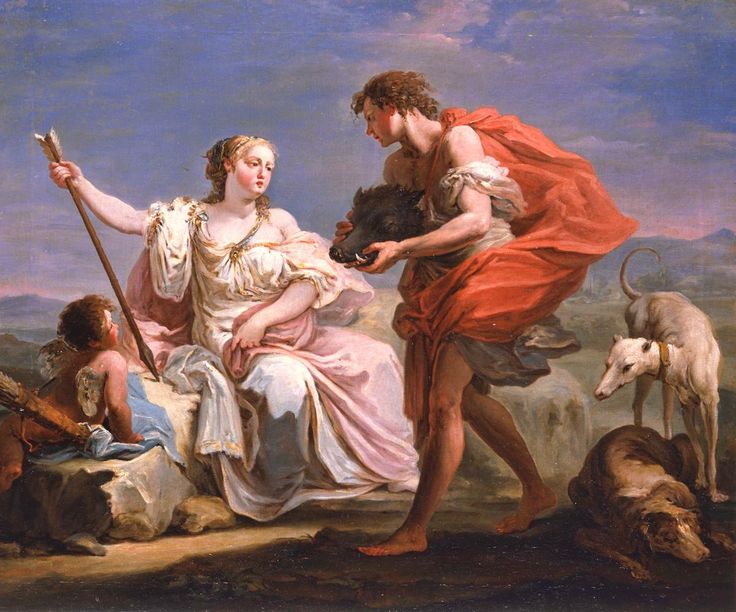
Meleager greatly admires Atalanta and pays special attention to her. During the hunt, Atalanta is the first to wound the boar. This further increases Meleager's admiration for her. He gives Atalanta the honor of killing the boar, but this causes discord among Meleager's family. In defense of Atalanta, Meleager kills his own relatives, setting off a chain of events that leads to Meleager's tragic end.

081960_2e1be176a9674c9082035b1a92e0dfc2~mv2.jpeg


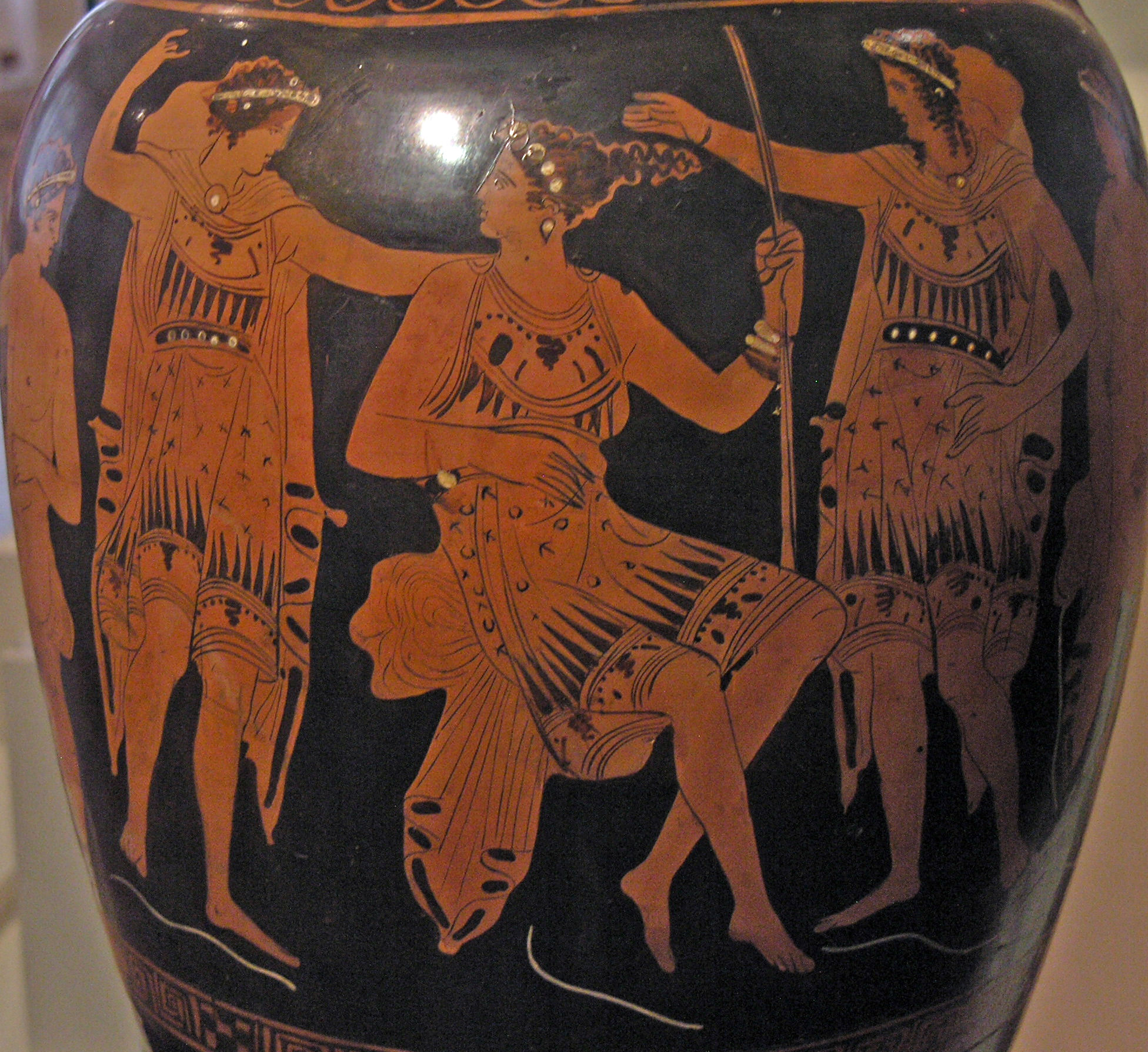
Atalanta's independence and desire to be seen as equal to men also manifests itself in the matter of marriage. Although she has many suitors, Atalanta does not want to marry and tells her father that if she must marry one day, she can only marry a man who beats her in a running race. This is a very difficult condition for the suitors, because Atalanta is extremely fast and it is almost impossible to beat her.

When Atalanta organizes this competition, she states that any suitor who loses the race will face the death penalty. Many men risk this danger for the sake of her love, but none of them can beat Atalanta. Until Hippomenes (or Melanion) appears.

Instead of relying only on his speed to defeat Atalanta, Hippomenes gets help from the goddess Aphrodite. Aphrodite gives him three golden apples and suggests he use them to distract Atalanta. When the race begins, Hippomenes throws the apples down one by one. Atalanta, attracted by the beauty of the apples, slows down to pick them up and Hippomenes catches up with her. When she picks the last apple, Hippomenes wins the race. Thus, Atalanta is forced to marry Hippomenes.

6228.jpg


However, this story does not end happily. Despite Aphrodite's help, Hippomenes fails to show his gratitude to the goddess. The gods do not forgive this arrogant behavior and punish Atalanta and Hippomenes by catching them inappropriately in a temple. The couple incurs the wrath of the gods and is transformed into lions. According to legends, in Greek mythology it is believed that lions do not mate with each other, and this is due to the transformation of Atalanta and Hippomenes.


Atalanta is a rare figure in Greek mythology as a brave and free-spirited woman. Her independence, skills and defiant attitude challenge the gender roles of the time. She is remembered as a hunter who stands out with her heroism on the one hand, and as a tragic figure shaped by the cruel hands of fate on the other.


Atalanta's life represents a role not usually given to heroines in ancient mythology: a heroine who competes on the same level as men, surpasses them and sits at the same table with the gods.
 
JG Karnonnos will do a wonderful job leading this project :)

I am sure he will do a great job leading this project.

@Karnonnos [JG] is a very wise individual, alongside you and HPHC666. It's truly a divine assembly coming out in human form and continuously promoting the work of the Gods when the JoS staff is coming.

May the Gods bless you all days and nights
 
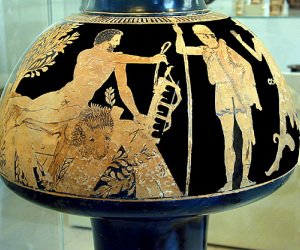
The story of Philoctetes

Philoctetes is one of the most complex and tragic heroes of Ancient Greek mythology. Although he was a key figure in the Trojan War, he is also remembered for his unfortunate fate and suffering. His story is based on themes of war, sacrifice, loneliness and betrayal. It is also an important example for understanding how heroes face moral tests in the wider context of Greek mythology.

Philoctetes was the son of Poeas, king of Meliboea in Thessaly. In Greek mythology, the most important event that determined Philoctetes' fate was his connection with the legendary hero Heracles. According to legend, Heracles began to suffer mortal pain from the poisonous tunic that was applied to his body during his famous exploits. In the end, Heracles decides that it is pointless to continue living despite all this pain and wants to ascend Mount Oeta and have a funeral pyre lit to leave the mortal world, promising that he will gift his magic bow and arrow to the one who fulfills this task.

ouk5qw31dVejq8RmkFUfAhMlprEZABhxbB9K8jn2qvss4YL-WODjyV-sdjTvpJyWb4FH9oJEW0gxEmQwUfMxSZsdqypMGi2de8TVor-4NNSRulxAhJ2YScP0qA


No one among the heroes wants to undertake this dangerous task because they believe that burning Heracles' corpse would be disrespectful and inauspicious because of his close connection with the gods, but Philoctetes stands out from all the heroes and bravely lights Heracles' funeral pyre and receives Heracles' magic bow and arrow. These weapons have extraordinary power and have only been used by the legendary hero.

Blessed by the gods, these bow and arrows would change Philoctetes' fate forever. These divine instruments had deadly power and even the slightest wound inflicted by them could result in death.


philoctetes_and_hercules4850672087523710022.jpg


At the beginning of the Trojan War, the Greeks gathered a large army and prepared to go to Troy. Philoctetes joins this army with Heracles' bow and arrows. They set off for Troy under the command of Agamemnon. However, during the journey, an unfortunate event happens to Philoctetes. When the Greek fleet stops at the island of Chryse, Philoctetes enters a temple where he is bitten by a snake. This snake is a poisonous creature sent by Hera and Philoctetes' wound worsens over time.

The unbearable pain of his wound and the bad odor it emits put the Greek army in great distress. Philoctetes constantly moans in pain, his wound does not heal and demoralizes the army. In this situation, Agamemnon and Menelaus decide that it is impossible for Philoctetes to participate in the Trojan War and they abandon him on the island of Lemnos. This island is completely uninhabited and it seems almost impossible for him to survive. The Greek army leaves Philoctetes here and continues on their way to Troy.

Philoctetes manages to survive alone on the island of Lemnos for ten years. The wound from the snake bite causes him constant pain, which weakens him both physically and mentally. But the bow and arrow given to him by Heracles enables Philoctetes to survive. He survives by hunting, and for years in solitude, he suffers the deep pain of being betrayed by his army.

Sophocles' play “Philoctetes” depicts this period intensely. Philoctetes' screams and the excruciating pain of his wound reflect his state of mind. Being abandoned by the Greek army leaves him in rage and despair. This process of abandonment shapes his moral stance and leads him to question the meaning of loyalty, sacrifice and betrayal.

1365033532.jpg


In the tenth year of the Trojan War, the Greek army has still not conquered Troy. An oracle tells them that the Greek forces can only win Troy with the arrows of Heracles. So the Greek leaders commission Odysseus and Diomedes to bring Philoctetes from the island of Lemnos. But the task is much more difficult than it seems, for Philoctetes is still bitter from having been betrayed and abandoned by the Greek army.

Odysseus devises a plan to trick Philoctetes and take his arrows. However, Diomedes and some other heroes decide that this plan is unfair and try to convince Philoctetes by talking to him honestly. Philoctetes initially resists and is angry at the Greeks' call for help. However, the spirit or divine image of Heracles appears to Philoctetes and tells him to go to Troy and that he will be the one to win the war.

This divine sign changes Philoctetes' decision. In the end, despite his pain and feelings of betrayal, he agrees to join the Greek army.

When Philoctetes returns to Troy, he kills Paris, one of the defenders of Troy, with Heracles' arrows. Paris' death is a critical event that hastens the fall of Troy. Philoctetes' victory is considered one of the greatest achievements of the Greek army and paved the way for the fall of Troy. With Paris' death, Troy's strongest defender is eliminated and the Greeks win the war.

Philoctetes was one of the heroes who played the biggest role in ending the Trojan War. Without his arrows, according to the prophecy, the Greeks would not have won the war. This emphasizes not only the physical strength of a hero in Greek mythology, but also the power of godly fate and divine weapons.

1200px-Philoktetes_Lemnos_Met_56.171.58.jpg


There are different stories about Philoctetes' life after the Trojan War. According to some sources, he returned to his hometown Meliboea after the war and lived a peaceful life. According to other sources, he traveled to southern Italy, where he founded a city and lived there for the rest of his life. Either way, Philoctetes is one of the great heroes of Greek mythology.


The story of Philoctetes is best told in the best way in the tragedy “Philoctetes” written by Sophocles. This tragedy focuses on Philoctetes' loneliness, betrayal, suffering and the concept of heroism. Philoctetes is filled with anger at being abandoned by the Greek army and this anger creates a great conflict between his warrior spirit and his human emotions.

Sophocles' play shows the deep moral and emotional conflict between Philoctetes' sense of betrayal and desire for revenge and the need for his help to help the Greek army win. In particular, themes such as Odysseus' cunning and Diomedes' honesty reflect various aspects of Greek heroism. In the end, Philoctetes decides to set aside his personal feelings and fight for a greater cause, which is considered one of the highest forms of Greek heroism.

440px-Den_sårede_Filoktet.jpg


Philoctetes is a figure in Greek mythology who explores the concepts of loyalty, suffering, betrayal and heroism. His story allows us to reflect on heroism and sacrifice, while at the same time showing the conflict between personal interests and social responsibilities. In Greek mythology, Philoctetes represents the darkest and most human aspects of war, while at the same time carrying the legacy of great heroes like Heracles and bringing it to a victorious conclusion.

The story of Philoctetes is therefore remembered as a myth in which heroes are glorified not only for their physical strength but also for their moral choices. We SS, rising under the will of the gods, must learn from these stories and keep moving forward on the path.
 
Ahi Evran: (whose name literally means "Brother of Serpents"). A known mystic and said to be able to command to snakes. I may do in-depth research about him in the future.

High Priest Kartir: I suspect whether he was just a fanatical follower of Zoroastrianism or was well are of the things. He pioneered the execution of Mani the Yehubor and banished all foreign religions from Persia. At the time, the idea of "spiritual suicide" was a common plague that was spread from the East. By exiling Hindu priests, maybe he somehow fought against this idea in his own way, maybe it was already deep-rooted in Persia at the time and he was not an exemption, I do not know.

Antinous: An Anatolian Hellene. Under custody of Emperor Hadrian, he attended to the Eleusinian Mysteries. Later, when visiting Egypt, he's said to be "drowned in Nile River" and after that event, Emperor Hadrian ordered him to be deified. Local priests associated him with Osiris and the rest of the Roman world did the same with Bacchus. He had his own cult and temples dedicated to him. I believe he achieved Magnum Opus.
 
I would like to contribute to those who work in the medical field. Any doctors and nurses, I will be sure to research them all and compile notes. There are many well-known medical professionals who were dedicated to the Gods, such as Asclepius. I would like to find those who are less renowned.
I am looking forward to reading your articles, I hold the healing professions(psychology and medicine) in very high regard and see it as perhaps the ultimate science. I believe it is a sacred path, and mysticism was once an integral part of the healing arts, and this discovery was profound in the work of Jung. The mother of modern nursing, Florence Nightingale, also believed in the unification of spirituality and science and that they were inseperable.
 
Since you, Charlotte666, mentioned Asclepius, I would also like to mention the one I have been admiring for 10 years: Imhotep, the ancient Egyptian Asclepius. Unfortunately, he was completely distorted by the Yehuborim Hollywood films in "The Mummy". Everything shown there doesn't match him at all. That's why I'm going to do a big article about him soon.

I borrowed my member name from him: the wise, the mighty, who was born a man and rose to become a god.
Hail Satanas!
Hail Luciferos!
Hail Wotanas!
I will definitely include him in my research! If you would like, we could collaborate and share information. My email is [email protected], or if you would prefer, we can keep in contact via the forums.
 
I wish great success to everyone involved.
Spiritual Satanism is a timeless religion irrespective of how it was called over the thousands of years, how many people practiced it at any given time or how persecuted it was. We have to show the world that Joy of Satanas is not some ordinary spiritual religion that was created 25 years ago as other sources outside seem to label us. Satanic souls have followed the Gods in all times and circumstances.
 
This project is officially under JG Karnonnos now.

Further, some have sent me certain people of our side who were martyrs. Yes, their martyrdom for the Gods should also be contained in their life.

Certain people have chosen to not bend the knee to the enemy and die with their spine straight, free and never as slaves. These people have done that choice in many areas of life, and that's how they entered legendary status. Galileo could have lied, converted and not supported the Truth in "fear" of his life, saying the Earth is Flat or be a coward. He chose to face imprisonment rather than lie on the behalf of the Christian Church which claimed "The world was flat".

Most of the Spiritual Satanists who were of great renown, did battle the enemy and they did not capitulate.

Most were heroes who have went against the conceptions of 99.5% of the planet at the time, or who resisted the impeding doom of the enemy programs. Many of them have succeeded doing this and also leading their lives; each life was very different from every other life. This also involves many warriors in the First century up to the 4th century where the program of the enemy started growing in power, or the Middle Ages.

We will hold the banner in honor for those who have not capitulated so that we remain free to follow the Gods today.

-High Priest Hooded Cobra 666

______________________

Greetings everyone, there will be two new Demon Rituals to be published shortly.

Other than this, I want to initiate a project for the Joy of Satan. This will involve articles that will be written about Spiritual Satanists [Followers of the Gods or those respecting the Ancient Gods] in history.

It is time if you really love any of these people, to give them a gift and immortalize their memory in the Joy of Satan. That way, they will inspire our people for centuries to come.

There were many graced personalities that were doing things like occultism, spirituality, or others that were very direct in their connection with the Gods and even admitted this explicitly. Others were more concealed and they did not reveal their affiliations, but information about their allegience to the Gods was proven by their works or historical review.

These involve many people; all the way from George Washington to Nikola Tesla, Friedrich Nietszche, Alexander the Great, Aristotle or Plato [They were worshipers of the Gods directly]. We must assemble a large list of all of these personalities, and articles have to be written in regard to them all, that will contain in-depth information.

Pioneers of both genders who did not comply to the enemy and advanced humanity forward regardless, in accordance to the ethical values and spiritual plans of the Gods need to be remembered. People who brought occult knowledge, criticized the enemy and reduced their power, did provide inordinate scientific value to mankind in the face of the oppression of the enemy [Like Gallileo to name a very well known case or Giordano Bruno], or those who caused great reformations or important achievements for the Gods in consistency with the compass of the Gods in this world, must be all included.

Emperors of the Roman Empire, other Great beings like Marcus Aurelius, were literally initiates of the Gods like you are today.

They do not have to only be perfect examples. People might do mistakes, life has obstacles. But they received great status and advanced in the path of the Gods, in many cases carrying huge amounts of people with them.

Many have done works they went not recognized for, affecting smaller numbers of souls. But that doesn't mean their works were also not of extreme importance. Smaller and inspiring examples of people from our history should also be included.

People who are known to have existed and became Gods historically, like Pythagoras or Asclepius, should also be included in this section [but also will be included in the new Demons section]. Ancient powerful followers of the Gods from India or worldwide should also be included, or other legends who are known beyond a doubt to have existed amogn us.

There must be no lying in this section. We do not want to say that everyone was part of this. We only want people who were verifiably on our side. There are already endless amounts.

We will focus on very evident cases; Ancient mystics and so on. These people can be from anywhere in the world and any timeline; Ancient Times until today.

If there are more than one people making research on a personality, articles can be combined.

All of these will also bring honor upon their people of their respective Nations, and their affiliations with the tasks of the Gods must be highlighted in their passing through life. So if you know of any regional important personality that struggled for the Gods, bring them to the light so they are commemorated and they receive honor.

There must be images, sources, historicity of a person, so their life can be seen and read about and an inspiration for SS to continue their journey.

There will be appointment of a JG Guardian at the head of this project and then everyone can contact them to organize with them, in order to make this section a reality.

As this is an official JoS project, advancement in the project will be taken in consideration for receiving positions or furthering one's position in the JoS Donor system also.

PS: Seminar arriving about Making Money Workings manifest within 24 hours for all Tiers.

-High Priest Hooded Cobra 666
I noticed a pattern regarding VERY dangerous (to the Yehuborim) Men and Women who were strumentalized for the enemy's narrative after their death. Joan of Arc, Rasputin, Vlad Tepes..Heroes who literally saved they're country, sometimes starting from nothing. I personally think Joan of Arc was the bravest and smartest Woman in human history.
 
Everyone participating, keep in mind that just because someone was famous and in the occult, does not necessarily mean they were on our side. Really dig deep and keep your mind open, don't assume.
 
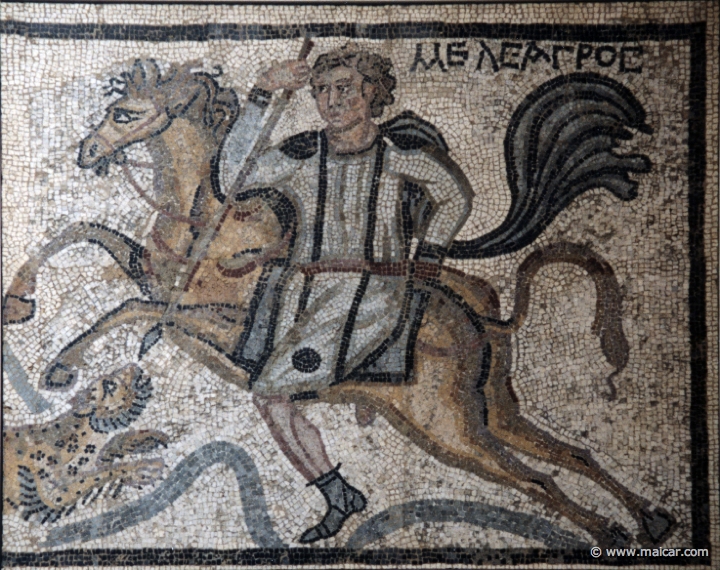
The Tale of Meleager

Meleager is one of the leading heroes of Greek mythology, best known for the Boar Hunt of Calydon. His story explores themes of fate, family relationships and tragic endings. Meleager's life, like that of many legendary heroes, is full of both divine and human elements. In this research project for JoS, I will explore Meleager's life, heroism, family and tragic end in detail.

meleager8105.jpg


Meleager was the son of Oineus and Althaea, king of Chalydon. Chalydon is a city in what is now Aetolia, in western Greece. Oineus was the king of the city and one of the most powerful rulers of Aetolia. Meleager's birth is far from the birth of an ordinary child, for he is a hero whose fate is predetermined.

One of the most remarkable events of Meleager's birth is related to the Moirae (Goddesses of Fate). According to legend, when Meleager was born, the Moirae, the Goddesses of Destiny, predetermined his fate. These goddesses say that Meleager's life depends on a piece of log. This log is a piece of wood that was burning in the family hearth when Meleager was born. The Moirae tell Althaea that if this log burns completely, Meleager will die. To protect her son Meleager, Althaea takes the log from the hearth and hides it in a safe place. Thus, Meleager's life depends on this log hidden by his mother.

This event shows that Meleager's fate was inevitable and that his death was directly related to the burning of a log. This concrete and inevitable nature of fate in Greek mythology is one of the most tragic elements of Meleager's story.

Meleager grows up to be a great warrior and hero. His father, Oineus, trained Meleager in the arts of war and he became famous for his bravery at a young age. Meleager is linked to other great heroes of Greek mythology and holds an important place among them. These heroes include Heracles, Theseus and Jason.

One of Meleager's most famous exploits was his adventure with the Argonauts on the ship Argo in search of the Golden Fleece. The Argonauts gathered under the leadership of Jason and traveled to Colchis to find the Golden Fleece. Meleager was among these heroes and faced many dangers. This was one of the highlights of his heroic career.

meleagre-tuant-le-sanglier-de-calydon.jpg


The most important adventure in Meleager's story is the Calydon Boar Hunt. According to this legend, Meleager's father, Oineus, made regular offerings to the gods for a year, but forgot one god, Artemis. In response to this disrespect, Artemis sent a gigantic wild boar to Calydon. This creature devastates the city, destroys the farmland and causes great harm to the people. To kill the boar, Oineus gathers heroes from all over Greece and organizes a great hunt.

This hunt becomes one of the most important events of Greek mythology. Meleager comes forward to lead this hunt and gathers the heroes who will take part in the hunt. Among the hunters are famous names such as Atalanta, Theseus, Castor and Pollux, Jason and Peleus. However, it is the famous female hunter Atalanta who attracts Meleager's special attention.

Atalanta is the first person to shoot an arrow at a wild boar during a hunt. This brave act deeply impresses Meleager and a romantic relationship blossoms between them. Meleager kills the boar and gives its hide to Atalanta as a reward for the hunt. However, this act causes a major conflict in Meleager's family.

Meleager's uncles, Toxeus and Plexippus, are vehemently opposed to giving the hunting trophy to a woman. They claim that this prize is their right and oppose Meleager. Meleager loses his temper and kills both uncles. This event becomes one of the most important turning points in Meleager's life and foreshadows his tragic end.

Meleager's murder of her uncles deeply affects her mother Althaea. Althaea cannot bear the death of her own brothers and decides to take revenge. Knowing that her son's life depends on that log, Althaea makes a tragic decision: She throws the log into the fire to kill Meleager.

Althaea's decision is considered one of the most tragic events in Greek mythology. A mother is forced to end her son's life. As the log burns, Meleager burns to death from the inside. His tragic end reveals the inevitability of fate and the deadly consequences of family conflicts.

After Meleager's death, his family and kingdom are devastated. Althaea kills herself with regret over her son's death or, according to some legends, is driven to suicide by grief. After Meleager's death, the kingdom of Calydon weakened and the city gradually lost its power.

5720_orig.jpg


The story of Meleager is one of the most complex narratives in Greek mythology. Although he achieves great success as a hero, his conflicts with his family and the inevitability of fate deeply affect his life. Meleager is both a shining star of heroism and a victim of inevitable tragedy brought about by fate. His story is one that makes us reflect deeply on the concepts of the human spirit, complex familial relationships and heroism from ancient Greek mythology. This hero's ending is one of the most striking in mythology and in many ways explores the concept of tragedy in depth.

The story of Meleager has been treated and told in various forms by many Greek writers and poets. In Homer's epic “Iliad”, the story of Meleager is indirectly mentioned. During his passive resistance in the Trojan War, Achilles remembers and learns from Meleager's tragic end. Homer, in describing Meleager's fate, draws parallels with Achilles' own fate and offers readers a profound narrative.

Tragedy writers such as Sophocles were also influenced by the dramatic structure of Meleager's story. His fate has been one of the sources of inspiration for Ancient Greek theater, as he has the same fate as other tragic heroes. The themes of family conflicts, revenge and death are common themes in the works of great tragedy writers such as Sophocles and Euripides.

220px-Wall_painting_-_Meleagros_and_Atalanta_-_Pompeii_%28VI_9_3%29_-_Napoli_MAN_8980.jpg
 

Official Temple of Zeus Links

Back
Top