

Tethys333
Active member
Greetings to all.
Understanding the architecture that defines our religion and relates to our Gods is essential for every Zevist.
I’d like you to pay close attention to the post I’ve written today, as it’s full of details that I believe are necessary.
Today, we’ll explore the Parthenon in Athens together.
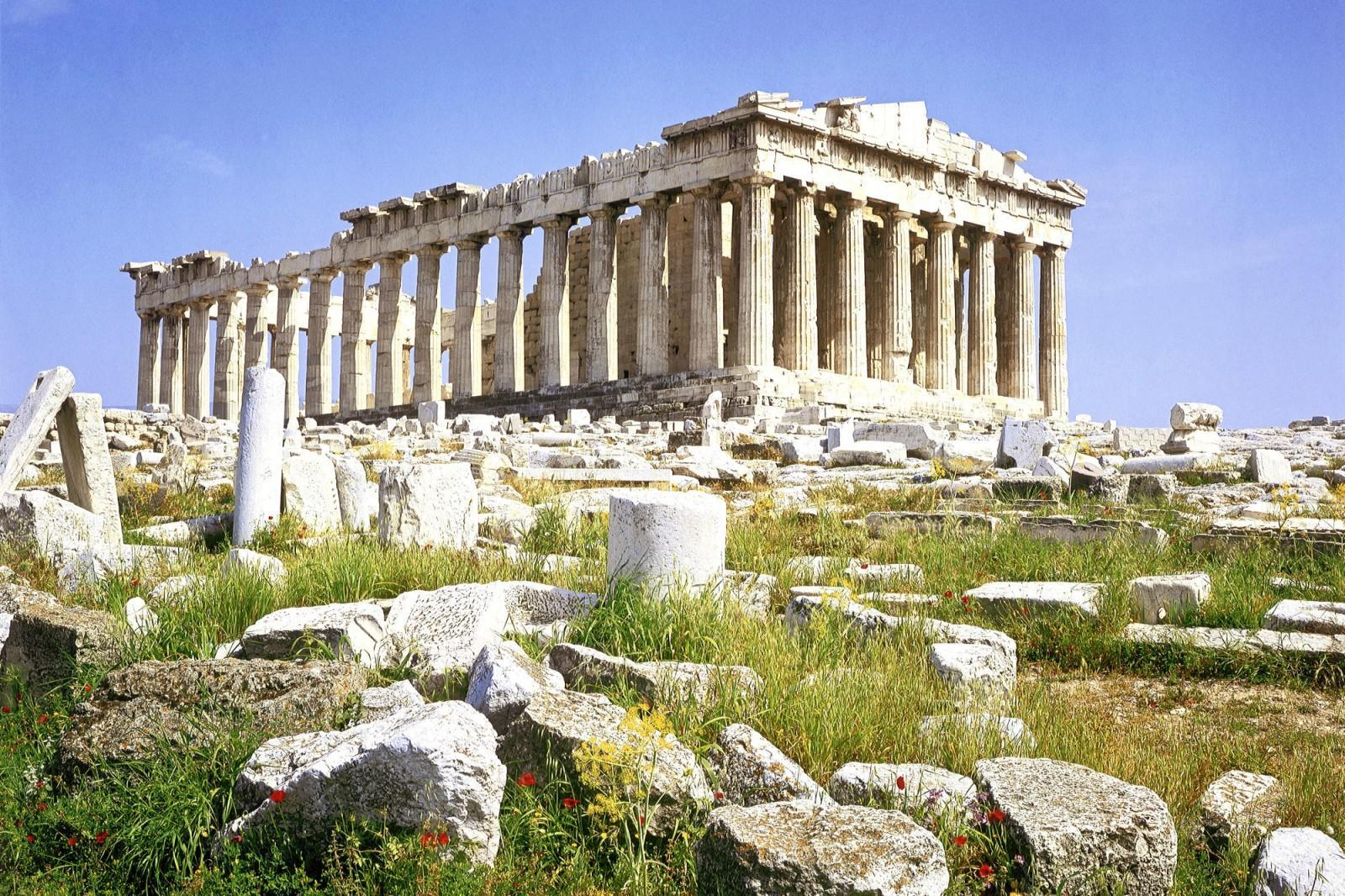
The Parthenon is a Greek Doric temple, built on the Acropolis of Athens and dedicated to Athena Parthénos (meaning “virgin”). It was strongly championed by Pericles.
It was built, starting in 465 B.C., in the heart of the Acropolis, not on the main axis of the access road but slightly offset to the right and in a corner position, with its main façade facing away from the Propylaea¹
The entrance to the temple, in fact, was located to the east, on the opposite side from the entrance to the Acropolis. Upon arriving at the sacred citadel, worshippers could admire both the rear (western) facade and a side (northern) facade.
The architects behind the project were Ictinus and Callicrates, about whom, however, we know very little. It has been hypothesized that Callicrates began construction of the Parthenon several years earlier, around 465 B.C., and that Ictinus took his place at a later date, in 447 or 445 B.C., when the southern section of the temple had already reached the level of the entablature². Ictinus made significant changes to Callicrates’ original design, altering what had already been built. He transformed the temple from a hexastyle to an octastyle, increasing the number of columns on the facade from six to eight. He also increased the number of side columns from 16 to 17 and the width of the cella to 19 meters.
The decision to enlarge the temple during construction was undoubtedly dictated by the need to create sufficient space to house the gigantic statue of Athena Parthenos, which the sculptor Phidias was creating for the cell, and to provide a spectacular setting for it. It cannot be ruled out, moreover, that Pericles himself, having decided to make the temple an expression of Athens’ new grandeur, was not satisfied with a traditional structure. Thus, the dimensions of the Parthenon were recalculated. Ictinus could not demolish what had already been erected and also had to reuse the column bases that had been prepared during the construction phase.
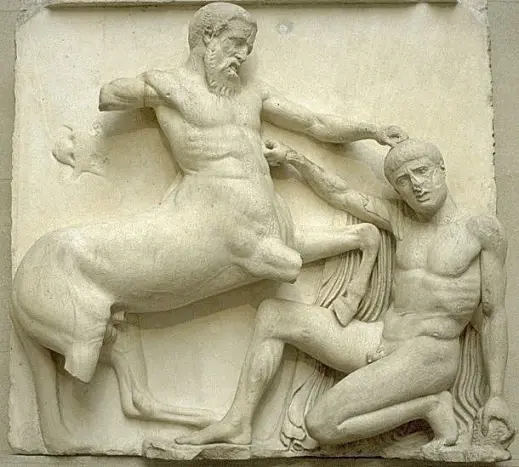
The exact role that Phidias played in the design of the Parthenon has not been fully clarified, but it is unlikely that the great sculptor acted as an architect. He was certainly entrusted with coordinating the entire decorative program, which included not only the statue in the cell but also the sculptures on the pediments and the bas-reliefs on the friezes.
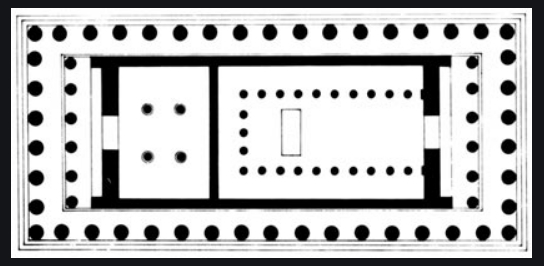
The Parthenon is structured as an octastyle peripteral temple.³ It features a crepidoma, a three-step base, and a peristyle, a continuous colonnade, comprising 46 columns arranged in a fairly compact formation. The naos (the cell), or central core, flanked by an entrance portico (prònaos) and a rear portico (opistòdomos), is quite spacious, undoubtedly to highlight the gigantic statue of Athena Parthènos, a masterpiece by Phidias, which the temple housed within.
This means that the peristyle, that is, the corridor formed by the outer colonnade (peristyle) and the walls of the naos, is proportionally somewhat narrower than in other contemporary temples, and the two entrance porticoes, front and rear, are also rather small.
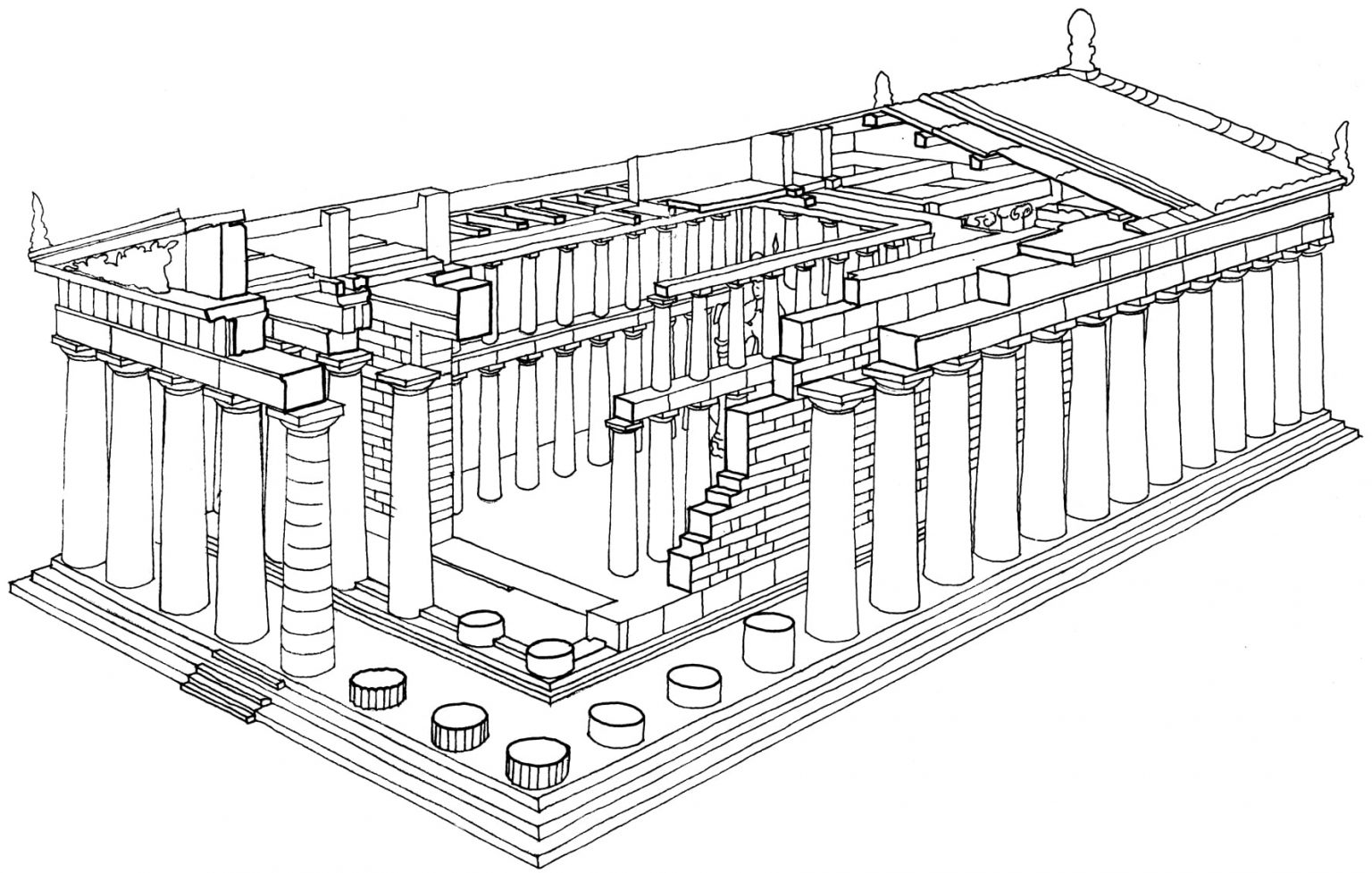
The naos of the Parthenon featured a transverse wall that divided it into two parts. The front section, the ekatòmpedon, the sacred part of the building, contained the colossal sculpture of the Goddess and was itself divided into three naves, created by two side colonnades connected by a third transverse colonnade at the rear. This distinctive U-shaped colonnade surrounded and highlighted the statue of Athena Parthènos.
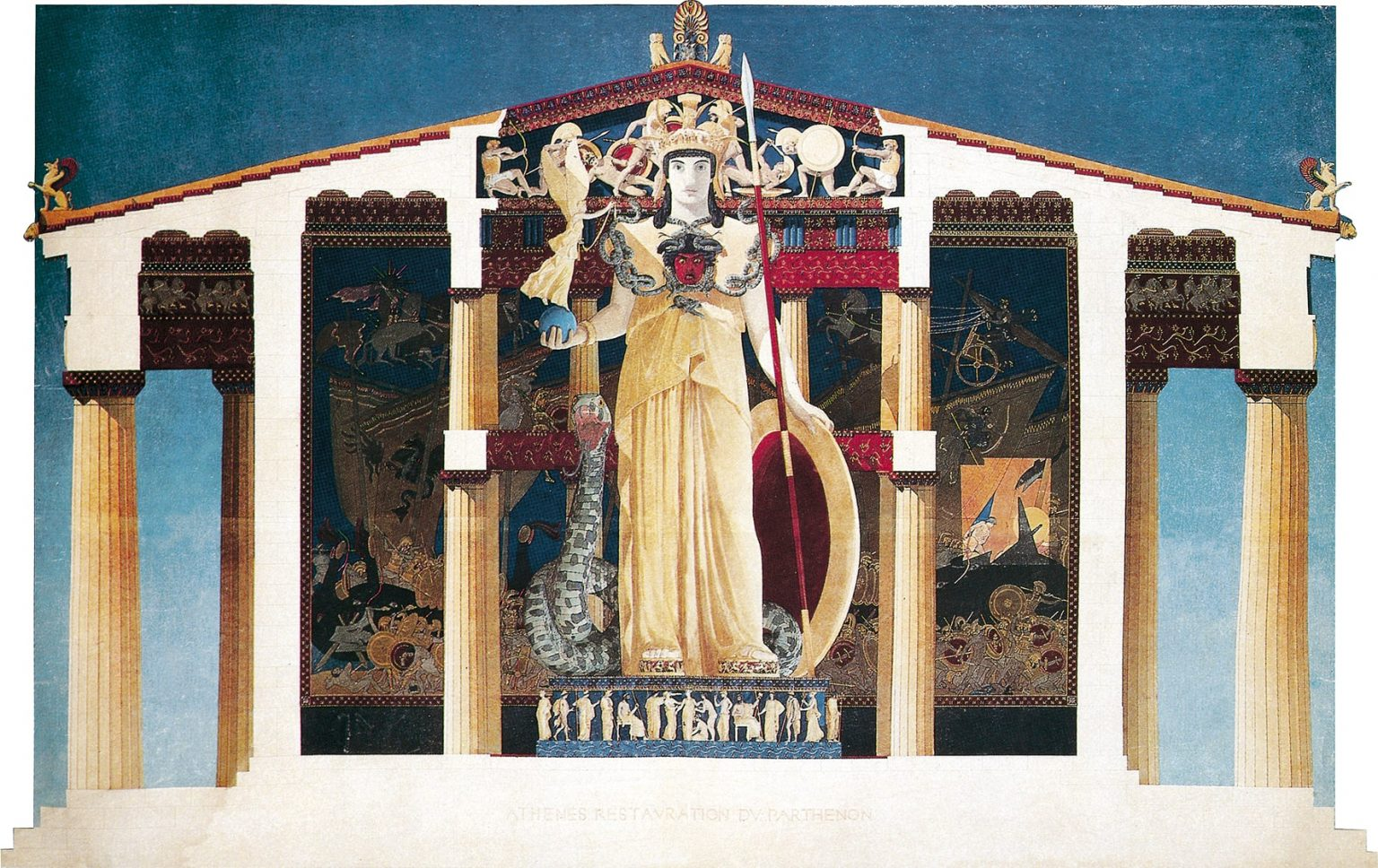
The rear section of the naos, known as the parthènon, was less than half as deep as the ekatòmpedon. Inside, the parthènon had four Ionic columns positioned at the corners of an imaginary rectangle; since it did not open onto the front cell, it was accessible only from the opistòdomos. The function of the parthènon has not been fully clarified. One theory suggests that it housed the temple’s treasury or even that of the city. Another hypothesis is that this space was reserved for Athenian virgins, who took turns weaving and embroidering the peplos to be offered to the goddess Athena during the Panathenaic festivals.
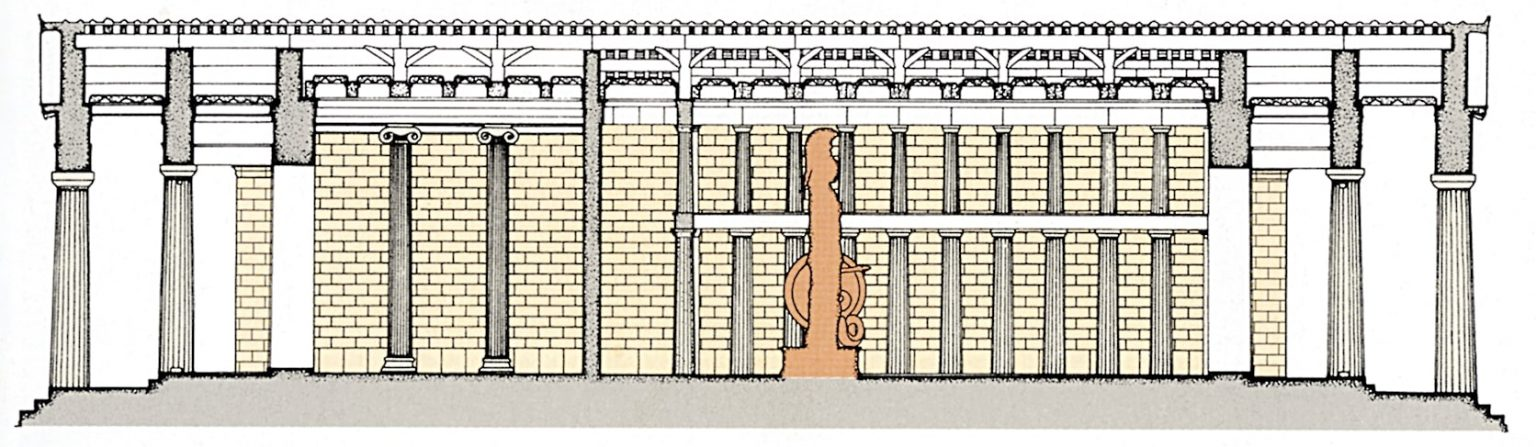
The two main facades of the Parthenon (the front one to the east and the rear one to the west) feature an octastyle colonnade, that is, one composed of eight columns, which supports the horizontal entablature. The sloping roof pitches created, at these facades, two pediments: large triangular openings enclosed by a wall (tympanum) that left space on the entablature to accommodate sculptures in the round. Probably, the three corners of the pediment were decorated, on the roof, with additional sculptures, known as acroteria.
The two side elevations were certainly much simpler, as they featured only the long colonnades of seventeen columns, the overlying entablature, and, at the top, the roof. The roof (now completely gone) was made of wood and covered not only the cella but also the outer corridor, accessible to the faithful. It was likely composed of a truss⁴ system and covered with terracotta tiles (embricus and coppi).
The Parthenon is a classical Doric temple: its capitals are not very flared, and the tapering of the column shafts (that is, the gradual decrease in diameter toward the top) is not pronounced. The pronaos and the opisthodomos, that is, the front and rear porticoes of the Parthenon, each featured six Doric columns, slightly smaller and shorter than those of the outer peristyle. The U-shaped colonnade of the ekatòmpedon, that is, the front part of the naos, was two-tiered, consisting of two superimposed rows of Doric columns.
All of the Parthenon’s sculptures and reliefs, as well as its main architectural elements (including the columns), were once vividly painted. The predominant colors were red, blue, yellow, and green.
In the Parthenon, the ratio of 9 to 4 recurs frequently. This is the proportion between the length and width of the entire building, measured at the stylobate, that is, the floor of the crepidoma; the same ratio is found between the height of the cornice, and likewise that of the roof eaves, and the height of the triglyphs in the frieze. This proportion can also be observed between the lower diameter of the outer columns and the width of the triglyphs. Equally prevalent is the use of the so-called golden section (or golden ratio), whose constant value corresponds to the number 1.618: this value governs, for example, the proportions of the main facades, whose width is equal to 1.618 times the total height. The golden ratio is then repeated several times among different parts of the facades.
Describing the Parthenon is quite complex, but I still think it’s essential to understand it. There’s a lot to say, including about the bombing it endured and its reconstruction, but I believe the key details lie precisely in the geometry and artistry that define it.
“Knowledge arises from the perception of forms.” – Aristotle, Metaphysics
This is what Aristotle says about art and aesthetics. Like philosophy, art was also considered sacred and important in ancient civilizations.
According to the ancient philosophers, particularly Plato, the world was an imitation of the world of ideas, the true, divine world.
Art, Plato said, is “mimesis of mimesis,” imitation of imitation. Just as the world follows an order, so does art; it sought to represent that invisible order that no one could see. The artist does not “invent”: he makes visible what is already true in the structure of reality.
Art contributes to our spiritual journey by helping us see everything we are not aware of. Piece by piece, color by color, they can create something great.
_________________________________________________________________________________________________________
1. Propylaea (from the Greek propylaia, “in front of the gate”) are monumental porticoed entrances, characterized by columns, that lead to temples, shrines, or complexes of great importance. They are typical of classical Greek architecture;
2. Entablature is a horizontal architectural element, typical of classical orders, supported by columns or pilasters, that serves as a link between the vertical structure and the roof. Composed of three main parts (architrave, frieze, and cornice), it supports the weight of the roof;
3. Peripteral temple is a sacred building from classical antiquity, Greek or Roman, characterized by a rectangular floor plan with a central sanctuary (naos) entirely surrounded by a colonnade, known as a peristyle or peristasis. This structure creates a continuous quadrangular portico that surrounds the building on all four sides.
4. A truss is a triangular architectural and structural element used primarily to support pitched roofs. Consisting of a lattice framework (typically made of wood, steel, or concrete), it is designed to span large distances without intermediate supports, absorbing horizontal forces and transferring only vertical loads to the walls.
Understanding the architecture that defines our religion and relates to our Gods is essential for every Zevist.
I’d like you to pay close attention to the post I’ve written today, as it’s full of details that I believe are necessary.
Today, we’ll explore the Parthenon in Athens together.
The Parthenon is a Greek Doric temple, built on the Acropolis of Athens and dedicated to Athena Parthénos (meaning “virgin”). It was strongly championed by Pericles.
It was built, starting in 465 B.C., in the heart of the Acropolis, not on the main axis of the access road but slightly offset to the right and in a corner position, with its main façade facing away from the Propylaea¹
The entrance to the temple, in fact, was located to the east, on the opposite side from the entrance to the Acropolis. Upon arriving at the sacred citadel, worshippers could admire both the rear (western) facade and a side (northern) facade.
The architects behind the project were Ictinus and Callicrates, about whom, however, we know very little. It has been hypothesized that Callicrates began construction of the Parthenon several years earlier, around 465 B.C., and that Ictinus took his place at a later date, in 447 or 445 B.C., when the southern section of the temple had already reached the level of the entablature². Ictinus made significant changes to Callicrates’ original design, altering what had already been built. He transformed the temple from a hexastyle to an octastyle, increasing the number of columns on the facade from six to eight. He also increased the number of side columns from 16 to 17 and the width of the cella to 19 meters.
The decision to enlarge the temple during construction was undoubtedly dictated by the need to create sufficient space to house the gigantic statue of Athena Parthenos, which the sculptor Phidias was creating for the cell, and to provide a spectacular setting for it. It cannot be ruled out, moreover, that Pericles himself, having decided to make the temple an expression of Athens’ new grandeur, was not satisfied with a traditional structure. Thus, the dimensions of the Parthenon were recalculated. Ictinus could not demolish what had already been erected and also had to reuse the column bases that had been prepared during the construction phase.
The exact role that Phidias played in the design of the Parthenon has not been fully clarified, but it is unlikely that the great sculptor acted as an architect. He was certainly entrusted with coordinating the entire decorative program, which included not only the statue in the cell but also the sculptures on the pediments and the bas-reliefs on the friezes.
The Parthenon is structured as an octastyle peripteral temple.³ It features a crepidoma, a three-step base, and a peristyle, a continuous colonnade, comprising 46 columns arranged in a fairly compact formation. The naos (the cell), or central core, flanked by an entrance portico (prònaos) and a rear portico (opistòdomos), is quite spacious, undoubtedly to highlight the gigantic statue of Athena Parthènos, a masterpiece by Phidias, which the temple housed within.
This means that the peristyle, that is, the corridor formed by the outer colonnade (peristyle) and the walls of the naos, is proportionally somewhat narrower than in other contemporary temples, and the two entrance porticoes, front and rear, are also rather small.
The naos of the Parthenon featured a transverse wall that divided it into two parts. The front section, the ekatòmpedon, the sacred part of the building, contained the colossal sculpture of the Goddess and was itself divided into three naves, created by two side colonnades connected by a third transverse colonnade at the rear. This distinctive U-shaped colonnade surrounded and highlighted the statue of Athena Parthènos.
The rear section of the naos, known as the parthènon, was less than half as deep as the ekatòmpedon. Inside, the parthènon had four Ionic columns positioned at the corners of an imaginary rectangle; since it did not open onto the front cell, it was accessible only from the opistòdomos. The function of the parthènon has not been fully clarified. One theory suggests that it housed the temple’s treasury or even that of the city. Another hypothesis is that this space was reserved for Athenian virgins, who took turns weaving and embroidering the peplos to be offered to the goddess Athena during the Panathenaic festivals.
The two main facades of the Parthenon (the front one to the east and the rear one to the west) feature an octastyle colonnade, that is, one composed of eight columns, which supports the horizontal entablature. The sloping roof pitches created, at these facades, two pediments: large triangular openings enclosed by a wall (tympanum) that left space on the entablature to accommodate sculptures in the round. Probably, the three corners of the pediment were decorated, on the roof, with additional sculptures, known as acroteria.
The two side elevations were certainly much simpler, as they featured only the long colonnades of seventeen columns, the overlying entablature, and, at the top, the roof. The roof (now completely gone) was made of wood and covered not only the cella but also the outer corridor, accessible to the faithful. It was likely composed of a truss⁴ system and covered with terracotta tiles (embricus and coppi).
The Parthenon is a classical Doric temple: its capitals are not very flared, and the tapering of the column shafts (that is, the gradual decrease in diameter toward the top) is not pronounced. The pronaos and the opisthodomos, that is, the front and rear porticoes of the Parthenon, each featured six Doric columns, slightly smaller and shorter than those of the outer peristyle. The U-shaped colonnade of the ekatòmpedon, that is, the front part of the naos, was two-tiered, consisting of two superimposed rows of Doric columns.
All of the Parthenon’s sculptures and reliefs, as well as its main architectural elements (including the columns), were once vividly painted. The predominant colors were red, blue, yellow, and green.
In the Parthenon, the ratio of 9 to 4 recurs frequently. This is the proportion between the length and width of the entire building, measured at the stylobate, that is, the floor of the crepidoma; the same ratio is found between the height of the cornice, and likewise that of the roof eaves, and the height of the triglyphs in the frieze. This proportion can also be observed between the lower diameter of the outer columns and the width of the triglyphs. Equally prevalent is the use of the so-called golden section (or golden ratio), whose constant value corresponds to the number 1.618: this value governs, for example, the proportions of the main facades, whose width is equal to 1.618 times the total height. The golden ratio is then repeated several times among different parts of the facades.
Describing the Parthenon is quite complex, but I still think it’s essential to understand it. There’s a lot to say, including about the bombing it endured and its reconstruction, but I believe the key details lie precisely in the geometry and artistry that define it.
“Knowledge arises from the perception of forms.” – Aristotle, Metaphysics
This is what Aristotle says about art and aesthetics. Like philosophy, art was also considered sacred and important in ancient civilizations.
According to the ancient philosophers, particularly Plato, the world was an imitation of the world of ideas, the true, divine world.
Art, Plato said, is “mimesis of mimesis,” imitation of imitation. Just as the world follows an order, so does art; it sought to represent that invisible order that no one could see. The artist does not “invent”: he makes visible what is already true in the structure of reality.
Art contributes to our spiritual journey by helping us see everything we are not aware of. Piece by piece, color by color, they can create something great.
_________________________________________________________________________________________________________
1. Propylaea (from the Greek propylaia, “in front of the gate”) are monumental porticoed entrances, characterized by columns, that lead to temples, shrines, or complexes of great importance. They are typical of classical Greek architecture;
2. Entablature is a horizontal architectural element, typical of classical orders, supported by columns or pilasters, that serves as a link between the vertical structure and the roof. Composed of three main parts (architrave, frieze, and cornice), it supports the weight of the roof;
3. Peripteral temple is a sacred building from classical antiquity, Greek or Roman, characterized by a rectangular floor plan with a central sanctuary (naos) entirely surrounded by a colonnade, known as a peristyle or peristasis. This structure creates a continuous quadrangular portico that surrounds the building on all four sides.
4. A truss is a triangular architectural and structural element used primarily to support pitched roofs. Consisting of a lattice framework (typically made of wood, steel, or concrete), it is designed to span large distances without intermediate supports, absorbing horizontal forces and transferring only vertical loads to the walls.


![Lucius Invictus [NG]](/data/avatars/s/69/69213.jpg?1767423438)