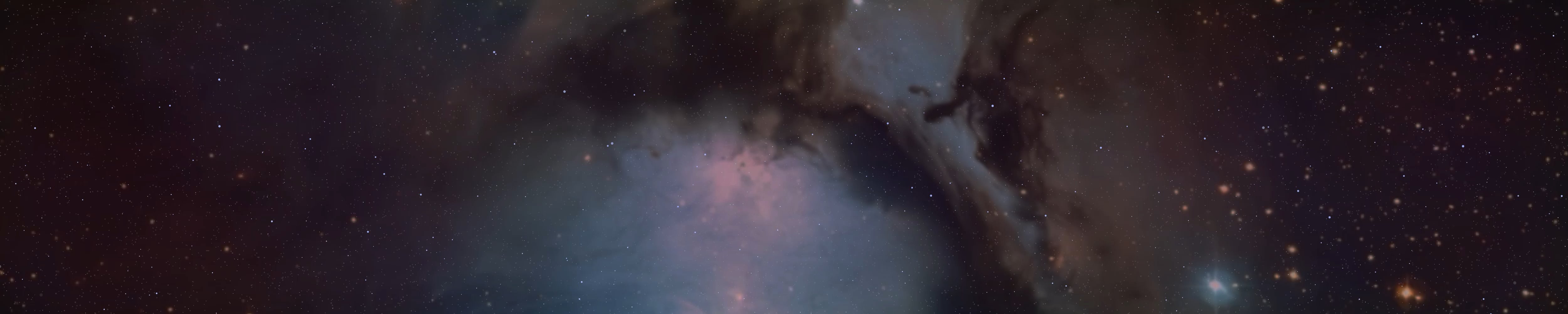

I honestly didn't expect results this quickly but here it is:
"Izanagi-no-Mikoto (male) and Izanami-no-Mikoto (female) were called by all the myriad gods and asked to help each other to create a new land which was to become Japan."
"They were given a spear with which they stirred the water, and when removed water dripped from the end, an island was created in the great nothingness."
Most likely symbolic of the Magnum Opus! By combining male and female aspects of the soul, stirring the "water" with a spear (Symbolic of the Kudalini Serpent) an island (Philosipher's stone?) was created.
They lived on this island, and created a palace and within was a large pole (The Spine).
When they wished to bear offspring, they performed a ritual each rounding a pole, male to the left and female to the right, the female greeting the male first.
They had 2 children (islands) which turned out badly and they cast them out. They decided that the ritual had been done incorrectly the first time (Hip or Shoulder Chackras).
They repeated the ritual but according to the correct laws of nature, the male spoke first.
They then gave birth to the 8 perfect islands of the Japanese archipelago (Main Chakras).
After the islands, they gave birth to the other Kami, Izanami-no-Mikoto dies (via "Childbirth" to Kagutsuch -no-mikoto, "incarnation of fire", a warning of Fire and 6th Chakra DO NOT mix?) and Izanagi-no-Mikoto tries to revive her.
His attempts to deny the laws of life and death have bad consequences.
Izanagi lamented the death of Izanami and undertook a journey to Yomi ("the shadowy land of the dead"). Izanagi found little difference between Yomi and the land above, except for the eternal darkness. However, this suffocating darkness was enough to make him ache for light and life. Quickly, he searched for Izanami and found her. At first, Izanagi could not see her for she was well hidden in the shadows. Nevertheless, he asked her to return with him. Izanami spat at Izanagi and informed him that he was too late. She had already eaten the food of the underworld and now belonged to the land of the dead. (No idea, the HPs might have something)
Izanagi was shocked at this news, but he refused to give in to her wishes to be left to the dark embrace of Yomi. Izanami agreed to return to the world but first requested to have some time to rest. She instructed Izanagi to not come into her bedroom. After a long wait, Izanami did not come out of her bedroom, and Izanagi was worried. While Izanami was sleeping, he took the comb that bound his long hair and set it alight as a torch. Under the sudden burst of light, he saw the horrid form of the once beautiful and graceful Izanami. The flesh of her ravaged body was rotting and was overrun with maggots and foul creatures. (Once again, no idea. lol, Help me out here?)
Crying out loud, Izanagi could no longer control his fear and started to run, intending to return to the living and to abandon his death-ridden wife. Izanami woke up shrieking and indignant and chased after him. Izanami instructed the shikome, or foul women, hunt for the frightened Izanagi and to bring him back.
Izanagi, thinking quickly, hurled his headdress, which became a bunch of black grapes (That's symbolic of some form of Spiritual Alchemy, I can gather that). The shikome fell on these but continued pursuit. Next, Izanagi threw his comb, which became a clump of bamboo shoots. Now it was Yomi's creatures that began to give chase, but Izanagi urinated against a tree and created a great river that increased his lead. (LOL) Unfortunately, the shikome still pursued Izanagi, who began to hurl peaches at them. He knew that this would not delay them for long, but he was nearly free, for the boundary of Yomi was now close at hand.
Izanagi burst through the entrance and quickly pushed a boulder to the entrance of Yomi. Izanami screamed from behind this barricade and told Izanagi that, if he left her, she would destroy 1,000 living people every day. He furiously replied that he would give life to 1,500. (That's DEFINITLY Something important)
And so began the existence of Death, caused by the hands of the proud Izanami, the abandoned wife of Izanagi
The islands of Japan are to be considered a paradise as they were directly created by the gods for the people of Japan, and were ordained by the higher spirits to be created into the Japanese empire. Shinto is the fundamental connection between the power and beauty of nature (the land) and the people of Japan. It is the manifestation of a path to understanding the institution of divine power.
Shinto teaches that everything contains a kami (神 "spiritual essence"? (Witchpower, Chi, Vril), commonly translated as god or spirit). Shinto's spirits are collectively called yaoyorozu no kami (八百万の神?), an expression literally meaning "eight million kami" (Most likely the 14400 Nadis), but interpreted as meaning "myriad", although it can be translated as "many Kami". There is a phonetic variation kamu and a similar word among Ainu kamui. There is an analog "mi-koto".[9]
Kami is generally accepted to describe the innate supernatural force that is above the actions of man, the realm of the sacred, and is inclusive of gods, spirit figures, and human ancestors.(Yep, friggin Witchpower, no doubt about it) All mythological creatures of the Japanese cultural tradition, of the Buddhistic tradition, Christian God, Hindu gods, Islamic Allah, various angels and demons of all faiths among others are considered Kami for the purpose of Shinto faith.
(So they didn't get fucking slaughtered they let them corrupt a bit of knowledge, but I think the Xians got played without realizing it... Shinto Priests kept all the original documents and gave them a copy to doodle their crap on?)
The kami reside in all things, but certain places are designated for the interface of people and kami (the common world and the sacred): sacred nature, shrines, and kamidana. There are natural places considered to have an unusually sacred spirit about them, and are objects of worship. They are frequently mountains, trees, unusual rocks, rivers, waterfalls, and other natural edifices. In most cases they are on or near a shrine grounds. The shrine is a building built in which to house the kami, with a separation from the "ordinary" world through sacred space with defined features based on the age and lineage of the shrine. The kamidana is a home shrine (placed on a wall in the home) that is a "kami residence" that acts as a substitute for a large shrine on a daily basis. In each case the object of worship is considered a sacred space inside which the kami spirit actually dwells, being treated with the utmost respect and deference. (Don't really know what this symbolizes, probably similar to an Alter, but in which case, the likely Spiritual Satanism likely had those large scale gatherings... maybe the original celebration of Yule season had that kind of scale, totally unsure.)
_En.Wikipedia.org/wiki/Shinto
Yomi or Yomi-no-kuni (黄泉 or 黄泉の国?) is the Japanese word for the land of the dead (World of Darkness).[1] According to Shinto mythology as related in Kojiki, this is where the dead go to dwell and apparently rot indefinitely. Once one has eaten at the hearth of Yomi it is impossible to return to the land of the living. Yomi is comparable to Hades or hell and is most commonly known for Izanami's retreat to that place after her death. Izanagi followed her there and upon his return he washed himself, creating Amaterasu, Susanoo, and Tsukuyomi-no-Mikoto in the process (See Japanese mythology).
This realm of the dead seems to have geographical continuity with this world and certainly cannot be thought of as a paradise to which one would aspire, nor can it appropriately be described as a hell in which one suffers retribution for past deeds; rather, all deceased carry on a gloomy and shadowy existence in perpetuity regardless of their behavior in life. Many scholars believe that the image of Yomi was derived from ancient Japanese tombs in which corpses were left for some time to decompose.
Yomi is ruled over by Izanami no Mikoto, the Grand Deity of Yomi (Yomotsu-Ōkami 黄泉大神). According to Kojiki, the entrance to Yomi lies in Izumo province and was sealed off by Izanagi upon his flight from Yomi, at which time he permanently blocked the entrance by placing a massive boulder (Chibiki-no-Iwa 千引の岩) at the base of the slope that leads to Yomi (Yomotsu Hirasaka 黄泉平坂 or 黄泉比良坂). Upon his return to Ashihara-no-Nakatsukuni, Izanagi noted that Yomi is a "polluted land" (kegareki kuni). This opinion reflects the traditional Shinto association between death and pollution. Later Susanoo takes this position over. (Most likely the Stangnance of the human soul?)
As could be expected, Izanagi went on to purify himself after recovering from his descent to Yomi. As he undressed and removed the adornments of his body, each item that he dropped to the ground formed a deity. Even more gods came into being when he went to the water to wash himself. The most important ones were created once he washed his face:
Amaterasu (incarnation of the sun) from his left eye, ()
Tsukuyomi (incarnation of the moon) from his right eye, and
Susanoo (incarnation of storms and ruler of the sea and storms) from his nose.
Izanagi went on to divide the world between them with Amaterasu inheriting the heavens, Tsukuyomi taking control of the night and moon and the storm god Susanoo owning the seas.[6] In some versions of the myth, Susanoo rules not only the seas but also all elements of a storm, including snow and hail, and, in rare cases, even sand. (So, yeah, something like that but I'm unsure as to what it means, maybe nothing?)
Takama-ga-hara (高天原 the Plain of High Heaven?) is a place in Japanese mythology. In Shinto, Takama-ga-hara (or Takama no Hara) is the dwelling place of the kami. It is believed to be connected to the Earth by the bridge Ama-no uki-hashi (the "Floating Bridge of Heaven").
In Shinto, ame (Or, "Heaven") is a lofty, sacred world, the home of the amatsukami. Some scholars have attempted to explain the myth of descent of the gods from the Takama-ga-hara as an allegory of the migration of peoples. However, it is likely to have referred from the beginning to a higher world in a religious sense (Bullshit, you know that fucker was a Xian retard trying to corrupt the truth some more). A Shinto myth explains that at the time of creation, light, pure elements branched off to become heaven (No, Takama-Ga-Hara!). Heavy, turbid elements branched off to become earth or "tsuchi" (Yes! Higher densities, earth was made from the heavier materials: We're Talking Takama-Ga-Hara as the Astral Plane!). "Ame" (WTF! "Ame" Means "Rain" F**KING "RAIN") became the home of the amatsukami or gods of heaven, while tsuchi became the home of kunitsukami or gods of the land (BLAH, BLAH, BLAH). The amatsukami are said to have descended from "heaven" to pacify and perfect this world[1]). (As a Spiritual Satanist, I think of this as Similar to our Gods and their Spiritual Guidance, maybe a thing or two might be learned from studying this further, but I'm done for now. If I'm right, then just maybe we can get the Shinto gods to help in our cause, the threat of Xianity and their Yehubor masters lingering at the doorstep might've put them in a position Similar to the Gods of Hell.)
HAIL BAAL LUCIFER!!
HAIL THE FOUR CROWNED PRINCES OF DUAT!!
HAIL ALL THE GODS OF DUAT INTO ETERNATY!!
AND HAIL FREE WILL!!
-Alexander Sage McDaniel.
"Izanagi-no-Mikoto (male) and Izanami-no-Mikoto (female) were called by all the myriad gods and asked to help each other to create a new land which was to become Japan."
"They were given a spear with which they stirred the water, and when removed water dripped from the end, an island was created in the great nothingness."
Most likely symbolic of the Magnum Opus! By combining male and female aspects of the soul, stirring the "water" with a spear (Symbolic of the Kudalini Serpent) an island (Philosipher's stone?) was created.
They lived on this island, and created a palace and within was a large pole (The Spine).
When they wished to bear offspring, they performed a ritual each rounding a pole, male to the left and female to the right, the female greeting the male first.
They had 2 children (islands) which turned out badly and they cast them out. They decided that the ritual had been done incorrectly the first time (Hip or Shoulder Chackras).
They repeated the ritual but according to the correct laws of nature, the male spoke first.
They then gave birth to the 8 perfect islands of the Japanese archipelago (Main Chakras).
After the islands, they gave birth to the other Kami, Izanami-no-Mikoto dies (via "Childbirth" to Kagutsuch -no-mikoto, "incarnation of fire", a warning of Fire and 6th Chakra DO NOT mix?) and Izanagi-no-Mikoto tries to revive her.
His attempts to deny the laws of life and death have bad consequences.
Izanagi lamented the death of Izanami and undertook a journey to Yomi ("the shadowy land of the dead"). Izanagi found little difference between Yomi and the land above, except for the eternal darkness. However, this suffocating darkness was enough to make him ache for light and life. Quickly, he searched for Izanami and found her. At first, Izanagi could not see her for she was well hidden in the shadows. Nevertheless, he asked her to return with him. Izanami spat at Izanagi and informed him that he was too late. She had already eaten the food of the underworld and now belonged to the land of the dead. (No idea, the HPs might have something)
Izanagi was shocked at this news, but he refused to give in to her wishes to be left to the dark embrace of Yomi. Izanami agreed to return to the world but first requested to have some time to rest. She instructed Izanagi to not come into her bedroom. After a long wait, Izanami did not come out of her bedroom, and Izanagi was worried. While Izanami was sleeping, he took the comb that bound his long hair and set it alight as a torch. Under the sudden burst of light, he saw the horrid form of the once beautiful and graceful Izanami. The flesh of her ravaged body was rotting and was overrun with maggots and foul creatures. (Once again, no idea. lol, Help me out here?)
Crying out loud, Izanagi could no longer control his fear and started to run, intending to return to the living and to abandon his death-ridden wife. Izanami woke up shrieking and indignant and chased after him. Izanami instructed the shikome, or foul women, hunt for the frightened Izanagi and to bring him back.
Izanagi, thinking quickly, hurled his headdress, which became a bunch of black grapes (That's symbolic of some form of Spiritual Alchemy, I can gather that). The shikome fell on these but continued pursuit. Next, Izanagi threw his comb, which became a clump of bamboo shoots. Now it was Yomi's creatures that began to give chase, but Izanagi urinated against a tree and created a great river that increased his lead. (LOL) Unfortunately, the shikome still pursued Izanagi, who began to hurl peaches at them. He knew that this would not delay them for long, but he was nearly free, for the boundary of Yomi was now close at hand.
Izanagi burst through the entrance and quickly pushed a boulder to the entrance of Yomi. Izanami screamed from behind this barricade and told Izanagi that, if he left her, she would destroy 1,000 living people every day. He furiously replied that he would give life to 1,500. (That's DEFINITLY Something important)
And so began the existence of Death, caused by the hands of the proud Izanami, the abandoned wife of Izanagi
The islands of Japan are to be considered a paradise as they were directly created by the gods for the people of Japan, and were ordained by the higher spirits to be created into the Japanese empire. Shinto is the fundamental connection between the power and beauty of nature (the land) and the people of Japan. It is the manifestation of a path to understanding the institution of divine power.
Shinto teaches that everything contains a kami (神 "spiritual essence"? (Witchpower, Chi, Vril), commonly translated as god or spirit). Shinto's spirits are collectively called yaoyorozu no kami (八百万の神?), an expression literally meaning "eight million kami" (Most likely the 14400 Nadis), but interpreted as meaning "myriad", although it can be translated as "many Kami". There is a phonetic variation kamu and a similar word among Ainu kamui. There is an analog "mi-koto".[9]
Kami is generally accepted to describe the innate supernatural force that is above the actions of man, the realm of the sacred, and is inclusive of gods, spirit figures, and human ancestors.(Yep, friggin Witchpower, no doubt about it) All mythological creatures of the Japanese cultural tradition, of the Buddhistic tradition, Christian God, Hindu gods, Islamic Allah, various angels and demons of all faiths among others are considered Kami for the purpose of Shinto faith.
(So they didn't get fucking slaughtered they let them corrupt a bit of knowledge, but I think the Xians got played without realizing it... Shinto Priests kept all the original documents and gave them a copy to doodle their crap on?)
The kami reside in all things, but certain places are designated for the interface of people and kami (the common world and the sacred): sacred nature, shrines, and kamidana. There are natural places considered to have an unusually sacred spirit about them, and are objects of worship. They are frequently mountains, trees, unusual rocks, rivers, waterfalls, and other natural edifices. In most cases they are on or near a shrine grounds. The shrine is a building built in which to house the kami, with a separation from the "ordinary" world through sacred space with defined features based on the age and lineage of the shrine. The kamidana is a home shrine (placed on a wall in the home) that is a "kami residence" that acts as a substitute for a large shrine on a daily basis. In each case the object of worship is considered a sacred space inside which the kami spirit actually dwells, being treated with the utmost respect and deference. (Don't really know what this symbolizes, probably similar to an Alter, but in which case, the likely Spiritual Satanism likely had those large scale gatherings... maybe the original celebration of Yule season had that kind of scale, totally unsure.)
_En.Wikipedia.org/wiki/Shinto
Yomi or Yomi-no-kuni (黄泉 or 黄泉の国?) is the Japanese word for the land of the dead (World of Darkness).[1] According to Shinto mythology as related in Kojiki, this is where the dead go to dwell and apparently rot indefinitely. Once one has eaten at the hearth of Yomi it is impossible to return to the land of the living. Yomi is comparable to Hades or hell and is most commonly known for Izanami's retreat to that place after her death. Izanagi followed her there and upon his return he washed himself, creating Amaterasu, Susanoo, and Tsukuyomi-no-Mikoto in the process (See Japanese mythology).
This realm of the dead seems to have geographical continuity with this world and certainly cannot be thought of as a paradise to which one would aspire, nor can it appropriately be described as a hell in which one suffers retribution for past deeds; rather, all deceased carry on a gloomy and shadowy existence in perpetuity regardless of their behavior in life. Many scholars believe that the image of Yomi was derived from ancient Japanese tombs in which corpses were left for some time to decompose.
Yomi is ruled over by Izanami no Mikoto, the Grand Deity of Yomi (Yomotsu-Ōkami 黄泉大神). According to Kojiki, the entrance to Yomi lies in Izumo province and was sealed off by Izanagi upon his flight from Yomi, at which time he permanently blocked the entrance by placing a massive boulder (Chibiki-no-Iwa 千引の岩) at the base of the slope that leads to Yomi (Yomotsu Hirasaka 黄泉平坂 or 黄泉比良坂). Upon his return to Ashihara-no-Nakatsukuni, Izanagi noted that Yomi is a "polluted land" (kegareki kuni). This opinion reflects the traditional Shinto association between death and pollution. Later Susanoo takes this position over. (Most likely the Stangnance of the human soul?)
As could be expected, Izanagi went on to purify himself after recovering from his descent to Yomi. As he undressed and removed the adornments of his body, each item that he dropped to the ground formed a deity. Even more gods came into being when he went to the water to wash himself. The most important ones were created once he washed his face:
Amaterasu (incarnation of the sun) from his left eye, ()
Tsukuyomi (incarnation of the moon) from his right eye, and
Susanoo (incarnation of storms and ruler of the sea and storms) from his nose.
Izanagi went on to divide the world between them with Amaterasu inheriting the heavens, Tsukuyomi taking control of the night and moon and the storm god Susanoo owning the seas.[6] In some versions of the myth, Susanoo rules not only the seas but also all elements of a storm, including snow and hail, and, in rare cases, even sand. (So, yeah, something like that but I'm unsure as to what it means, maybe nothing?)
Takama-ga-hara (高天原 the Plain of High Heaven?) is a place in Japanese mythology. In Shinto, Takama-ga-hara (or Takama no Hara) is the dwelling place of the kami. It is believed to be connected to the Earth by the bridge Ama-no uki-hashi (the "Floating Bridge of Heaven").
In Shinto, ame (Or, "Heaven") is a lofty, sacred world, the home of the amatsukami. Some scholars have attempted to explain the myth of descent of the gods from the Takama-ga-hara as an allegory of the migration of peoples. However, it is likely to have referred from the beginning to a higher world in a religious sense (Bullshit, you know that fucker was a Xian retard trying to corrupt the truth some more). A Shinto myth explains that at the time of creation, light, pure elements branched off to become heaven (No, Takama-Ga-Hara!). Heavy, turbid elements branched off to become earth or "tsuchi" (Yes! Higher densities, earth was made from the heavier materials: We're Talking Takama-Ga-Hara as the Astral Plane!). "Ame" (WTF! "Ame" Means "Rain" F**KING "RAIN") became the home of the amatsukami or gods of heaven, while tsuchi became the home of kunitsukami or gods of the land (BLAH, BLAH, BLAH). The amatsukami are said to have descended from "heaven" to pacify and perfect this world[1]). (As a Spiritual Satanist, I think of this as Similar to our Gods and their Spiritual Guidance, maybe a thing or two might be learned from studying this further, but I'm done for now. If I'm right, then just maybe we can get the Shinto gods to help in our cause, the threat of Xianity and their Yehubor masters lingering at the doorstep might've put them in a position Similar to the Gods of Hell.)
HAIL BAAL LUCIFER!!
HAIL THE FOUR CROWNED PRINCES OF DUAT!!
HAIL ALL THE GODS OF DUAT INTO ETERNATY!!
AND HAIL FREE WILL!!
-Alexander Sage McDaniel.
![SaqqaraNox [NG]](/data/avatars/s/71/71414.jpg?1773425605)


