
Mnemosyne, Memory, and the Search for Truth
The purpose of this post is to reflect on the importance of memory, especially in modern times, when access to information has become almost immediate. Search engines, smartphones, cloud storage, and now artificial intelligence have made it easier than ever to retrieve information without having to retain it ourselves.
What is memory?
According to modern definitions, memory is the cognitive ability to encode, preserve, and retrieve information and experiences over time. It generally involves three fundamental processes: the acquisition and encoding of information, its storage or consolidation, and its later retrieval.
Memory, therefore, is not merely a passive archive. It also concerns the processes through which information enters us, is retained, and is made available again when needed.
Memory is obviously essential to our existence. It contributes to our identity, our skills, our relationships, and practically everything we consider important in life. Yet we tend to perceive its importance differently depending on the situation. When studying for an exam, we desperately want to remember everything we have learned. In ordinary life, however, forgetting a date, a fact, or some general information often seems less serious: a quick Internet search, or now a question to an AI, can retrieve it for us almost instantly.
In this sense, humanity has enormously expanded its memory through external storage systems. Writing, books, recordings, photographs, databases, and digital archives allow us to preserve vastly more information than any individual mind could retain.
This does not necessarily mean that human memory is simply “declining.” External tools can free cognitive resources and are immensely useful. What has changed is that we are increasingly able to offload part of the work of remembering onto external systems. As a result, we may have less reason to exercise certain forms of internal recall.
Interestingly, concerns of this kind are not new.
In Plato's Phaedrus, Socrates recounts the Egyptian story of Theuth, inventor of writing, and King Thamus. Theuth proudly presents writing as a discovery that will improve both memory and wisdom. Thamus responds that its effect may be the opposite:
“[275a] and now you, who are the father of letters, have been led by your affection to ascribe to them a power the opposite of that which they really possess. For this invention will produce forgetfulness in the minds of those who learn to use it, because they will not practice their memory. Their trust in writing, produced by external characters which are no part of themselves, will discourage the use of their own memory within them. You have invented an elixir not of memory, but of reminding; and you offer your pupils the appearance of wisdom, not true wisdom, for they will read many things without instruction and will therefore seem [275b] to know many things, when they are for the most part ignorant and hard to get along with, since they are not wise, but only appear wise.”
Thamus' criticism contains two separate ideas.
The first concerns memory itself. If information can always be stored externally, there is less pressure to retain and retrieve it internally.
The second is more subtle: having access to information is not the same thing as possessing knowledge. A person may be surrounded by texts, facts, and explanations without having truly understood or integrated them. External information can produce the appearance of knowledge without necessarily producing wisdom.
The Phaedrus was written in the fourth century BCE, at a time when writing was already well established but oral performance still had enormous cultural importance. Memory remained essential in Greek society.
This passage should therefore not be understood as a simplistic attack on writing. Writing has allowed humanity to preserve an amount of information that oral memory alone could never sustain. The important distinction is between preserving information externally and possessing knowledge internally.
Plato: Memory and Anamnesis
In Plato's dialogues, we can distinguish at least two important dimensions of memory.
The first is relatively close to our ordinary understanding of memory: μνήμη - mnēmē.
In the Theaetetus, Socrates compares memory to a block of wax within the soul, which he calls a gift of Mnemosyne, mother of the Muses. In some people this wax is larger, in others smaller; in some softer, in others harder. Our perceptions and thoughts leave impressions upon it like seals impressed into wax. As long as the impression remains, we remember; when it disappears, we forget.
Elsewhere, in the Philebus, memory is described as the preservation of perception.
But Plato also develops a much deeper and more metaphysical concept: ἀνάμνησις - anamnēsis, recollection.
Anamnesis is the process through which the soul recovers knowledge that it is not simply acquiring from nothing, but which it somehow already possessed.
In Plato's Meno, Meno poses a famous problem to Socrates, usually called Meno's Paradox:
If you already know what you are looking for, there is no need to search for it.
But if you do not know it at all, how could you recognize it when you find it?
Socrates answers through the idea of recollection. He introduces the doctrine that the soul is immortal and has encountered knowledge before its present embodied existence. Learning can therefore be understood, at least in part, as recovering what the soul already knew.
This should not be reduced to the simplistic idea that “I learned fact X in a previous life, therefore I already know fact X now.” The philosophical point is deeper: the soul possesses certain conditions or forms of knowledge that allow it to recognize truth when it is properly led toward it.
Plato illustrates this through the famous discussion between Socrates and an uneducated slave boy in the Meno. The boy has not studied geometry, yet through a sequence of questions Socrates guides him through a geometrical problem. The boy initially gives incorrect answers, gradually recognizes his errors, and eventually reaches the correct conclusion.
The teacher therefore does not merely fill an empty mind with information. He creates the conditions through which the other person can discover and recognize truth for himself.
This is also one of the ideas behind the Socratic method of teaching through questions.
The structure of the word anamnēsis itself is interesting:
ἀνά- (aná-) can mean “again,” “back,” and in other contexts “up” or “upward.”
μνήσις (mnēsis) refers to remembering and belongs to the same linguistic family as μνήμη (mnēmē), memory.
The normal meaning of anamnēsis is therefore “recollection” or “calling something back to memory.” Still, the additional sense of aná as movement upward offers an interesting symbolic image. Without claiming that this proves a theological meaning by etymology alone, it fits remarkably well with the Zevist conception of spiritual ascent toward higher truth.
For Zevists, this should sound familiar. Truth is approached through ascent, through higher spiritual centers, the opening of the Third Eye, and communication with the Divine.
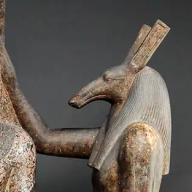
This is reflected directly in the Ritual of Thoth:
From the bottom of our souls, we plead to you:
Bring soul remembrance (ανάμνηση), not only memory (Μνήμη)!
Remind us of what we knew before we were born. Remind us of what we forgot when we took flesh.
The request is not merely for ordinary memory, but for anamnesis: the recovery of a deeper knowledge associated with the immortal soul.
Aristotle, although rejecting the Platonic idea that recollection retrieves knowledge possessed before birth, also gives memory an essential role in knowledge. In the Metaphysics, he argues that many memories of the same kind of event eventually form experience. Memory is therefore not merely an archive of the past; it is one of the foundations from which human experience and knowledge are built.
At this point, we can already see that memory occupied a far more important position in Greek thought than merely remembering names, dates, or events. It could become connected with experience, reasoning, knowledge, and- in Plato - the approach toward truth itself.
Mnemosyne
The powers and structures of reality are governed by higher intelligences. In Ancient Greek religion, the divine power most directly associated with memory was Mnemosyne.
In Hesiod, Mnemosyne is one of the Titanides, daughter of Gaia, Earth, and Ouranos, Heaven. She therefore belongs to the divine generation preceding the Olympian order of Zeus.
Unlike many of the other Titans, however, Mnemosyne becomes united with Zeus, and from their union the Muses are born.
This union becomes highly significant when we consider what Mnemosyne represents.
A particularly interesting tradition is preserved by Diodorus Siculus, who recounts a Cretan tradition concerning the Titans. In this account, the Titans are divine benefactors associated with discoveries useful to humanity.
Kronos is said to have brought mankind from a primitive way of life toward civilization. Hyperion is associated with understanding and explaining the movements of the heavenly bodies. Themis is credited with introducing divination, burnt sacrifices, and divine ordinances.
Mnemosyne receives an equally profound role.
Diodorus writes:
“Of the female Titans they say that Mnemosyne discovered powers of reasoning, and that she arranged the placement of the names to each of the things such as they are, by means of which we also express each thing and converse with one another; things which some say Hermes introduced.
But they attribute to this goddess also the power to bring things to renewal, and becomes memory for people, from which indeed she received her common name.”
- Diodorus Siculus, Library 5.67.3
According to this tradition, Mnemosyne is associated not only with memory, but also with reasoning, naming, language, and communication.
Her sphere even overlaps to some extent with that of Hermes, which Diodorus himself acknowledges.
This relationship appears again in the Homeric Hymn to Hermes. When Hermes sings of the origins of the Gods and how each received his divine portion, he honors Mnemosyne first:
“First among the Gods he honored Mnemosyne, mother of the Muses, in his song... And next the goodly son of Zeus hymned the rest of the immortals according to their order in age, and told how each was born, mentioning all in order as he struck the lyre upon his arm.”
Mnemosyne is therefore connected not simply with retaining information, but with ordering, naming, and making knowledge communicable.
The same association appears indirectly in the Orphic Hymn to Hermes, where Hermes is asked to grant, among other gifts, excellence in speech and powers of memory:
... Hear me as I pray, granting a good fulfilment of life
in works, in the graces of speech, and in powers of memory.
This overlap between memory and communication should not surprise us.
Language itself depends heavily upon memory. We must retain words, meanings, grammatical structures, and associations before we can communicate fluently. A rich vocabulary is not merely a matter of having encountered many words: those words must also remain accessible when we need them.
Memory, therefore, is one of the foundations upon which communication is built.
Mnemosyne also becomes especially meaningful when placed opposite Lethe - Forgetfulness.
In Pausanias' description of the oracle of Trophonius, the initiate drinks first from the water of Lethe, to forget what previously occupied his mind, and afterward from the water of Mnemosyne, so that he may remember what he experiences during the sacred descent.
This suggests something important: sacred memory does not necessarily mean remembering everything indiscriminately. Forgetfulness and remembrance can form part of the same spiritual process: letting go of what distracts us while preserving what truly matters.
The Muses
From the union of Zeus and Mnemosyne were born the nine Muses - Μοῦσαι, Mousai.
They were divine beings associated with song, poetry, music, dance, knowledge, inspiration, and the preservation of what deserves to be remembered.
As explained in the Temple of Zeus article on the Titanomachy, the union itself is meaningful. Mnemosyne, Memory, united with the divine order and sovereignty of Zeus, gives birth to the powers through which knowledge, beauty, harmony, poetry, and culture are expressed.
This symbolism becomes easy to understand when we consider the arts governed by the Muses.
Poetry, song, music, and the other inspired arts all depend upon memory, but memory alone is insufficient. Artistic creation also requires order, proportion, structure, harmony, and intelligence.
There was even an older tradition in which the Muses were only three:
Melete - Practice
Mneme - Memory
Aoide - Song
The sequence itself is revealing: practice develops memory, and memory makes song possible.
The poet held an important position in ancient Greek culture.
He was not merely an entertainer. In a culture where oral transmission remained fundamental, the poet could become a guardian of collective memory. Through composition and performance, poets transmitted heroic deeds, myths, genealogies, traditions, and stories concerning the Gods.
Albert Lord, writing about oral poetic tradition, emphasized the ancient religious dimension of the poet:
“Its symbols, its sounds, its patterns were born for magic productivity, not for aesthetic satisfaction. If later they provided such satisfaction, it was only for generations which had forgotten their real meaning.
The poet was sorcerer and seer before he became ‘artist.’ His structures were not abstract art, or art for its own sake. The roots of oral traditional narrative are not artistic but religious in the broadest sense.”
-Albert Lord, 1960
Hesiod describes the poet as an attendant of the Muses.
Within the religious and poetic worldview of archaic Greece, the inspired poet could narrate events of the distant past with an authority that surpassed ordinary human memory. The Muses, being Divine, were believed to possess knowledge inaccessible to ordinary mortals, and through their inspiration the poet could speak of events he had never personally witnessed.
The Muses were therefore not understood merely as forces helping someone compose an attractive poem or a beautiful song. They represented the divine source through which memory, knowledge, inspiration, and artistic expression could be brought into the human world.
The relationship becomes clear:
Mnemosyne preserves and recalls.
The Muses transform what is preserved into song, poetry, culture, and beauty.
And through those works, memory is transmitted to others.
Conclusion
Today we possess external systems of memory on a scale the ancient world could never have imagined.
This does not make memory obsolete. If anything, it makes the distinction between access to information and internal knowledge increasingly important.
We can store almost unlimited amounts of information outside ourselves. We can retrieve facts within seconds. But external storage cannot entirely replace the internal structures through which we recognize, connect, evaluate, understand, and integrate what we encounter.
The Greeks did not view memory merely as a mechanism for storing and retrieving past events.
In Aristotle, memory becomes one of the foundations of experience.
In Plato, recollection can become a path toward truths that transcend immediate sensory experience.
In religious tradition, Mnemosyne governs not only remembrance, but becomes associated with reasoning, language, order, and the preservation of knowledge.
And through her union with Zeus arise the Muses, through whom memory becomes poetry, music, inspiration, beauty, and collective culture.
From a Zevist perspective, this gives memory an even deeper spiritual significance. Mnemosyne is not merely useful when we want to remember something. A sacred relationship with Memory can become part of the effort to recover what has been forgotten, strengthen the soul's connection with truth, and advance spiritually.
This post only scratches the surface of Mnemosyne and the philosophy of memory. Entire books could be devoted to Plato and Aristotle alone, without even entering fully into the mysteries surrounding Mnemosyne, the Muses, Lethe, initiation, and the afterlife.
What I mainly wanted to communicate is something simpler:
Memory should not be treated as an outdated faculty made unnecessary by technology.
It is one of the foundations through which information becomes experience, experience becomes understanding, and understanding becomes part of who we are.
For this reason, I would like to conclude with the Orphic Hymn to Mnemosyne, as presented on the ToZ Ritual website.
Μνημοσύνην καλέω, Ζηνὸς σύλλεκτρον, ἄνασσαν,
ἣ Μούσας τέκνωσ’ ἱεράς, ὁσίας, λιγυφώνους,
ἐκτὸς ἔχουσ’ ἀπάτης μνήμην βλαψίφρονος αἰεί,
πάντα νόον συνέχουσα βροτῶν ψυχῇσι σύνοικον,
εὐδύνατον κρατερὸν θνητῶν αὔξουσα λογισμόν,
ἡδυτάτη, φιλάγρυπνος ὑπομνήσκουσά τε πάντα,
ὧν ἂν ἕκαστος ἀεὶ στέρνοις γνώμην κατάθηται,
οὔτι παρεκβαίνουσ’, ἐπεγείρουσα φρένα πᾶσιν.
ἀλλά, μάκαιρα θεά, μύσταις μνήμην ἐπέγειρε
εὐιέρου τελετῆς, λήθην δ’ ἀπὸ τῶνδ’ ἀπόπεμπε.
I call Mnemosyne, Queen and bedfellow of Zeus,
who bore the sacred Muses, holy and clear-voiced,
ever keeping memory apart from mind-harming deception,
holding together all the mind that dwells within mortal souls,
strengthening the powerful, steadfast reasoning of mortals,
most sweet, loving wakefulness, bringing all things to remembrance,
whatever each one has entrusted as understanding within the breast,
never turning aside, awakening the mind in all.
But, blessed Goddess, awaken in the initiates the remembrance
of the holy rite, and send forgetfulness far away from them.
Sources and Further Reading
Michiel van Veldhuizen, A Theology of Memory: The Concept of Memory in the Greek Experience of the Divine, Master's Thesis, Brandeis University, 2012.
Plato, Phaedrus, especially 274c-275d - Theuth, Thamus, writing, memory and the appearance of wisdom.
Perseus Digital Library
Plato, Meno, Meno's Paradox and the doctrine of recollection.
Perseus Digital Library
Aristotle, On Memory and Recollection; Metaphysics, Book I - memory, recollection, experience and knowledge.
MIT Classics - On Memory and Recollection
Hesiod, Theogony - Mnemosyne, Zeus and the birth of the Muses.
Theoi - Hesiod's Theogony
Diodorus Siculus, Library of History 5.67.3 - Mnemosyne, reasoning, naming and communication.
Theoi - Diodorus Siculus, Book V
Pausanias, Description of Greece, especially 9.39 - the waters of Lethe and Mnemosyne at the oracle of Trophonius.
Homeric Hymn to Hermes, 427-432 - Hermes honoring Mnemosyne first in his song.
Albert B. Lord, The Singer of Tales, Harvard University Press, 1960.
Temple of Zeus, Titanomachy - Part I.
Temple of Zeus
Temple of Zeus / ToZ Rituals, Thoth Power Ritual.
Thoth Power Ritual
Temple of Zeus / ToZ Rituals, Orphic Hymn to Hermes.
Orphic Hymn to Hermes
Temple of Zeus / ToZ Rituals, Orphic Hymn to Mnemosyne.
Orphic Hymn to Mnemosyne
Apollo's Astrology: https://www.astroapollo.org