

Bennu
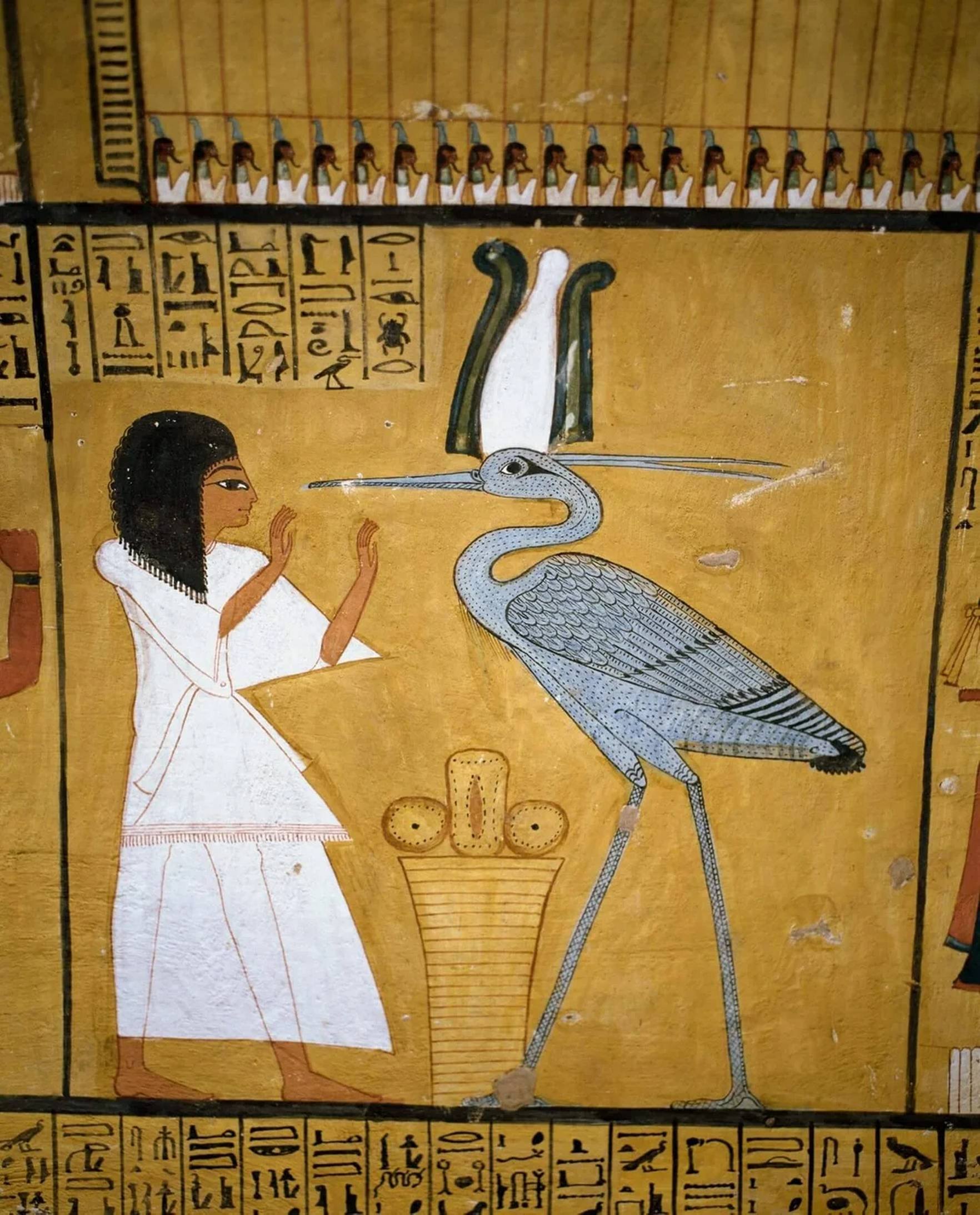
Bennu (Egyptian: bnw, often transcribed as Benu or Bennu) is an ancient Egyptian deity associated with the sun, creation, and cyclical rebirth. Depicted primarily as a grey heron, Bennu served as a potent symbol of renewal and the primordial forces of the cosmos in Egyptian mythology. The deity was closely linked to the sun god Ra (as his ba, or soul/manifestation) and the creator god Atum, playing a key role in Heliopolitan creation myths, and intrinsically tied to the mythical Phoenix bird of later Greek legend.
I. Etymology
The Egyptian name bnw (Bennu/Benu) is etymologically connected to the verb wbn (weben), meaning "to rise in brilliance," "to shine," or "to rise." This root aptly reflects the deity’s solar associations and role in the daily rebirth of the sun, as well as its emergence from the primordial waters. The name also carries connotations linked to the benben stone--the primordial mound of creation in Heliopolitan theology--upon which Bennu was said to have alighted. [1]
References to a bnw-bird appear as early as the Pyramid Texts of the Old Kingdom (c. 2400–2300 BCE), where it is associated with Atum. Early depictions or hieroglyphic uses of the term may have referred to different birds (such as a small singing bird or possibly a kingfisher in some interpretations), but by the New Kingdom, Bennu was consistently portrayed as a large grey heron with a long beak and a double-feathered crest. [2]
The Greek name "phoenix" (φοῖνιξ, phoinix), by which the bird became widely known in the classical world, has a separate etymology unrelated to the Egyptian term, though cultural transmission linked the concepts. The Greek word is first attested in Mycenaean Greek (po-ni-ke), which may have referred to the legendary Griffin, but is also commonly derived from associations with "purple-red" or "crimson" (referring to the bird’s plumage or solar/fire symbolism), the date palm tree (phoinix), or the Phoenicians (as traders in purple dye or from the East). It may ultimately relate to a Semitic root for a red dye (madder).
Though the palm tree associations may seem peculiar, it's worth noting that the palm tree itself is associated with immortality in Egyptian culture. Further, a palm branch was awarded to victorious athletes in ancient Greece, and a palm frond or even the tree itself is one of the more common attributes of the Goddess Victoria in ancient Rome. [3]
Revealingly, in Christian iconography, the palm represents Jesus' "triumphant" entry to Jerusalem, celebrated on "Palm Sunday" (the Sunday prior to Easter, which itself is a celebration of the dying-and-rising aspect of the religion), as Jesus was said to have been greeted citizens carrying palm branches in 12:13 of the Gospel of John. Most fittingly, Revelation 7:9 represents the victory of spirit over the flesh. [4]
Some scholars have speculated on a possible distant connection or folk etymology linking it to "Bennu," but linguistic evidence does not support a direct derivation; the similarity in myths stems more from Greek reports of Egyptian traditions than from the name itself. [5] [6]
II. Culture & Mythology
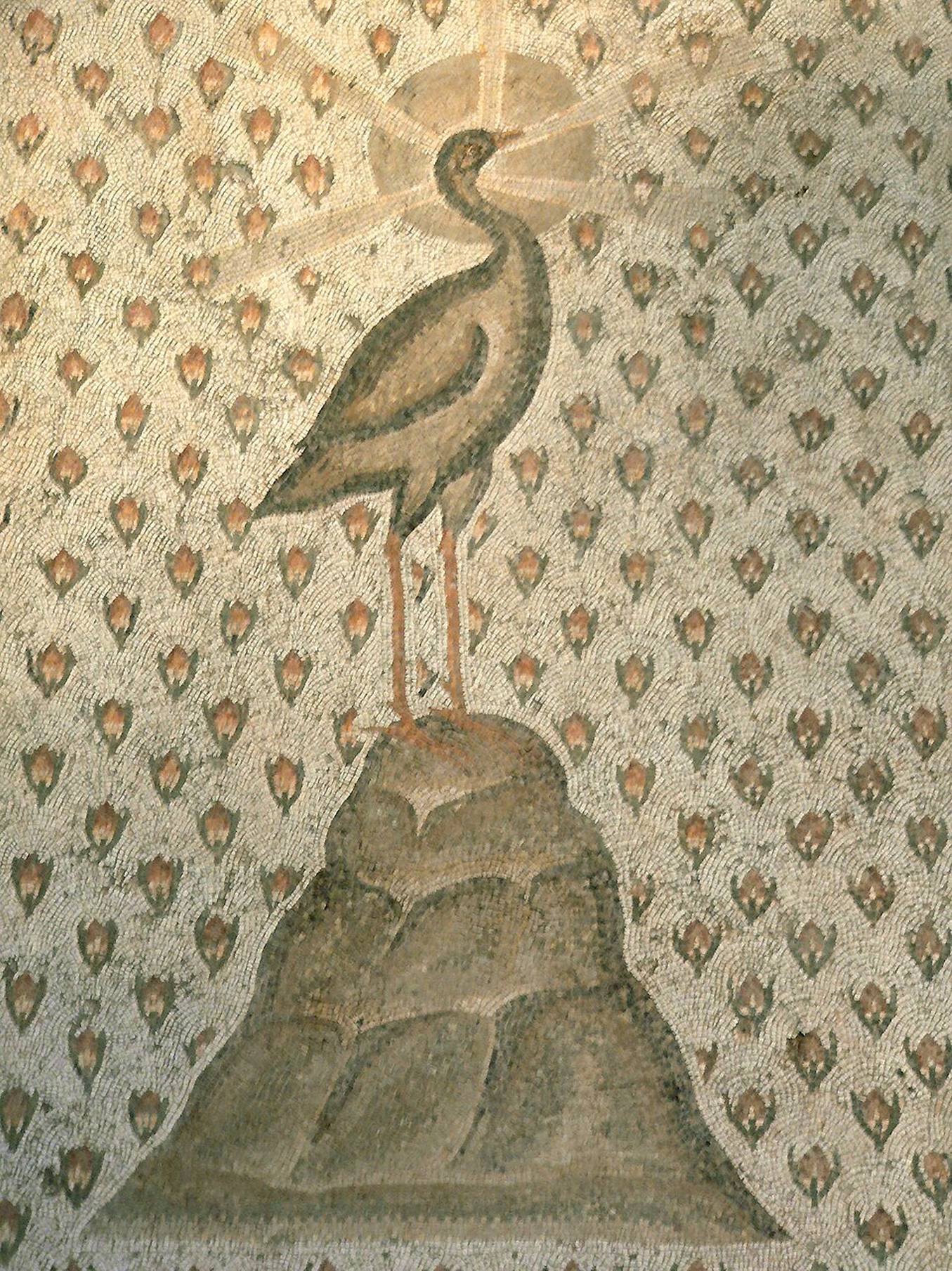
The earliest references to the Bennu appear in the Pyramid Texts, where it is described as a manifestation of the Heliopolitan sun god Atum. This association with the creator deity continues into the Middle Kingdom, during which the Benu of Ra is said to represent the form through which Atum emerged from the primordial waters. Like the Sun God himself, the Bennu is considered self-generated.
In mythological papyri from the Twenty-First Dynasty, the Bennu is depicted alongside a heart amulet and a scarab, accompanied by the description "the one who came into being by himself." The bird also functions as a symbol of anticipated rebirth in the Underworld. It is often carved onto the backs of heart scarabs placed with the deceased, intended to ensure that the heart does not fail during the judgment of deeds in the Hall of the Two Truths.
As the living manifestation/Ba of Ra, the Bennu maintains a close connection with the Sun God’s temple at Heliopolis, and it was believed that the Bennu brought the remains of its predecessor to the altar of the Sun God at Heliopolis each time it was reborn. On the sarcophagus of the Divine Adoratrice of Amun, Ankhnesneferibra, now housed in the British Museum, the Bennu is depicted perched upon a sacred willow tree within the temple. [1]
It remains unclear if the classical imagery for the Bennu is a direct reference to any particular species of bird, especially as the portrayal shifted from Old Kingdom to New. Some consideration is given to both the kingfisher and Nile goose (the latter important to the later cult of Amun), given they both water birds by nature and would fly low over it and release their respective calls. Ultimately, the best known portrayal of Ancient Egypt remains the New Kingdom's grey heron.
Herodotus, writing in the 5th century BCE, provides the following account, confirming the aspects of the myth and, importantly, linking the Bennu to the later Greek Phoenix, likening the bird to the more familiar iconography of an eagle of red and gold. As you will see across both classic and later sources, myrrh is frequently mentioned as a key ingredient in Bennu/Phoenix's rebirth process, which is especially notable, given myrrh was used in the Egyptian embalming process, which itself was a process that insured a second life beyond the physical death.
"[The Egyptians] have also another sacred bird called the phoenix which I myself have never seen, except in pictures. Indeed it is a great rarity, even in Egypt, only coming there (according to the accounts of the people of Heliopolis) once in five hundred years, when the old phoenix dies. Its size and appearance, if it is like the pictures, are as follow: The plumage is partly red, partly golden, while the general make and size are almost exactly that of the eagle. They tell a story of what this bird does, which does not seem to me to be credible: that he comes all the way from Arabia, and brings the parent bird, all plastered over with myrrh, to the temple of the Sun, and there buries the body. In order to bring him, they say, he first forms a ball of myrrh as big as he finds that he can carry; then he hollows out the ball and puts his parent inside, after which he covers over the opening with fresh myrrh, and the ball is then of exactly the same weight as at first; so he brings it to Egypt, plastered over as I have said, and deposits it in the temple of the Sun. Such is the story they tell of the doings of this bird." [7]
Later, in 8CE, the Roman poet Ovid gives an even more elaborate, poetic description of the mythical bird in his Metamorphoses:
"There is a bird which reproduces and renews itself:
the Assyrians call it the phoenix. It does not live
on seeds or grass, but feeds on drops of frankincense
and the juices of amomum. When it has completed
five centuries of life, it builds a nest for itself
in the branches of a waving palm tree, or in the top
of an oak, with its talons and its pure beak.
As soon as it has constructed this cradle, it fills it
with cassia and smooth spikes of nard, and crushed
cinnamon with yellow myrrh, and lays itself down
upon it and finishes its life among the perfumes.They say that from the body of the parent
a small phoenix is reborn, destined to live
the same number of years. When time has given it
strength and it is able to bear the weight,
it lifts the nest from the tall tree
and dutifully carries both its own cradle
and its parent’s tomb; and when it has reached
the city of Hyperion, through the yielding air,
it lays them down before the sacred doors
in the temple of Hyperion." [8]
Lastly within the classical context, Pliny the Elder's Natural History provides a quasi-scientific account, presenting the Phoenix as a marvel of the natural world:
"Ethiopia and India more especially produce birds of variegated plumage, and such as are quite indescribable; but the phoenix, which is said to come from Arabia, surpasses them all. I am not sure that it is not a fabulous bird; it is said that there is only one in the whole world, and that it is not often seen. They tell us that it is of the size of an eagle, and has a golden colour about the neck, while the rest of the body is purple; that it has a tail of an azure colour, with feathers of a roseate hue, and that the throat is adorned with a crest, and the head with a tuft of feathers.
The first person at Rome who described it, and who saw it, was Manilius, that celebrated senator, and one who was remarkable for his learning; and he stated that no one had ever seen it feeding, that in Arabia it was sacred to the sun, that it lives five hundred and forty years, and that when it has grown old, it constructs a nest for itself of the twigs of the wild cinnamon and frankincense, and fills it with odours, upon which it lies and dies.
From its bones and marrow, they say, there springs at first a sort of little worm, which is afterwards changed into a small bird. The first thing that it does is to pay the proper rites to the remains of its former self, and to carry the whole nest to the city of the Sun near Panchaia, and there deposit it upon the altar of that divinity.
Despite the wide variety of characteristics, all classical sources agree on the same rule: that there is only one Phoenix at a time, and its death is never final.
III. Middle Ages & Renaissance Culture/Symbology
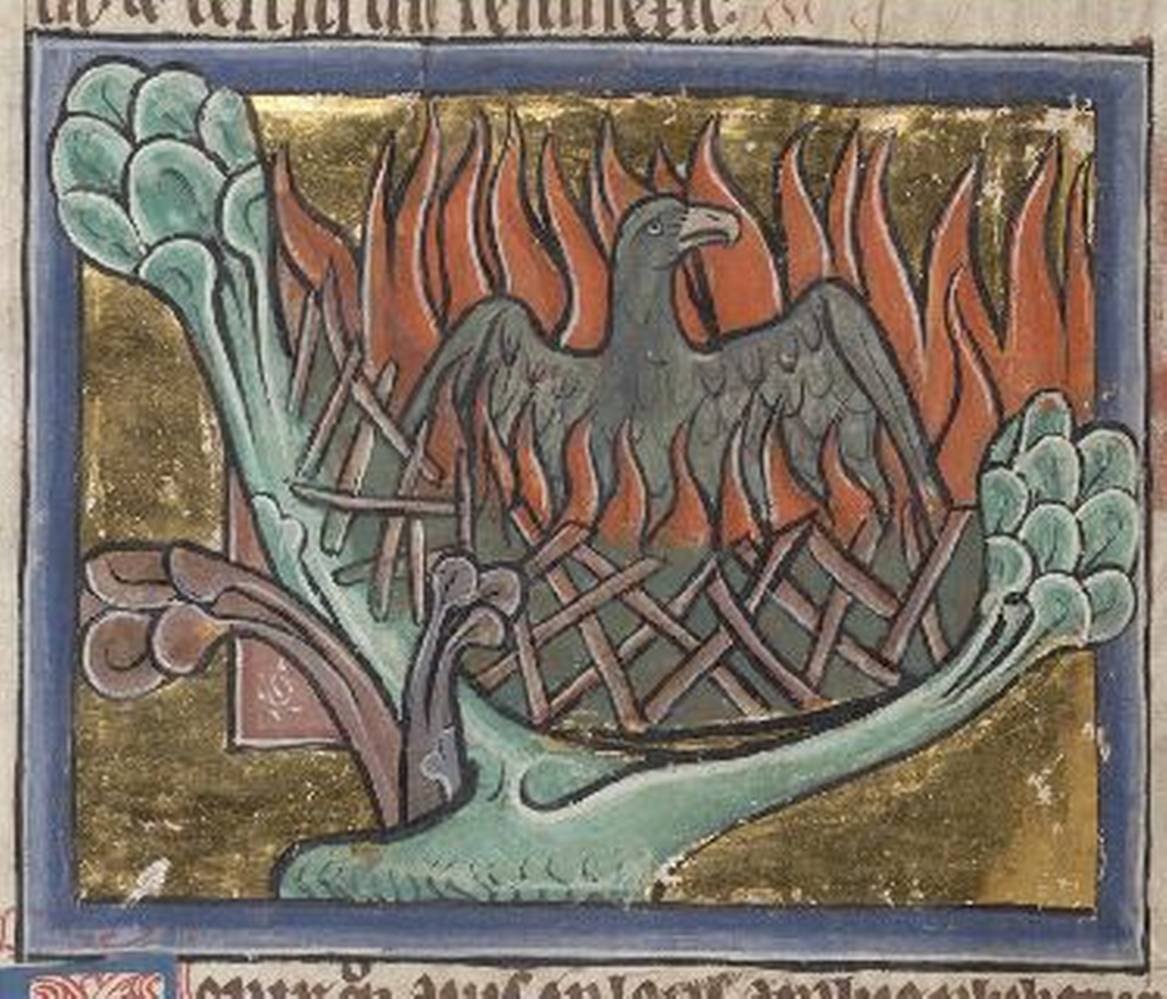
Even through the Middle Ages and onwards to the Renaissance, the Phoenix maintained a strong presence in both myth and in symbology, maintaining its key characteristics even through heavy Christian appropriation.
"The story of the phoenix is taken as an allegory of the death and resurrection of Christ, who had the power to lay down his life and to take it back again.” It further links the bird to the righteous: “The phoenix can also signify the resurrection of the righteous who, gathering the aromatic plants of virtue, prepare for the renewal of their former energy after death." - The Aberdeen Bestiary [10]
Even in the 14th century, Italian poet Dante Alighieri refers to the phoenix in Canto XXIV of the Divine Comedy's Inferno, maintaining many of its familiar motifs.
"Even thus by the great sages 'tis confessed
The phoenix dies, and then is born again,
When it approaches its five-hundredth year;
The Renaissance amplified the phoenix as a symbol of renewal beyond the Christian context, befitting of the era’s name and spirit. It appeared on heraldic crests signifying rebirth after adversity and was favored by royalty and martyrs. Queen Elizabeth I of England was famously linked to the phoenix; Shakespeare and Fletcher’s Henry VIII uses the image for her legacy:
"... Nor shall this peace sleep with her; but as when
The bird of wonder dies, the maiden phoenix,
Her ashes new create another heir
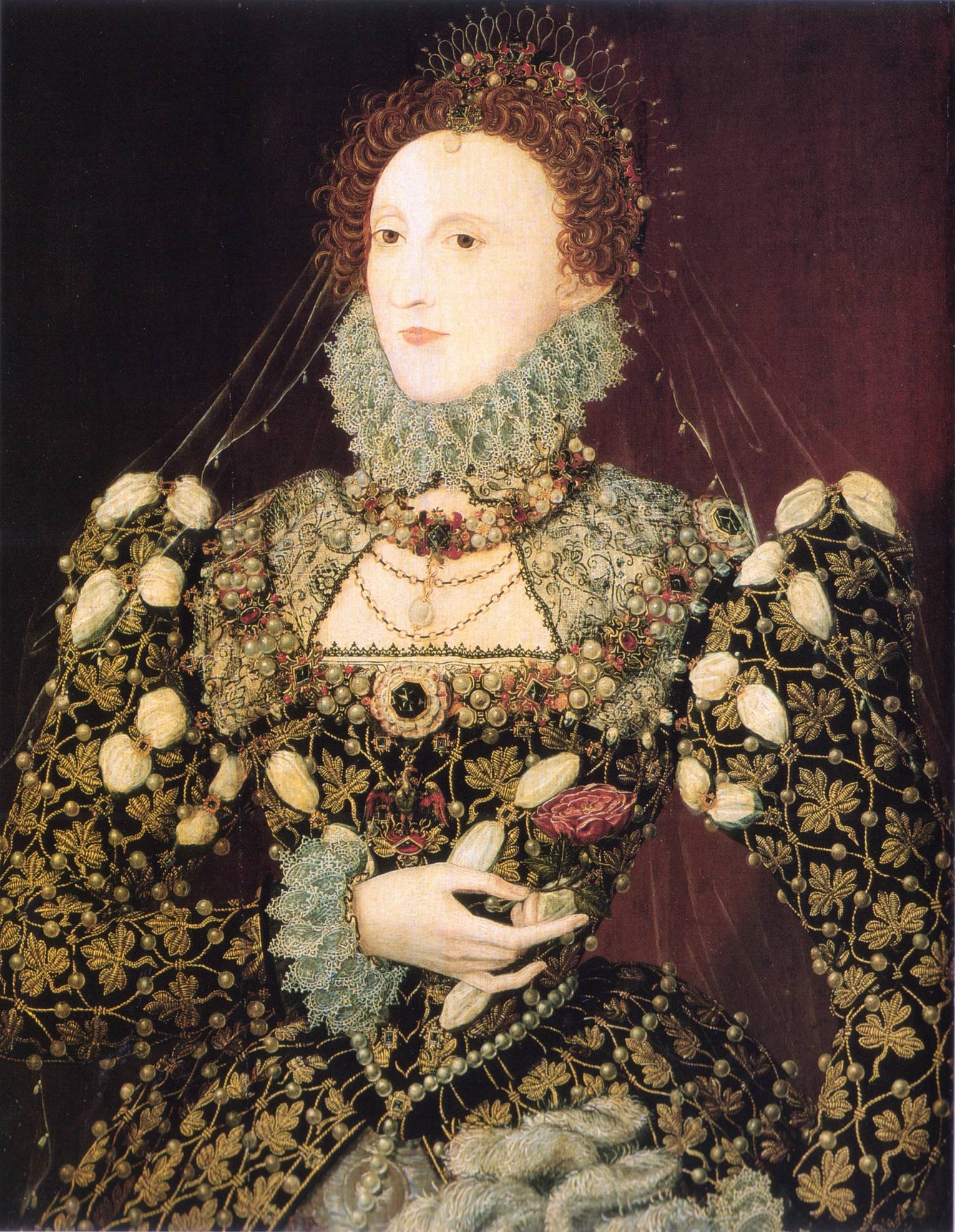
(Phoenix embroidery visible in the lower-center of the portrait)
Queen Elizabeth I never married nor had children, though her eventful reign gave birth to the noteworthy Elizabethan era of England. In this sense, the Phoenix symbology made a virtuous implication of her status as the maiden "Virgin Queen", that she, in essence, able to self-generate her own legacy and cultural continuity. [13]
Later in the 19th century, the writer Thomas Carlyle, known as the "sage of Chelsea", would himself use the Phoenix metaphor for the larger patterns of history itself.
For the rest, in what year of grace such Phoenix-cremation will be completed, you need not ask. The law of Perseverance is among the deepest in man: by nature he hates change; seldom will he quit his old house till it has actually fallen about his ears. Thus have I seen Solemnities linger as Ceremonies, sacred Symbols as idle Pageants, to the extent of three hundred years and more after all life and sacredness had evaporated out of them. And then, finally, what time the Phoenix Death-Birth itself will require, depends on unseen contingencies.—Meanwhile, would Destiny offer Mankind, that after, say two centuries of convulsion and conflagration, more or less vivid, the fire-creation should be accomplished, and we to find ourselves again in a Living Society, and no longer fighting but working,—were it not perhaps prudent in Mankind to strike the bargain?" [14]
In this metaphor, Carlyle notes a resistance to change, with true transformation in his mind only coming bear with crisis--periods of upheaval, conflict, and destruction that sweep away what no longer works. These moments are chaotic and dangerous, affecting everyone from ordinary people to powerful figures, and they cannot be neatly predicted or controlled. Complete and absolute renewal, in his view, is poetically inseparable from death and collapse: the old must burn before something vital can take its place--an especially poignant perspective from one born during the French Revolution era.
IV. Cultural Analogues
The phoenix archetype appears in many cultures beyond its well-known Greek and Egyptian roots. While details vary, these analogues often share motifs of longevity, brilliance (especially fiery or radiant plumage), wisdom, and transformation, reflecting universal human themes of death and rebirth.
Slavic Firebird (Zhar-Ptitsa)
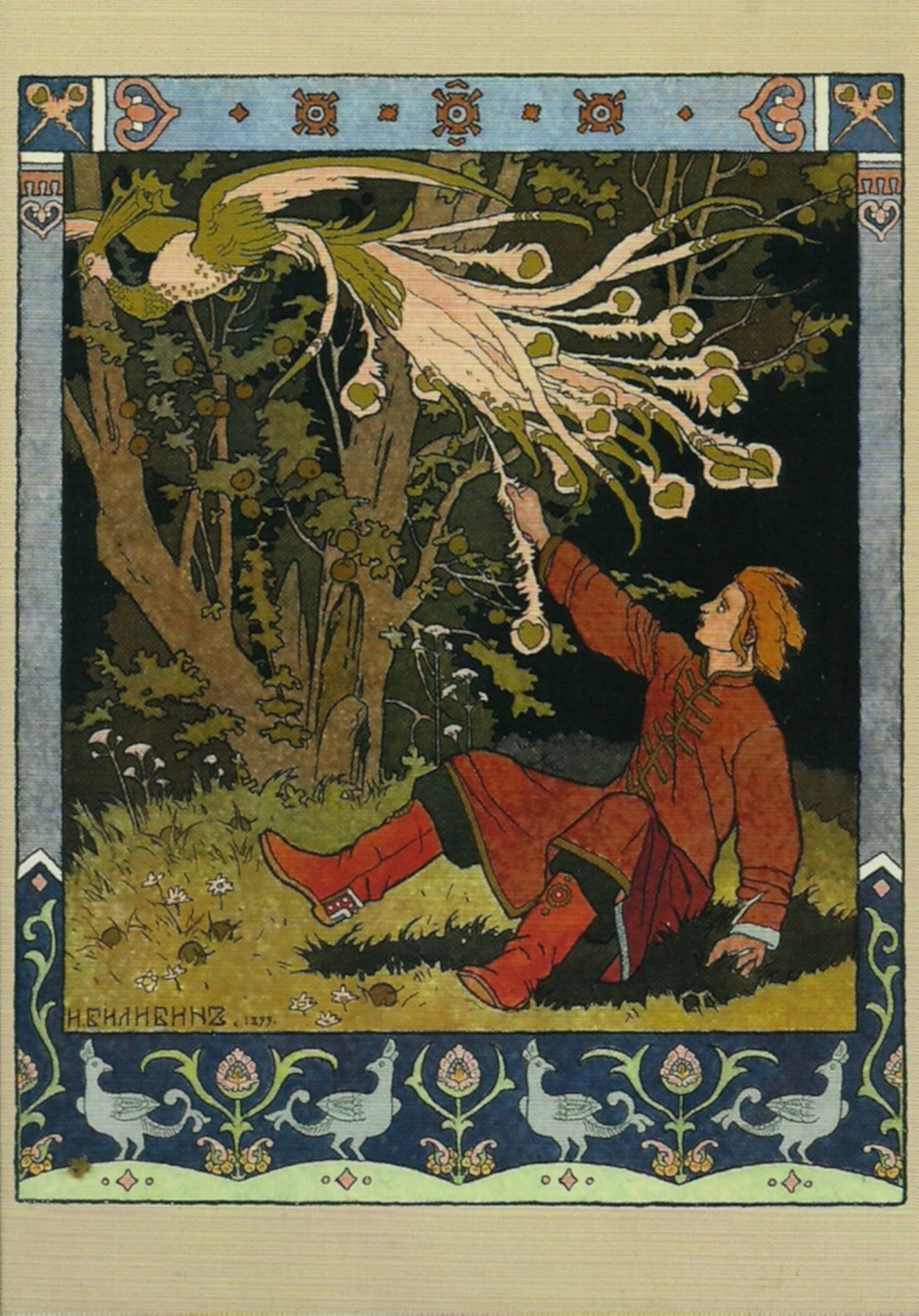
In Slavic folklore, particularly Russian fairy tales, the Firebird (жар-птица) is a glowing, prophetic bird from a distant land. Its feathers shine with golden, red, orange, and yellow light like flames or embers, and a single feather can illuminate a room. Capturing or even possessing one of its feathers brings both blessings (luck, aid in quests) and curses (doom or difficult trials for the captor).
Unlike the self-immolating phoenix, the Firebird is more of a quest object and sun/fire symbol, rooted very apparently in pre-Christian Slavic sun veneration. It appears in tales collected by Alexander Afanasyev and inspired Igor Stravinsky’s famous ballet. Scholars note parallels with the phoenix in its fiery nature and transformative role in heroic journeys. [15]
Arabic Anqa (ʿAnqāʾ)
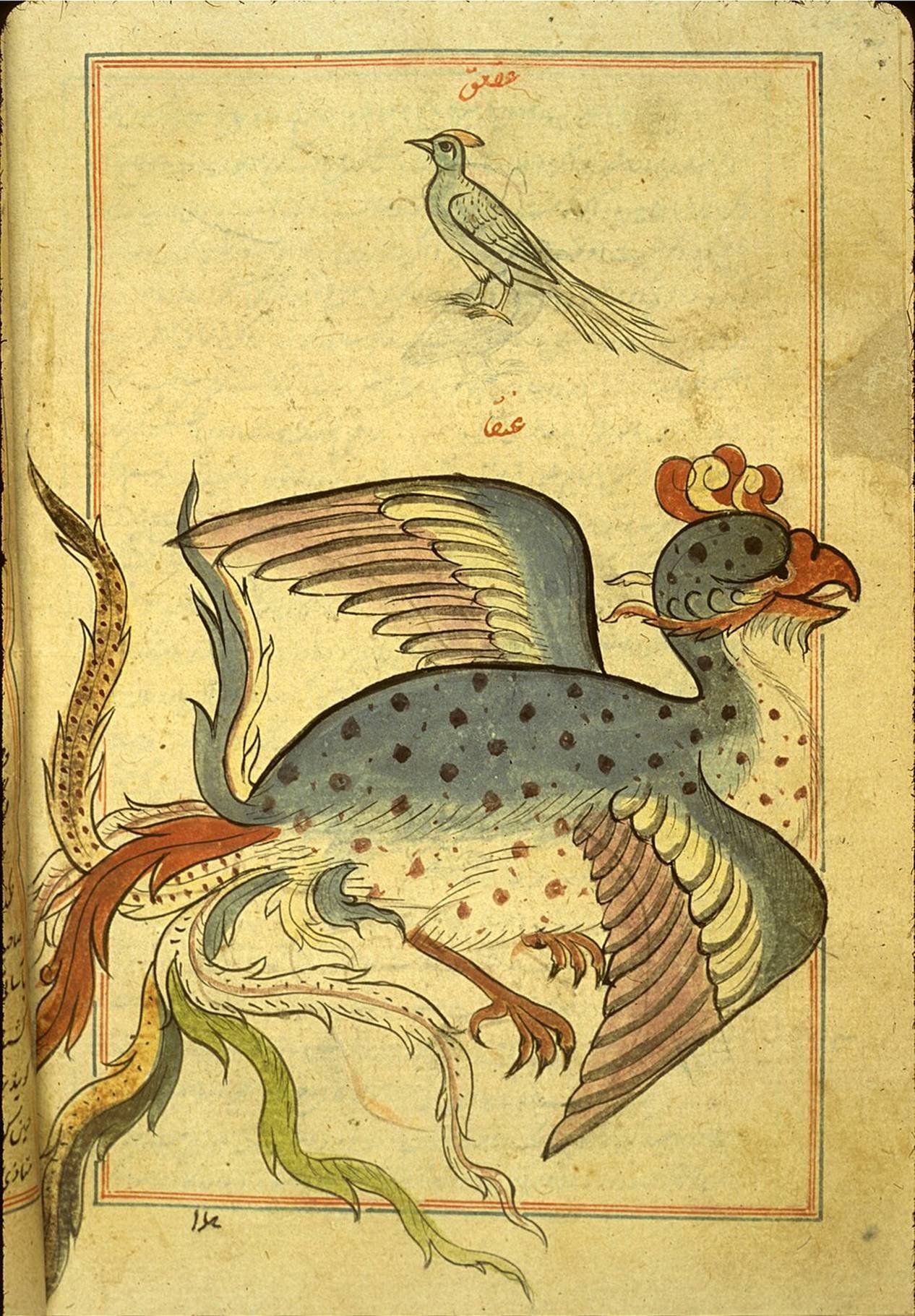
The Anqa (also spelled Anka or Angha), often translated as the Arabian phoenix, is a huge, enigmatic bird in Islamic and pre-Islamic Arabic mythology. Described as eagle-like or heron-like, it is enormous (sometimes capable of carrying off large animals) and associated with rarity, wisdom, and appearing at pivotal or calamitous moments in history.
One tradition holds that God created it perfect, but it became a plague and was destroyed--yet it retains phoenix-like associations with resurrection after calamity. In later lore, it blends with the Persian Simurgh and symbolizes beauty, mystery, and moral guidance. It is frequently identified directly with the phoenix in Arabic sources. [16]
Persian Simurgh
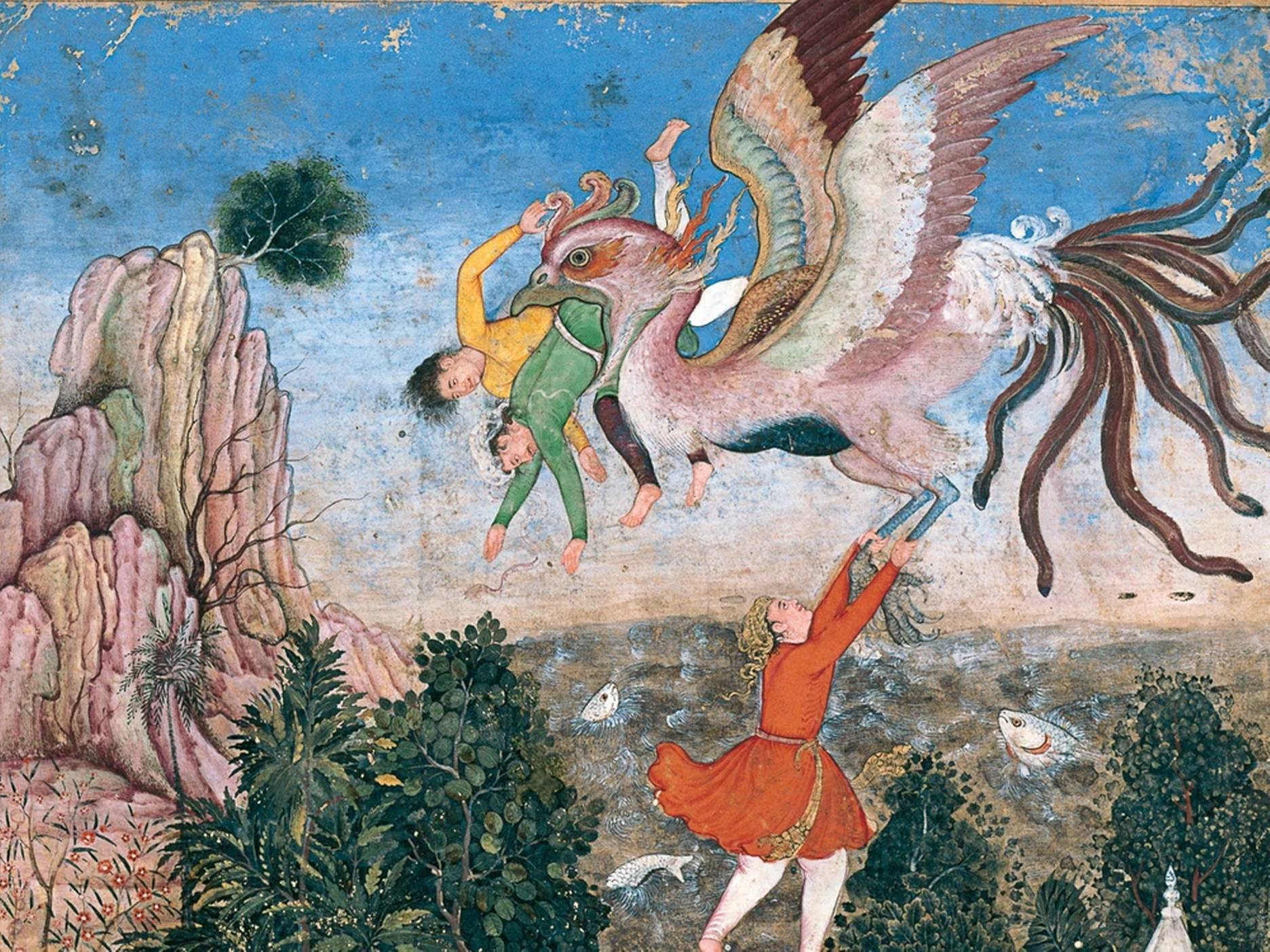
The Simurgh (also Simorgh, Sēnmurw, or Simurg) is a benevolent, wise "king of birds" in Persian (Iranian) mythology, with roots possibly in Zoroastrian texts like the Avesta. It is depicted as a large, majestic creature--often eagle- or peacock-like--with magnificent plumage. Extremely ancient (having seen the world destroyed and reborn multiple times), it possesses prophecy, healing knowledge, and acts as a guide or rescuer.
One legend describes it living 1,700 years before plunging into flames and being reborn, echoing the phoenix directly. It features prominently in works like The Conference of the Birds by Attar, where it symbolizes the divine. The Simurgh influenced broader Middle Eastern and Turkic traditions and shares visual and symbolic similarities with the Chinese Fenghuang. [17]
Turkish Konrul (and Zümrüdü Anka)
In Turkic mythology, the Konrul (also Kongrul, Konqrul, or Qonrul) is a long-lived bird that cyclically regenerates or is reborn, explicitly compared to the phoenix. It is often gigantic, sometimes with copper or red feathers, and capable of carrying elephants. It blends elements of the Persian Simurgh (wisdom, benevolence) and Arabic Anqa.
It is also known as Zümrüdü Anka ("Emerald Anqa"), merging traditions under Islamic cultural influence. Related figures like Tuğrul appear in Turkish narratives, symbolizing enlightenment, protection, spiritual maturity, and renewal. The Konrul embodies the synthesis of Eurasian mythical bird motifs.
V. Two of Swords
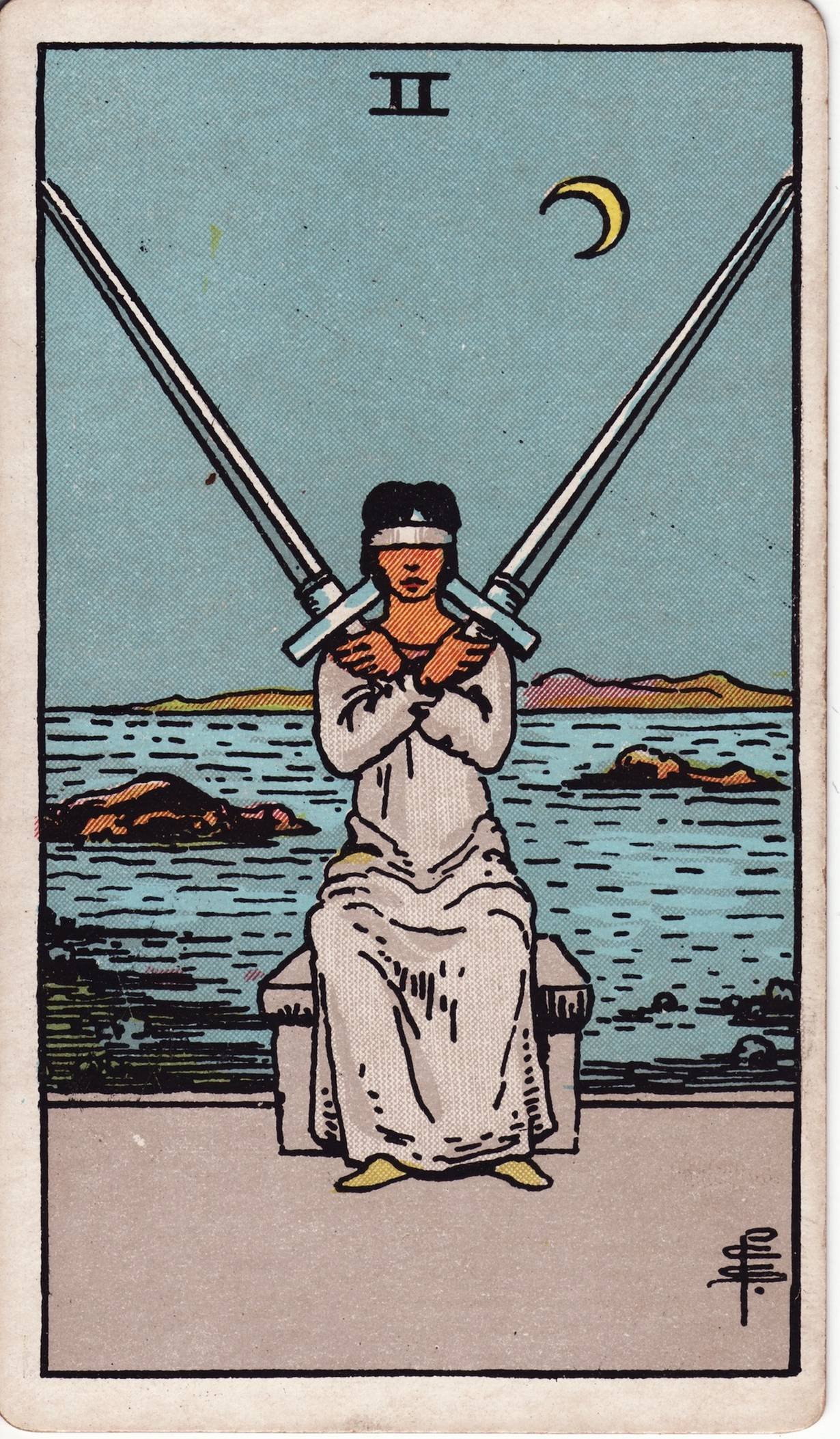
This card classically shows a blindfolded figure seated by water, holding two crossed or balanced swords. It signifies stalemate, indecision, a crossroads, mental tension, truce, denial/avoidance, or a deliberate pause while weighing opposing forces (often intellect vs. emotion, or two difficult options). The blindfold implies turning inward, blocking external input, or relying on intuition because clear sight isn’t yet possible. In decks like Crowley's Thoth, it’s titled "Peace," emphasizing an equilibrated tension. In what's an especially interesting parallel, one can note the still water and the jutting of rocks just above the surface, much as in the Bennu myth itself.
In a sense, the Two of Swords captures the pregnant pause or crucible phase preceding the Phoenix’s fiery transformation. The Phoenix doesn't rise casually, it must first be consumed by flames. The Two of Swords is that exact in-between state: arms crossed in balance or defense, swords locked in opposition, blindfolded so old ways of seeing must be surrendered. It's the moment of maximum internal pressure where nothing moves externally, yet everything is poised for decisive change. Choosing (or being forced to release one sword) breaks the stalemate and ignites the alchemical fire of renewal.
Swords represent air/intellect, conflict, and duality. The two crossed swords mirror the dual nature of the Phoenix cycle--death/life, destruction/creation, sunset/sunrise. The figure's stillness by the water (emotions, the unconscious) suggests a need to integrate opposites rather than pick one prematurely. Bennu/Phoenix ultimately transcends duality through renewal: it doesn’t choose "this or that" forever but cycles into a reborn unity. The card can represent the mental/emotional preparation or "incubation" for that leap.
The peace in Two of Swords prefigures the Phoenix. True equilibrium isn’t passive avoidance, rather, it's the harmonious holding of tension that allows the transformative fire to do its work without scattering energy in premature action. Many interpretations see the card as a call to meditate, reflect, or wait in neutrality until clarity or necessity forces the swords down and the rebirth begins. Much of magic or anything in life comes down to what's simply known as the art of correct timing. In any myth of the Phoenix, the Phoenix does not simply self-immolate on a whim. There is a prescribed time for when one cycle ends and another begins.
Sources
[1] Hart, George, The Routledge Dictionary of Egyptian Gods and Goddesses (Second ed.). New York, 2005
[2] Wilkinson, Richard H, The Complete Gods and Goddesses of Ancient Egypt. London: Thames & Hudson, 2003
-Article by Arcadia [NG]
[Disclaimer: Final, officialised article may differ in syntax, content and clarifications].