Over time economic disparities and ethnic tensions grew between the Uighur and Han populations that eventually resulted in protests and other disturbances.
A particularly violent outbreak occurred in July 2009, mainly in Ürümqi, in which it was reported that nearly 200 people (mostly Han) were killed and some 1,700 were injured. Violent incidents increased after that and included attacks by knife-wielding assailants and by suicide bombers.
Chinese authorities responded by cracking down on Uighurs suspected of being dissidents and separatists. The authorities’ actions included shootings, arrests, and long jail sentences until 2017, when the Chinese government initiated a thorough crackdown on Uighurs in Xinjiang. Citing a need for greater security, the government set up cameras, checkpoints, and constant police patrols in Uighur-dominated areas.
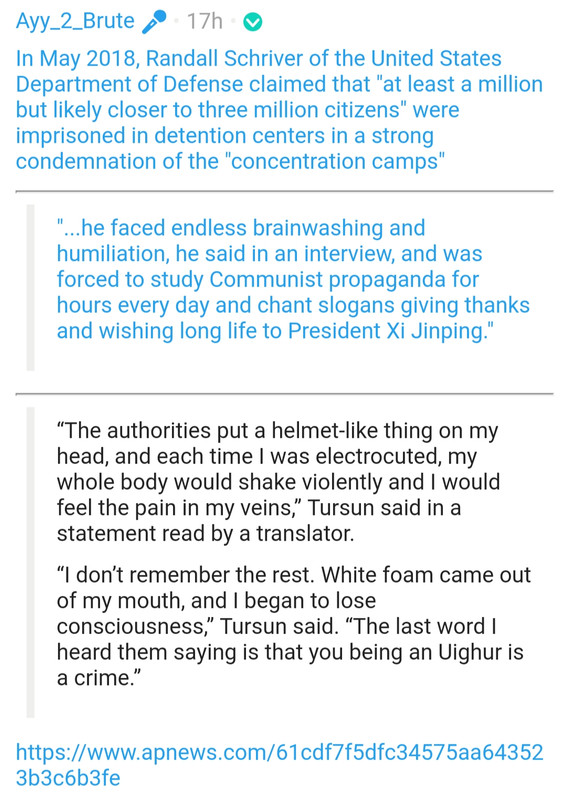
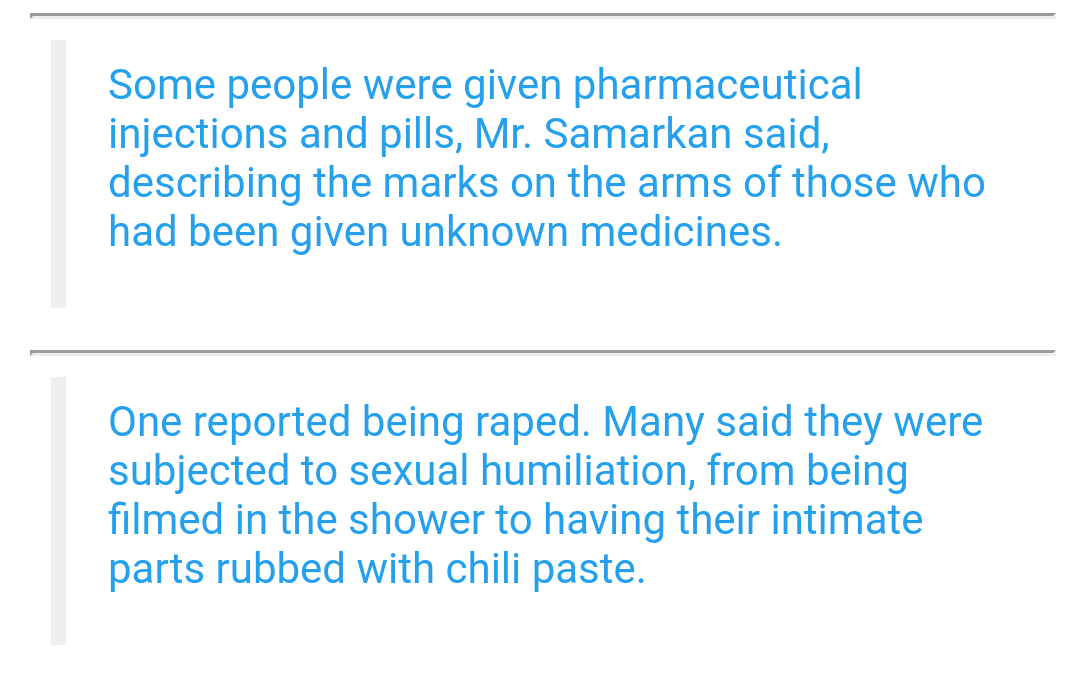
The most controversial governmental undertaking—which was met by protests from human-rights organizations—was the indefinite detention of up to one million Uighurs in “political training centres,” heavily fortified buildings that were likened to the reeducation camps of the Mao Zedong era. In August 2018 the United Nations called upon China to end the detention, but government officials denied the existence of the camps.



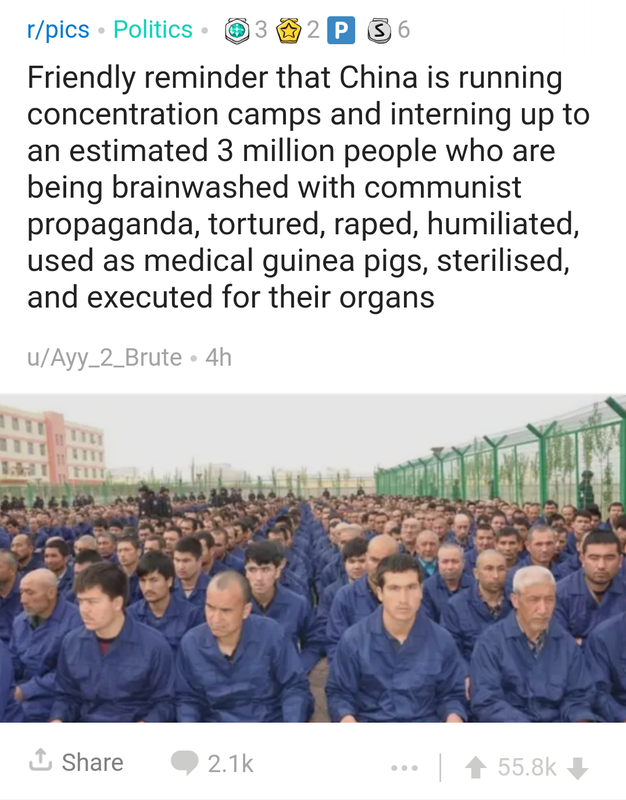
 https://www.reddit.com/r/pics/comments/dgib1y/friendly_reminder_that_china_is_running/