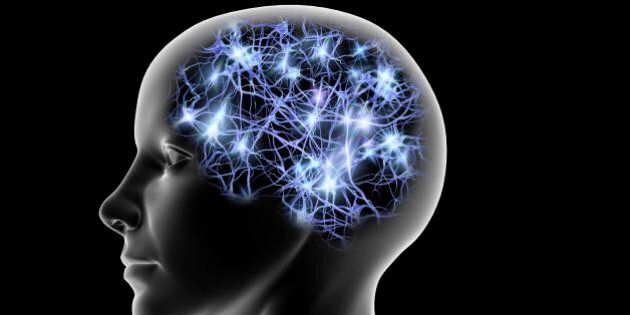
Equal to one million gigabytes, the equivalent of about 31,250 iPhone 7s of 32 GB: this is the memory capacity of the human brain, calculated by a group of neuroscientists for new research, published in the journal "eLife". According to the study, our mind would be able to store at least 10 times more information than, until now, we believed it could store. "It's a bomb discovery in the field of neuroscience," commented one of the researchers, Terry Sejnowski of the Salk Institute for Biological Studies, California. "The new measurements of the brain's memory capacity that we've made increase conservative estimates by a factor of 10," he added. We're around at least one petabyte (one million GB), a size roughly similar to the entire World Wide Web," the neuroscientist explained. Sejnowski and his team reconstructed in 3D the hippocampus of a rat, that area of the brain commonly associated with long-term memory. Using algorithms and microscopic techniques, the researchers then went on to reconstruct the synapses at the nanomolecular level, studying them in detail as never before. The observation showed that synapses, even within a few minutes, can vary in size, giving rise to 26 different categories. If until now they were classified only as small, medium or large, neuroscientists have discovered that, on the contrary, there are differences between them which, even if they are only 8%, mean a lot. Precisely this complexity in the synaptic dimensions, according to neuroscientists, would translate into an enormous boost in the brain's capacity of memorization. The research is full of implications and requires further investigation: it is important to keep in mind that it has been conducted only using the brain of rats as a model, but, in the future, it can and should also be conducted to human beings. Scholars, however, say they are satisfied: "Hidden behind the apparent chaos and disorder of the brain is the precision of the shapes and sizes of the synapses," explained the author again. Just like machines, but more complex and flexible, our brains, therefore, can store a quantity of information that, until now, was unimaginable.
There is space but if there was a fast way to store information in addition to the classic way of storing information by repetition, it would be very useful.




![The Alchemist7 [SG]](/data/avatars/s/1/1057.jpg?1762556650)