

Wotanwarrior
Well-known member
- Joined
- Sep 20, 2017
- Messages
- 2,010
Gomory was one of the most important goddesses of the Sumeria mythology, she was known as the Great Healer, Babylon owes its name to her.
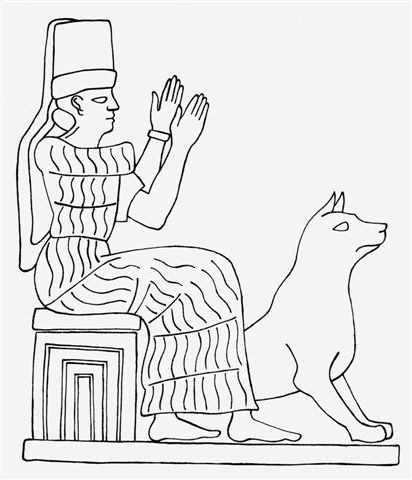
Gula, Nintinuga, Nin-Karrak, Nin Ezen, Ga-tum-dug or Nm-din-dug, being able to translate as "the Great Lady" or "the Lady who restores life", in Akkadian and Babylonian mythology, is the goddess of healing and consort of Ninurta.
His symbolic animal would be the sacred dog, who was depicted by his side and would act as a messenger and element that would evoke healing. She was also known as "the Great Mother", "Mother Gula" or "Lady of Life".
It would have the same characteristics as the goddess Baba, although it seems that the two were originally independent. Baba's name is more prevalent in the oldest period and gives way in the post-Hammurabi period to Gula.
Since it is likely that the god of war, Ninib (Ninurta), would have absorbed the cults of lesser deities from the sun, the two names may represent consorts of different gods. Whatever it is, the qualities of both are the same and the two produce synonymous designations as Ninib's wives. In Isin, where he had his main center of worship, the enclosure of the sacred temple of E-galmaj was assigned as a consort to Pabilsag, lord of the city. He had seven children, most noted damu, god of healing and reincarnation, worshipped in Isin and Ninazu, god of healing and the underworld.
After the Universal Flood, Gula helped to give humanity a "breath of life" again. This designation also emphasizes the main trait of the two goddesses, that of healers (or with medical functions). It is often referred to as "the great doctor" and therefore plays a particularly prominent role in rituals and spells aimed at alleviating the sufferings of diseases. However, it was also invoked to curse those who trampled on the rights of rulers or those who did wrong with poisons.
As in Ninib's case, the goddess cult occupies a prominent place in Umma, Shirgulla and Nippur. Although generally closely related to her husband, she is also invoked by herself, so she retains more independence than most of the goddesses of Babylon and Assyria. It is also mentioned in prayer letters and hymns, and sometimes invoked in treatises and codes of law.
As a protector of borders, she appears prominently in the stone sabilles that delimit Babylonian lands or kudurrus, being represented by a statue, when other gods and goddesses are described only by their shrines, sacred animals or weapons. In the Neo-Babylonian period his cult remained prominent and Nebuchadnezzar II mentioned no less than three chapels or shrines inside the sacred E-zida enclosures in the city of Borsippa, as well as a temple in his honor in Babylon.
https://es.wikipedia.org/wiki/Gula_(mitolog%C3%ADa)
Baba (mythology)
Bust of a goddess, probably Baba, carrying a kind of tiara with horns, symbol of her divinity. Neo-Sumerian period (2150-2100a. C.). Telloh, former Girsu, Louvre Museum.
Baba or Bau (from Ba'u; ba-u2, with the characters u2 and ba6), in Themerian and Akkadian mythology, later called Ninisina or Gula, is the goddess of healing and guardian divinity of Lagash, daughter of the mother goddess Gatumdu and therefore granddaughter of the Supreme Sumerian pantheon, whom she sometimes, referring to him, calls "father" (which can lead to eritches). She probably had a local origin as a mother goddess and was also called "Lady of Abundance", for controlling the fertility of animals and humans.
She was the wife of the war god, Ningirsu, with which she had seven daughters, including Hegir-Nuna (Gangir).
Its name, which means "barking" or "wow" (bau), probably has an onomatopoeic origin of a dog's bark and is sometimes depicted with the head of a dog. Texts found in the ruins of Lagash, dated from the reign of reformer Urukagina (2364 - 2342 a.C.) reveal that his wife Sasa did business on behalf of the "House or Temple of the Goddess Baba".1
The king of Lagash, Urbaba (Ur-Baba, "the man of Baba") took his name in homage to the goddess. Later, kings Urukagina and Gudea (who called the same "son of Baba"), gave her preferential treatment in worship. As Ningirsu's wife, she was also worshipped in Girsu.
Dedicated templesIt had an important temple in Lagash (called E-bau) and another in Girsu (called E-tar-sirsir), but it was also revered in Ur and Irikug (E-ngalga-sud temple "The house that extends councils throughout". Sumerian texts of the First Lagash Dynasty stated that the size of the land belonging to his temple was 4500 ha and that he had 1200 workers.2 In Girsu texts from the protodynamic period, it was accounted for that 188 slaves worked in his temple.3
In the temples there were large festivities such as the one that took place in autumn in Lagash, which lasted four days, where the pilgrims who came to place their offerings and sacrificials were celebrated to honor their ancestors. The goddess could thus mediate between angry deities and humans by mainly procuring healing. In Girsu there was an important Feast of the New Year, which lasted seven days, where, as in other Mesopotamian places, a rite of "Sacred Marriage" was held where the king himself, representing Ningirsu, took the supreme priestess of the goddess Baba in commemoration of the continued renewal of mortality.4
https://es.wikipedia.org/wiki/Baba_(mitolog%C3%ADa)
Gula, Nintinuga, Nin-Karrak, Nin Ezen, Ga-tum-dug or Nm-din-dug, being able to translate as "the Great Lady" or "the Lady who restores life", in Akkadian and Babylonian mythology, is the goddess of healing and consort of Ninurta.
His symbolic animal would be the sacred dog, who was depicted by his side and would act as a messenger and element that would evoke healing. She was also known as "the Great Mother", "Mother Gula" or "Lady of Life".
It would have the same characteristics as the goddess Baba, although it seems that the two were originally independent. Baba's name is more prevalent in the oldest period and gives way in the post-Hammurabi period to Gula.
Since it is likely that the god of war, Ninib (Ninurta), would have absorbed the cults of lesser deities from the sun, the two names may represent consorts of different gods. Whatever it is, the qualities of both are the same and the two produce synonymous designations as Ninib's wives. In Isin, where he had his main center of worship, the enclosure of the sacred temple of E-galmaj was assigned as a consort to Pabilsag, lord of the city. He had seven children, most noted damu, god of healing and reincarnation, worshipped in Isin and Ninazu, god of healing and the underworld.
After the Universal Flood, Gula helped to give humanity a "breath of life" again. This designation also emphasizes the main trait of the two goddesses, that of healers (or with medical functions). It is often referred to as "the great doctor" and therefore plays a particularly prominent role in rituals and spells aimed at alleviating the sufferings of diseases. However, it was also invoked to curse those who trampled on the rights of rulers or those who did wrong with poisons.
As in Ninib's case, the goddess cult occupies a prominent place in Umma, Shirgulla and Nippur. Although generally closely related to her husband, she is also invoked by herself, so she retains more independence than most of the goddesses of Babylon and Assyria. It is also mentioned in prayer letters and hymns, and sometimes invoked in treatises and codes of law.
As a protector of borders, she appears prominently in the stone sabilles that delimit Babylonian lands or kudurrus, being represented by a statue, when other gods and goddesses are described only by their shrines, sacred animals or weapons. In the Neo-Babylonian period his cult remained prominent and Nebuchadnezzar II mentioned no less than three chapels or shrines inside the sacred E-zida enclosures in the city of Borsippa, as well as a temple in his honor in Babylon.
https://es.wikipedia.org/wiki/Gula_(mitolog%C3%ADa)
Baba (mythology)
Bust of a goddess, probably Baba, carrying a kind of tiara with horns, symbol of her divinity. Neo-Sumerian period (2150-2100a. C.). Telloh, former Girsu, Louvre Museum.
Baba or Bau (from Ba'u; ba-u2, with the characters u2 and ba6), in Themerian and Akkadian mythology, later called Ninisina or Gula, is the goddess of healing and guardian divinity of Lagash, daughter of the mother goddess Gatumdu and therefore granddaughter of the Supreme Sumerian pantheon, whom she sometimes, referring to him, calls "father" (which can lead to eritches). She probably had a local origin as a mother goddess and was also called "Lady of Abundance", for controlling the fertility of animals and humans.
She was the wife of the war god, Ningirsu, with which she had seven daughters, including Hegir-Nuna (Gangir).
Its name, which means "barking" or "wow" (bau), probably has an onomatopoeic origin of a dog's bark and is sometimes depicted with the head of a dog. Texts found in the ruins of Lagash, dated from the reign of reformer Urukagina (2364 - 2342 a.C.) reveal that his wife Sasa did business on behalf of the "House or Temple of the Goddess Baba".1
The king of Lagash, Urbaba (Ur-Baba, "the man of Baba") took his name in homage to the goddess. Later, kings Urukagina and Gudea (who called the same "son of Baba"), gave her preferential treatment in worship. As Ningirsu's wife, she was also worshipped in Girsu.
Dedicated templesIt had an important temple in Lagash (called E-bau) and another in Girsu (called E-tar-sirsir), but it was also revered in Ur and Irikug (E-ngalga-sud temple "The house that extends councils throughout". Sumerian texts of the First Lagash Dynasty stated that the size of the land belonging to his temple was 4500 ha and that he had 1200 workers.2 In Girsu texts from the protodynamic period, it was accounted for that 188 slaves worked in his temple.3
In the temples there were large festivities such as the one that took place in autumn in Lagash, which lasted four days, where the pilgrims who came to place their offerings and sacrificials were celebrated to honor their ancestors. The goddess could thus mediate between angry deities and humans by mainly procuring healing. In Girsu there was an important Feast of the New Year, which lasted seven days, where, as in other Mesopotamian places, a rite of "Sacred Marriage" was held where the king himself, representing Ningirsu, took the supreme priestess of the goddess Baba in commemoration of the continued renewal of mortality.4
https://es.wikipedia.org/wiki/Baba_(mitolog%C3%ADa)
![Lucius Invictus [NG]](/data/avatars/s/69/69213.jpg?1767423438)