

We usually speak about time as though it were one thing. Something passes, something grows older, something ends. We count the hours and assume that counting tells us what time is. But an hour spent waiting and the moment when we finally know what to do are different experiences. Both belong to time. What I want to explore now is the relationship between them.
The Greek words Chronos (χρόνος) and Kairos (καιρός) give us a way into this. Chronos is time as duration, the passage within which things unfold. Kairos can mean the fitting moment, but also an appropriate season or period. In the Orphic Hymn to the HoraeExternal ↗, its plural form, καιρῶν, appears in a prayer for fruitful seasons. Something needs time to develop, and its development has a season in which it comes to fruition.
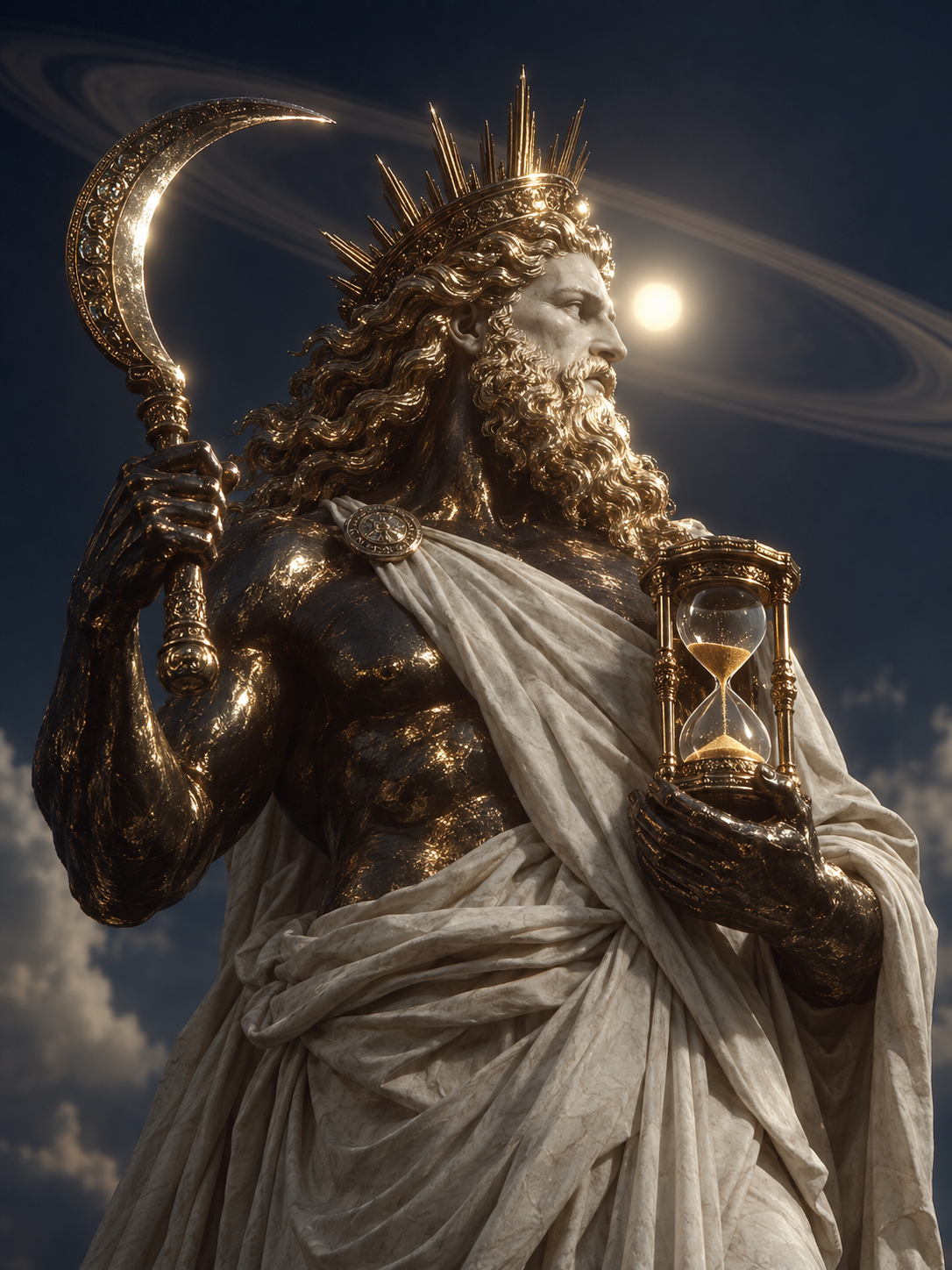
Let's take the most simple example of a fruit tree ripening where growth takes time. There is a duration, a sequence of changes, conditions that have to develop. But knowing how many days have passed does not necessarily tell us whether it is ready. We have to perceive its actual condition. Harvest too early and the growth is interrupted, you wait too long and the opportunity passes. The Mysteries got the initiates to understand this very first concept in its different forms and manifestation [Demeter in cultivation and harvest, Persephone in descent, return, and renewed growth, Kronos in the power that both increases and consumes things, and the Horae in the fruitful seasons].
Now let's see the word Kronos (Κρόνος), the Titan identified with Roman Saturn. His name resembles Chronos, and ancient writers consciously connected them.
in Ancient Greek, Saturn is called ΚΡΟΝΟΣ and time is called ΧΡΟΝΟΣ.
The Orphic Hymn to KronosExternal ↗ describes Him as consuming everything and increasing it again. Both manifestations belong to the same God. The 'devouring father' is also a form of generative power. Hence, why Saturn return in one's chart doesn't need to be feared. (For more understanding about this read High Priestess Lydia Coventina sermon Saturn Return - Facts, not Fears)
Time participates in the formation of things as well as in their disappearance. The passage that allows something to mature also carries it towards decline. We cannot ask for growth while remaining untouched by the process through which growth happens. There is a small detail in the Greek version that caught my eye. Line five addresses Him as
αἰῶνος Κρόνε παγγενέτορ
Kronos, begetter of all time, Kronos of manifold story.
The temporal word here is Aion. It (αἰών) can signify a lifetime, an age, or enduring time, and in particular contexts eternity. In an Orphic cosmogony reported by Damascius, unaging Chronos appears as a winged serpent with a bull’s head, a lion’s head, and a divine face between them.
See this Modena relief, identified as Aion/Phanes/Protogonos:
The firstborn divine source whose light dispels the dark mist from the eyes.External ↗
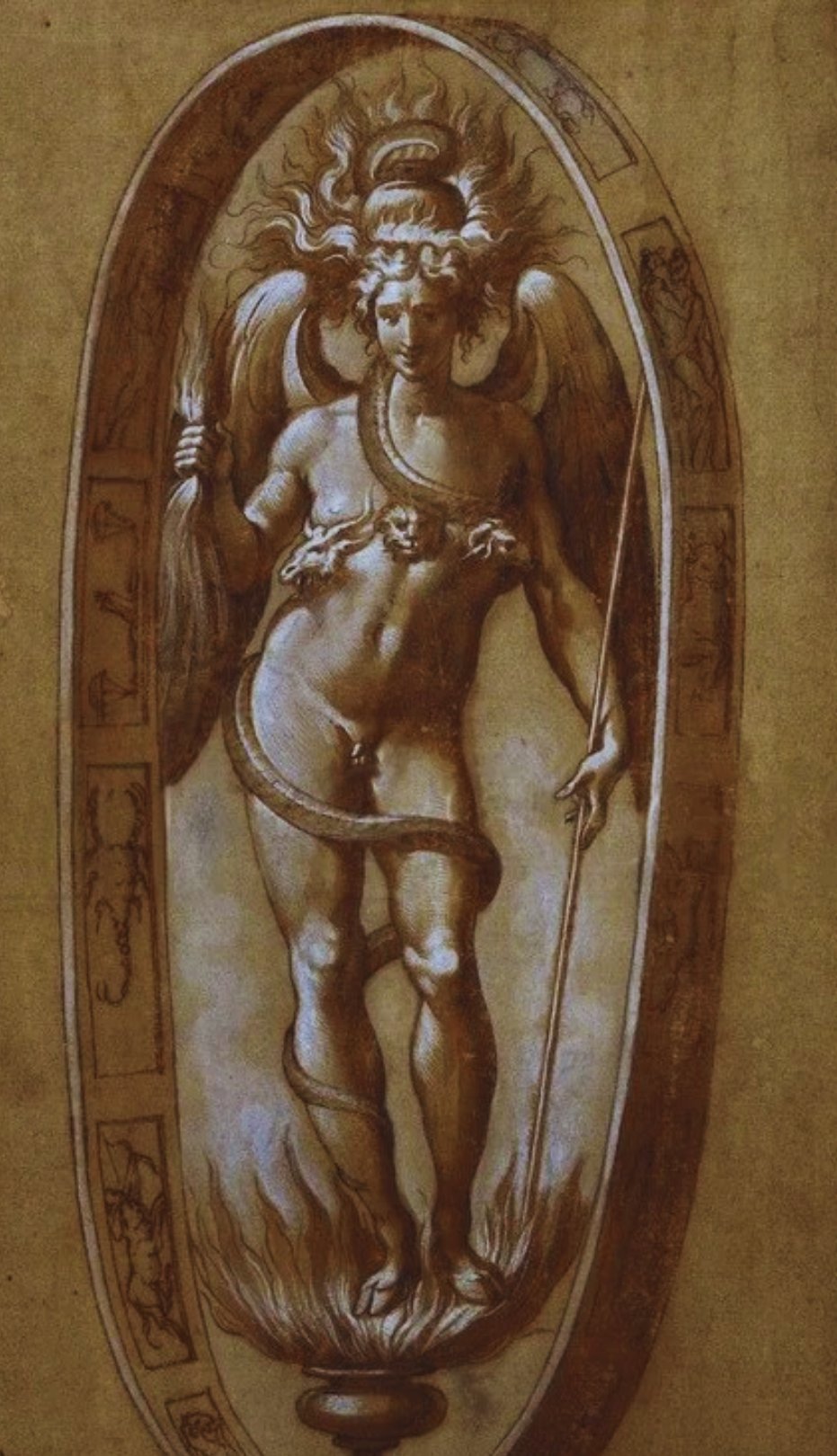
He stands winged, entwined by a serpent and encircled by the zodiac, emerging between the halves of a cosmic egg. Zodiac symbolism in itself represents the passage of time and order.
Who is the wife of Kronos? RheaExternal ↗.
Sovereign Rhea, daughter of Protogonos of many forms (...)
The source of Her generative power it's the primordial source itself.
I will stop here for now, recite the Hymns for more days and wait until the group rituals (the Kronos Power Ritual, from 8 to 14 October) are complete. Let’s participate in VTExternal ↗, dear Zevists.
Thank you Clergy for all the work you do.